Isosafrole
1-Propenyl-3,4-methylenedioxybenzene
(E)-Isosafrole · trans-Isosafrole
化学組成 · Constituent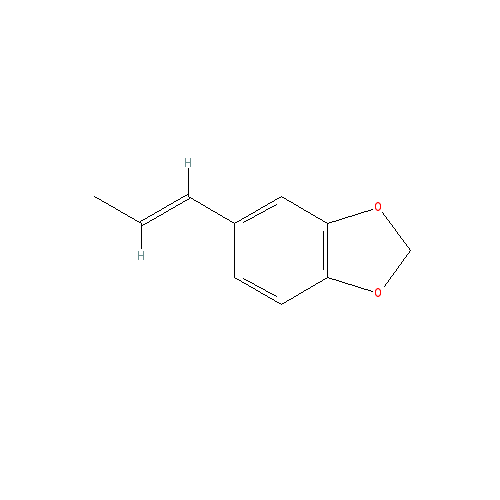
1-Propenyl-3,4-methylenedioxybenzene
(E)-Isosafrole · trans-Isosafrole
化学組成 · Constituent
Isosafrole là đồng phân vị trí của safrole, xuất hiện ở vết trong tinh dầu ylang-ylang. EU và IFRA hạn chế nghiêm ngặt vì rủi ro ung thư gan tương tự safrole.
Đường uống. LD50 cấp tính qua đường uống 1.34 g/kg trên chuột, 2.47 g/kg trên chuột nhắt.
Mạn tính. Cho chuột ăn 5.000 ppm trong 2 năm và 10.000 ppm trong 11 tuần gây chậm tăng trưởng, gan to và tổn thương gan vi mô nhẹ ở cả hai liều. Ở liều thấp, 5 trên 50 chuột có u gan nguyên phát.
Đột biến gen và ung thư. Không gây đột biến trong Ames test. Báo cáo về độc gen mâu thuẫn. Isosafrole là chất gây ung thư gan yếu ở chuột, cơ chế có thể không phải gen. Có thể có chuyển isomer thành 3'-hydroxy isosafrole thành 1'-hydroxysafrole, chất chuyển hoá tiền ung thư của safrole.
Isosafrole is the positional isomer of safrole, occurring in trace amounts in ylang-ylang oil. The EU and IFRA strictly restrict it due to hepatocarcinogenic risk similar to safrole.
Oral. Acute oral LD50 is 1.34 g/kg in rats, 2.47 g/kg in mice.
Subchronic. Rats fed 5,000 ppm for 2 years and 10,000 ppm for 11 weeks showed growth retardation, liver enlargement and slight microscopic liver damage at both doses. At the lower dose, 5 of 50 rats had primary liver tumors.
Mutagenicity and cancer. Not mutagenic in the Ames test. Genotoxicity reports are conflicting. Isosafrole is a weak rodent hepatocarcinogen, possibly through a non-genotoxic mechanism. Isomerization of 3'-hydroxy isosafrole to 1'-hydroxysafrole, the proximate carcinogenic metabolite of safrole, is possible at high exposure.
| Ngọc lan tây · Ylang-ylang | Trace |
Trên chuột, isosafrole chủ yếu (79 phần trăm) bị O-demethyl thành dẫn xuất catechol, một phần tiếp tục chuyển thành sản phẩm O-methyl và khử chuỗi bên. Chỉ rất ít nhóm methylenedioxy còn lại để cho diol 1',2' (khoảng 2 phần trăm) và alcohol 3'. Isosafrole là chất cảm ứng mạnh cytochrome P450 và P448.
In rats, isosafrole is mainly (79 percent) O-demethylenated to the catechol derivative, some of which is further converted to O-methylated and side-chain-reduced products. Only relatively little of the methylenedioxy group survives, to give the 1',2'-diol (about 2 percent) and 3'-alcohol. Isosafrole is a potent inducer of cytochromes P450 and P448.
Isosafrole xuất hiện cùng safrole trong tự nhiên nhưng ở nồng độ thấp hơn nhiều. Bất kỳ biện pháp nào hạn chế phơi nhiễm safrole trong thực phẩm cũng sẽ bao quát isosafrole.
Isosafrole occurs together with safrole in nature but at much lower concentrations. Any measure to restrict exposure to safrole in food would also cover isosafrole.