Cinnamyl alcohol
3-Phenyl-2-propen-1-ol
Cinnamic alcohol · trans-Cinnamyl alcohol
化学組成 · Constituent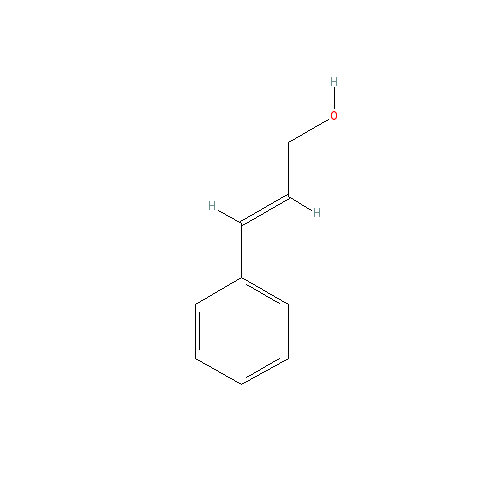
3-Phenyl-2-propen-1-ol
Cinnamic alcohol · trans-Cinnamyl alcohol
化学組成 · Constituent
Cinnamyl alcohol là chất gây mẫn cảm da đáng kể, mặc dù hoạt tính thấp hơn cinnamaldehyde. Hợp chất chuyển hoá tại da thành cinnamic acid và cinnamaldehyde; chính cinnamaldehyde là chất chịu trách nhiệm cho khả năng mẫn cảm.
Trên da. Patch test nguyên chất 24 giờ trên 20 tình nguyện không kích ứng. Ở 10 phần trăm không gây kích ứng trên 476 nam nữ tình nguyện.
Mẫn cảm. Maximation test 10 phần trăm trong 21 panel cho 71 phản ứng mẫn cảm trong 527 thử nghiệm (13.47 phần trăm). HRIPT cho 7 trên 259 tình nguyện (2.7 phần trăm) mẫn cảm. Patch test 5 phần trăm trên bệnh nhân chàm cho 7.7 phần trăm phản ứng. Trong nhóm bệnh nhân nhạy hương liệu, phản ứng cao hơn nhiều.
Đường uống. LD50 cấp tính chuột 2 g/kg; LD50 da thỏ vượt 5 g/kg.
Sinh sản. Gavage 5–250 mg/kg/ngày trên chuột mang thai ngày 6–15 cho NOAEL mẹ 50 mg/kg/ngày và NOAEL phát triển 250 mg/kg/ngày.
Đột biến gen. Không gây đột biến trong Ames test.
Cinnamyl alcohol is a significant skin sensitizer, although less potent than cinnamaldehyde. The compound is metabolized in skin to cinnamic acid and cinnamaldehyde; the latter accounts for its sensitization potential.
Skin. Undiluted 24-hour patch test on 20 volunteers caused no irritation. At 10 percent it produced no irritation in 476 volunteers.
Sensitization. A 10 percent maximation test across 21 panels gave 71 sensitization reactions in 527 tests (13.47 percent). HRIPT gave 7 of 259 (2.7 percent) sensitizations. A 5 percent patch test in eczema patients gave 7.7 percent reactions. Among fragrance-sensitive patients, rates are higher.
Oral. Acute oral LD50 in rats is 2 g/kg; rabbit dermal LD50 exceeds 5 g/kg.
Reproductive. Gavage 5–250 mg/kg/day in pregnant rats on days 6–15 gave maternal NOAEL 50 mg/kg/day and developmental NOAEL 250 mg/kg/day.
Mutagenicity. Non-mutagenic in the Ames test.
| Bakul (Mimusops elengi) · Bakul | 13.7 % |
| Lan dạ hương · Hyacinth | 11.0 % |
| Bồ kết Styrax · Styrax | 2.0 – 4.1 % |
| Hoa thủy tiên · Narcissus | 0.8 – 2.9 % |
| Quế (lá) · Cinnamon leaf | 0 – 0.6 % |
| Quế Cassia · Cassia | 0 – 0.2 % |
Chất chuyển hoá niệu chính sau tiêm phúc mạc ở chuột là hippuric acid (liên hợp glycine của benzoic acid), 3-hydroxy-3-phenylpropanoic acid và liên hợp glutathione. Ở thỏ, cinnamic acid và benzoic acid là chất chuyển hoá niệu chủ yếu.
Cinnamyl alcohol bôi da được chuyển hoá bởi enzyme tại da thành cinnamic acid và cinnamaldehyde. Chuyển đổi thành cinnamaldehyde chịu trách nhiệm chính cho hoạt tính mẫn cảm.
The major urinary metabolites after intraperitoneal dosing in rats are hippuric acid (glycine conjugate of benzoic acid), 3-hydroxy-3-phenylpropanoic acid and a glutathione conjugate. In rabbits, cinnamic acid and benzoic acid are the main urinary metabolites.
Topically applied cinnamyl alcohol is converted by skin enzymes to cinnamic acid and cinnamaldehyde. Conversion to cinnamaldehyde is primarily responsible for the sensitizing activity.
Cinnamyl alcohol là chất tạo hương phổ biến trong nước hoa, đặc biệt cho note hoa hyacinth tổng hợp. Tỷ lệ mẫn cảm cao đã dẫn đến giới hạn nồng độ nghiêm ngặt trong leave-on.
Cinnamyl alcohol is a common fragrance constituent, particularly for synthetic hyacinth notes. Its high sensitization rate has driven strict leave-on concentration limits.