Cinnamyl alcohol
3-Phenyl-2-propen-1-ol
Cinnamic alcohol · trans-Cinnamyl alcohol
化学組成 · Constituent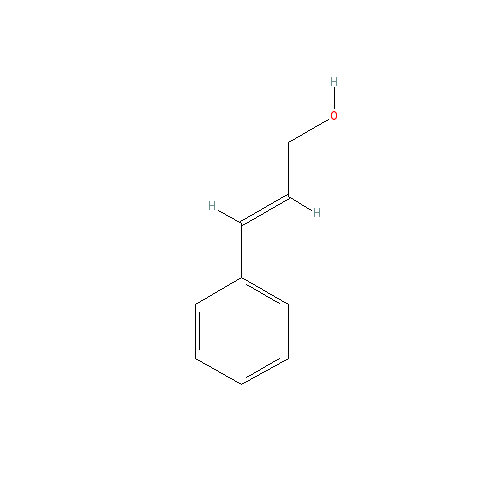
3-Phenyl-2-propen-1-ol
Cinnamic alcohol · trans-Cinnamyl alcohol
化学組成 · Constituent
Cinnamyl alcohol is a significant skin sensitizer, although less potent than cinnamaldehyde. The compound is metabolized in skin to cinnamic acid and cinnamaldehyde; the latter accounts for its sensitization potential.
Skin. Undiluted 24-hour patch test on 20 volunteers caused no irritation. At 10 percent it produced no irritation in 476 volunteers.
Sensitization. A 10 percent maximation test across 21 panels gave 71 sensitization reactions in 527 tests (13.47 percent). HRIPT gave 7 of 259 (2.7 percent) sensitizations. A 5 percent patch test in eczema patients gave 7.7 percent reactions. Among fragrance-sensitive patients, rates are higher.
Oral. Acute oral LD50 in rats is 2 g/kg; rabbit dermal LD50 exceeds 5 g/kg.
Reproductive. Gavage 5–250 mg/kg/day in pregnant rats on days 6–15 gave maternal NOAEL 50 mg/kg/day and developmental NOAEL 250 mg/kg/day.
Mutagenicity. Non-mutagenic in the Ames test.
| Bakul | 13.7 % |
| Hyacinth | 11.0 % |
| Styrax | 2.0 – 4.1 % |
| Narcissus | 0.8 – 2.9 % |
| Cinnamon leaf | 0 – 0.6 % |
| Cassia | 0 – 0.2 % |
The major urinary metabolites after intraperitoneal dosing in rats are hippuric acid (glycine conjugate of benzoic acid), 3-hydroxy-3-phenylpropanoic acid and a glutathione conjugate. In rabbits, cinnamic acid and benzoic acid are the main urinary metabolites.
Topically applied cinnamyl alcohol is converted by skin enzymes to cinnamic acid and cinnamaldehyde. Conversion to cinnamaldehyde is primarily responsible for the sensitizing activity.
Cinnamyl alcohol is a common fragrance constituent, particularly for synthetic hyacinth notes. Its high sensitization rate has driven strict leave-on concentration limits.