Benzyl salicylate
Phenylmethyl 2-hydroxybenzoate
Salicylic acid benzyl ester · o-Hydroxybenzoic acid benzyl ester
化学組成 · Constituent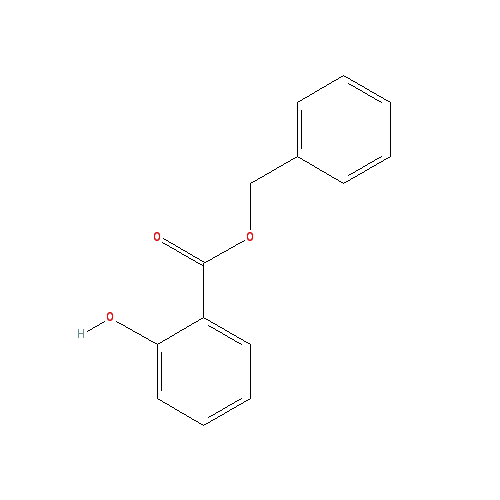
Phenylmethyl 2-hydroxybenzoate
Salicylic acid benzyl ester · o-Hydroxybenzoic acid benzyl ester
化学組成 · Constituent
Benzyl salicylate is a mildly substituted phenol, a weak acid that can be corrosive to tissues at high concentrations. Listed among the 26 EU fragrance allergens, practical data show very low risk in non-Japanese populations.
Skin. A 30 percent patch test on 25 volunteers caused no sensitization. In 10,503 patch tests of consumer products containing under 2 percent benzyl salicylate, no reactions were attributable to the compound. In 100 consecutive dermatitis patients, no irritant or allergic reactions to 1 percent.
Clear population differences exist. In Japan, 3.4 percent of 5,087 dermatitis patients reacted to 2 percent. In Europe and North America, the rate is 0.76 percent in 2,640 patients.
Oral. Acute oral LD50 in rats is 2.23 g/kg; rabbit dermal LD50 is 14.15 g/kg, indicating very low toxicity.
Reproductive. Salicylates generally inhibit growth and cause congenital abnormalities in animals. Benzyl salicylate has weak in vitro estrogenic activity at 10⁻⁵ M, with an opposite effect at 10⁻⁴ M. It is unlikely to reach toxic doses through practical essential oil exposure.
Mutagenicity. Non-mutagenic in the Ames test.
| Ylang-ylang | 0.3 – 3.9 % |
| Carnation | 3.9 % |
| Tuberose | 2.6 % |
Benzyl salicylate absorbs UV light. The compound was historically used as a mild sunscreen ingredient. Today its main role is as a fixative for floral notes in fine perfumery.