Benzyl alcohol
Phenylmethanol
Benzenemethanol · Phenylcarbinol · α-Hydroxytoluene
化学組成 · Constituent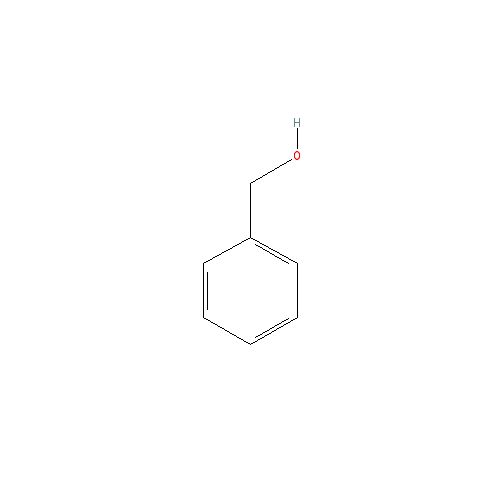
Phenylmethanol
Benzenemethanol · Phenylcarbinol · α-Hydroxytoluene
化学組成 · Constituent
Benzyl alcohol là dung môi và cấu tử hương liệu phổ biến. Hợp chất nằm trong danh sách 26 chất gây dị ứng hương liệu EU, nhưng dữ liệu thực tế cho thấy mức rủi ro mẫn cảm thấp.
Trên da. Trong 4.195 bệnh nhân chàm ở thử nghiệm 5 phần trăm chỉ một người (0.025 phần trăm) phản ứng. Patch test trên 241, 70, 50 và các nhóm khác đều cho không phản ứng dương tính. HRIPT ở 5 phần trăm cho hai mẫn cảm trên 101 đối tượng, ở 3 phần trăm không có phản ứng.
Ở bệnh nhân nhạy Peru balsam, 8 trên 102 phản ứng với 5 phần trăm. Hợp chất được xếp loại C, không gây dị ứng đáng kể.
Đường uống. LD50 cấp tính chuột 1.23–3.1 g/kg. Liều tiêm tĩnh mạch 0.025–0.4 mL/kg trên chuột nhắt gây co giật, khó thở và giảm vận động ở tất cả các liều trừ thấp nhất.
Trẻ sơ sinh non yếu thiếu khả năng tạo hippuric acid, làm quá trình giải độc benzyl alcohol kém. Đây là nhóm cần chú ý đặc biệt.
Bán mãn tính. Chuột và chuột nhắt nhận 2.000 mg/kg trong 16 ngày tử vong toàn bộ. Ở 1.000 mg/kg, 2–3 trong 5 con tử vong.
Benzyl alcohol is a widely used solvent and fragrance constituent. Listed among the 26 EU fragrance allergens, practical data indicate low sensitization risk.
Skin. Among 4,195 eczema patients tested at 5 percent, only one (0.025 percent) reacted. Patch tests on 241, 70, 50 and other groups showed no positive reactions. HRIPT at 5 percent gave two sensitizations in 101 subjects; at 3 percent no reactions.
Among Peru balsam sensitive patients, 8 of 102 reacted to 5 percent. The compound is classified Category C, not significantly allergenic.
Oral. Acute oral LD50 is 1.23–3.1 g/kg in rats. Intravenous 0.025–0.4 mL/kg in mice caused convulsions, dyspnea and reduced mobility at all doses except the lowest.
Preterm neonates have deficient hippuric acid formation, impairing benzyl alcohol detoxification. This is a specifically vulnerable group.
Subchronic. Rats and mice given 2,000 mg/kg for 16 days all died. At 1,000 mg/kg, 2 to 3 of 5 died.
| Nhựa Tolu · Tolu balsam | 41.8 % |
| An tức hương · Benzoin | 38.8 – 43.4 % |
| Lan dạ hương · Hyacinth | 40.0 % |
| Hoa thủy tiên · Narcissus | 1.7 – 4.8 % |
| Hoa tím · Violet leaf | 1.0 – 2.1 % |
| Ngọc lan vàng · Champaca (orange) | 0.3 – 2.0 % |
| Bakul (Mimusops elengi) · Bakul | 1.6 % |
| Hoa lài Sambac · Jasmine sambac | 1.3 % |
Benzyl alcohol được oxi hoá nhanh thành benzoic acid trong cơ thể, sau đó liên hợp với glycine thành hippuric acid và bài tiết qua nước tiểu. Hệ thống giải độc này kém phát triển ở trẻ sơ sinh non.
Benzyl alcohol is rapidly oxidized to benzoic acid, then conjugated with glycine to hippuric acid and excreted in urine. This detoxification pathway is poorly developed in preterm neonates.
Benzyl alcohol được dùng như excipient trong nhiều công thức bôi ngoài da. Hợp chất chậm oxi hoá thành benzoic acid khi tiếp xúc không khí.
Mỹ phẩm cho trẻ em không nên chứa benzyl alcohol do hệ chuyển hoá chưa hoàn thiện.
Benzyl alcohol is used as an excipient in many topical formulations. The compound slowly oxidizes to benzoic acid on air exposure.
Infant cosmetics should avoid benzyl alcohol due to immature metabolism.