Methyl isoeugenol
3,4-Dimethoxy-(1-propenyl)benzene
O-Methyl isoeugenol · Isoeugenol methyl ether · 4-Propenylveratrole
化学組成 · Constituent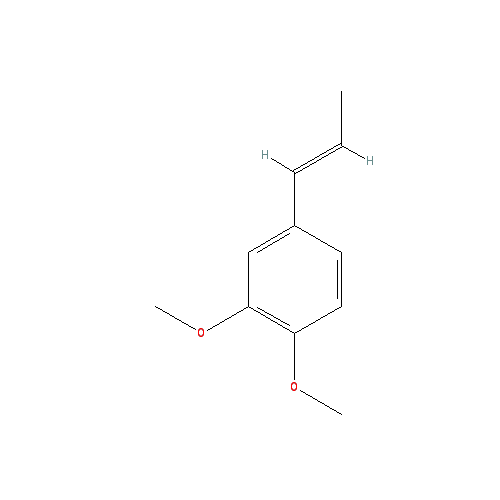
3,4-Dimethoxy-(1-propenyl)benzene
O-Methyl isoeugenol · Isoeugenol methyl ether · 4-Propenylveratrole
化学組成 · Constituent
Methyl isoeugenol là đồng phân của methyleugenol, có hoạt tính gây mẫn cảm da cao hơn methyleugenol.
Trên da. Trong nghiên cứu đa trung tâm toàn cầu trên 218 bệnh nhân viêm da nhạy cảm với hương liệu, 16 (7.3 phần trăm) phản ứng dương tính với 5 phần trăm methyl isoeugenol.
Độc tính bán mạn. Cho chuột ăn 30, 100, 300 mg/kg/ngày trong 28 ngày, chỉ có một số biến đổi nhẹ ở liều cao như thay đổi hoá học huyết thanh, tăng trọng lượng gan và đếm bạch cầu, không có ý nghĩa độc chất.
Methyl isoeugenol is an isomer of methyleugenol with higher skin sensitization activity than methyleugenol.
Skin. In a worldwide multicenter study on 218 dermatitis patients with proven fragrance sensitization, 16 (7.3 percent) reacted positively to 5 percent methyl isoeugenol.
Subchronic toxicity. Rats fed 30, 100, 300 mg/kg/day for 28 days showed only minor high-dose changes such as serum chemistry alterations, increased liver weight and white blood cell counts, with no toxicological significance.
| Sả Java · Citronella | 0 – 10.7 % |
| Hoa huệ Mexico · Tuberose | 32.5 % |
| Thạch xương bồ · Calamus (tetraploid form) | tr – 2.8 % |
| Hoa thủy tiên · Narcissus | 0 – 1.6 % |
Chuyển hoá tương tự methyleugenol nhưng O-demethyl hoá vị trí 4 quan trọng hơn. Sản phẩm chính là 3,4-dimethoxycinnamic acid và 3,4-dimethoxybenzoic acid dưới dạng liên hợp glycine, và 3-methoxy-4-hydroxycinnamic acid.
Metabolism is similar to methyleugenol but 4-O-demethylation is more important. Principal metabolites are 3,4-dimethoxycinnamic acid and 3,4-dimethoxybenzoic acid as glycine conjugates, and 3-methoxy-4-hydroxycinnamic acid.
Methyl isoeugenol tồn tại ở hai dạng đồng phân hình học (E)- và (Z)-, cả hai xuất hiện trong tinh dầu citronella Sri Lanka. Mặc dù gần methyleugenol về cấu trúc, hợp chất này không được đặt giới hạn IFRA cho ung thư.
Methyl isoeugenol exists in two geometric isomers, (E)- and (Z)-, both occurring in Sri Lankan citronella oil. Although structurally close to methyleugenol, this compound does not have an IFRA limit for cancer risk.