Benzyl isothiocyanate
Isothiocyanatomethylbenzene
Isothiocyanic acid benzyl ester · Benzyl mustard oil
化学組成 · Constituent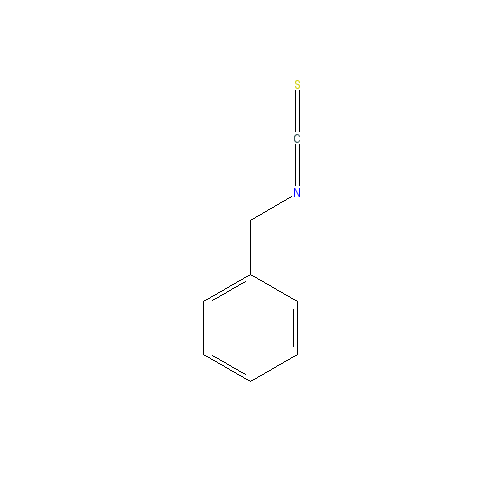
Isothiocyanatomethylbenzene
Isothiocyanic acid benzyl ester · Benzyl mustard oil
化学組成 · Constituent
Benzyl isothiocyanate có trong nasturtium absolute với nồng độ rất cao (72.3 phần trăm). Hợp chất kích ứng mạnh và độc thận, gan, có thể gây ung thư bàng quang trên động vật.
Trên da. Kích ứng nặng theo Lewis. Không có dữ liệu thử nghiệm lâm sàng đầy đủ.
Độc tính cấp. Liều thấp gây chết qua tiêm phúc mạc và tiêm dưới da là 100 mg/kg ở chuột và chuột nhắt. LD50 dưới da chuột nhắt 150 mg/kg.
Sinh sản. Liều uống 12.5–50 mg/kg trên chuột cái trước và sau làm tổ giảm trọng lượng thai và nhau ở nhóm 25 và 50 mg/kg. Có ba ca mẹ tử vong ở nhóm liều cao với dấu hiệu hạ hoạt động, vết mũi và giảm cân.
Gan. Benzyl isothiocyanate độc hơn đáng kể với tế bào gan chuột RL-4 so với các chất chuyển hoá glutathione và N-acetylcysteine.
Ung thư. Cho chuột đực ăn 0.1 phần trăm benzyl isothiocyanate trong 32 tuần tăng tỷ lệ phì đại và ung thư bàng quang, đặc biệt ở các con đã tiếp xúc trước với chất gây ung thư. Mặt khác, hợp chất có hoạt tính chống ung thư đáng kể ở các mô khác qua cảm ứng apoptosis.
Đột biến gen. Ở mức 5 mM và cao hơn, hợp chất tự gây tổn thương DNA in vitro.
Benzyl isothiocyanate occurs in nasturtium absolute at very high concentration (72.3 percent). The compound is severely irritating, hepatotoxic and nephrotoxic, with potential to induce bladder cancer in animal models.
Skin. Severely irritating according to Lewis. Adequate clinical patch-test data are lacking.
Acute toxicity. Low lethal doses by intraperitoneal and subcutaneous routes are 100 mg/kg in rats and mice. Subcutaneous LD50 in mice is 150 mg/kg.
Reproductive. Oral 12.5–50 mg/kg in female rats pre- and post-implantation reduced fetal and placental weight at 25 and 50 mg/kg. Three maternal deaths occurred at the high dose with hypoactivity, perinasal staining and weight loss.
Liver. Benzyl isothiocyanate is considerably more toxic to rat RL-4 hepatocytes than its glutathione and N-acetylcysteine conjugates.
Carcinogenicity. Feeding 0.1 percent for 32 weeks to male rats increased bladder hyperplasia and cancer, especially in animals previously exposed to carcinogen promoters. The compound also has substantial anticancer activity in other tissues by inducing apoptosis.
Genotoxicity. At 5 mM and above, the compound itself causes DNA damage in vitro.
| Sen cạn · Nasturtium | 72.3 % |
Benzyl isothiocyanate phản ứng nhanh với glutathione tạo liên hợp, phân huỷ tiếp thành liên hợp cysteine và acetyl hoá thành mercapturic acid N-acetyl-S-(N-benzylthiocarbamoyl)-cysteine, là chất chuyển hoá niệu chính ở chuột (40 phần trăm) và người (54 phần trăm).
Benzyl isothiocyanate reacts rapidly with glutathione to form a conjugate that degrades to the cysteine conjugate and is acetylated to the mercapturic acid N-acetyl-S-(N-benzylthiocarbamoyl)-cysteine, the major urinary metabolite in both rat (40 percent) and human (54 percent).
Hợp chất có hoạt tính diệt khuẩn và chống ung thư đường tiêu hoá khi tiêu thụ ở liều thấp qua rau cải họ Brassica. Trong bối cảnh tinh dầu, mức độ tiếp xúc rất khác và rủi ro thiên về độc tính.
The compound has antimicrobial and chemopreventive activity against gastrointestinal cancers when consumed at low doses through Brassica vegetables. In the essential oil context, exposure levels are very different and the risk tilts toward toxicity.