カルダモン
Bạch đậu khấu
Elettaria cardamomum
Green cardamon, True cardamon
Oils high in 1,8-cineole can cause CNS and breathing problems in young children when applied near the nose.
Contraindication: do not apply to or near the face of infants or children.
GRAS status. No skin irritation or sensitization at tested levels. Non-phototoxic.
Cardamon oil significantly inhibited gastric irritation and ulcerative lesions induced by ethanol and aspirin in rats (Jamal et al 2006).
| 1,8-Cineole | 26.5 – 44.6 % |
| α-Terpinyl acetate | 29.2 – 39.7 % |
| Linalyl acetate | 0.7 – 7.7 % |
| (+)-Limonene | 1.7 – 6.0 % |
| Linalool | 0.4 – 5.9 % |
| α-Terpineol | 0.8 – 4.3 % |
| Sabinene | 2.5 – 3.8 % |
| Terpinen-4-ol | 0.9 – 3.2 % |
| (E)-Nerolidol | 0.1 – 2.7 % |
| β-Myrcene | 0.2 – 2.2 % |
| α-Pinene | 0.6 – 1.5 % |
| Geraniol | 0.3 – 1.1 % |
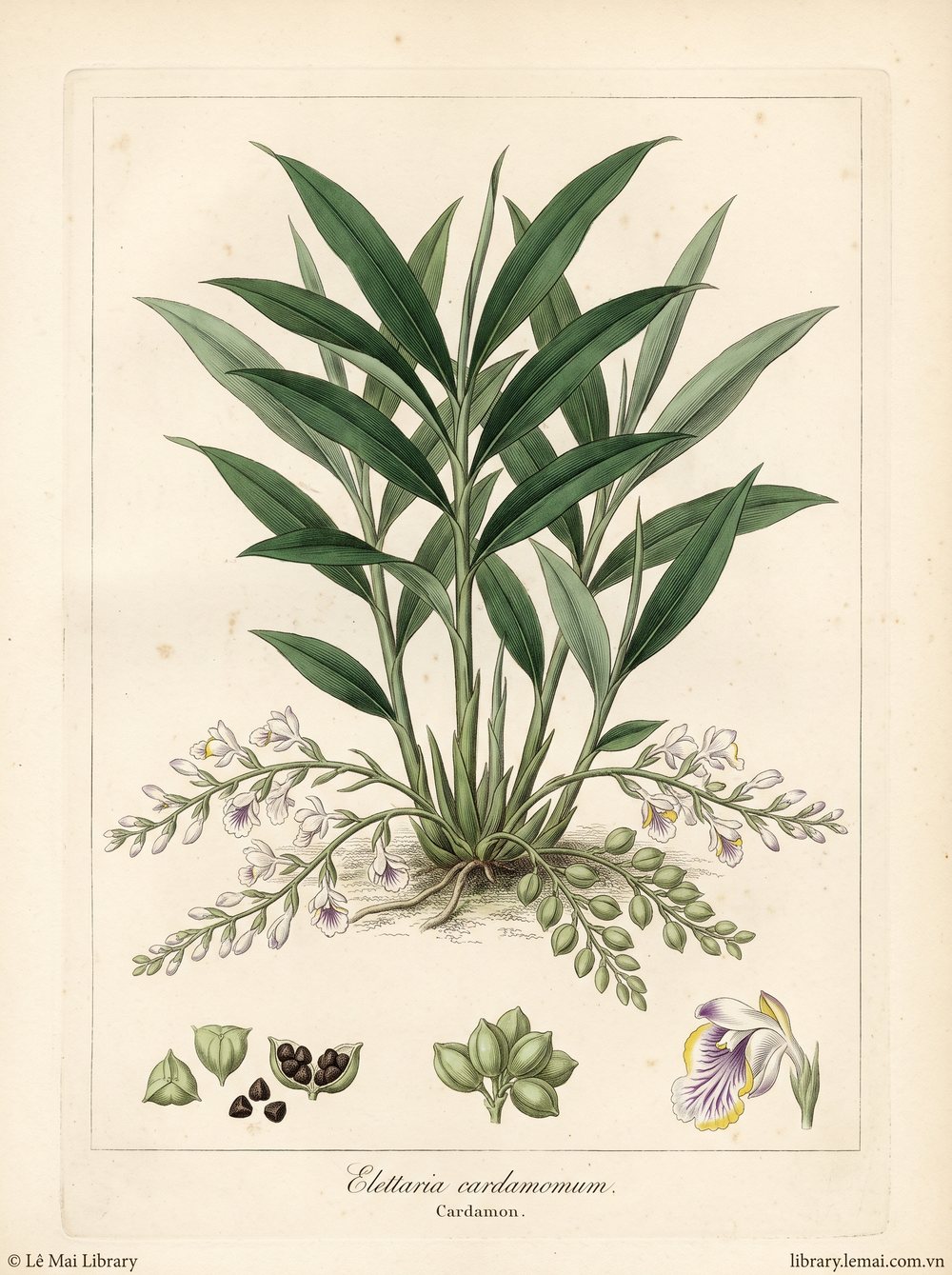
Elettaria cardamomum is a tropical South Asian perennial herb. Small black seeds sit inside three-ridged green pods.
Family Zingiberaceae, same family as ginger and turmeric. Produced mainly in Guatemala and India.
Cardamon seeds are a high-value spice in Indian, Arab and Scandinavian cuisines. The seed oil is one of the key perfumery materials for the spicy oriental note.
May be adulterated by addition of 1,8-cineole, α-terpinyl acetate or linalyl acetate.