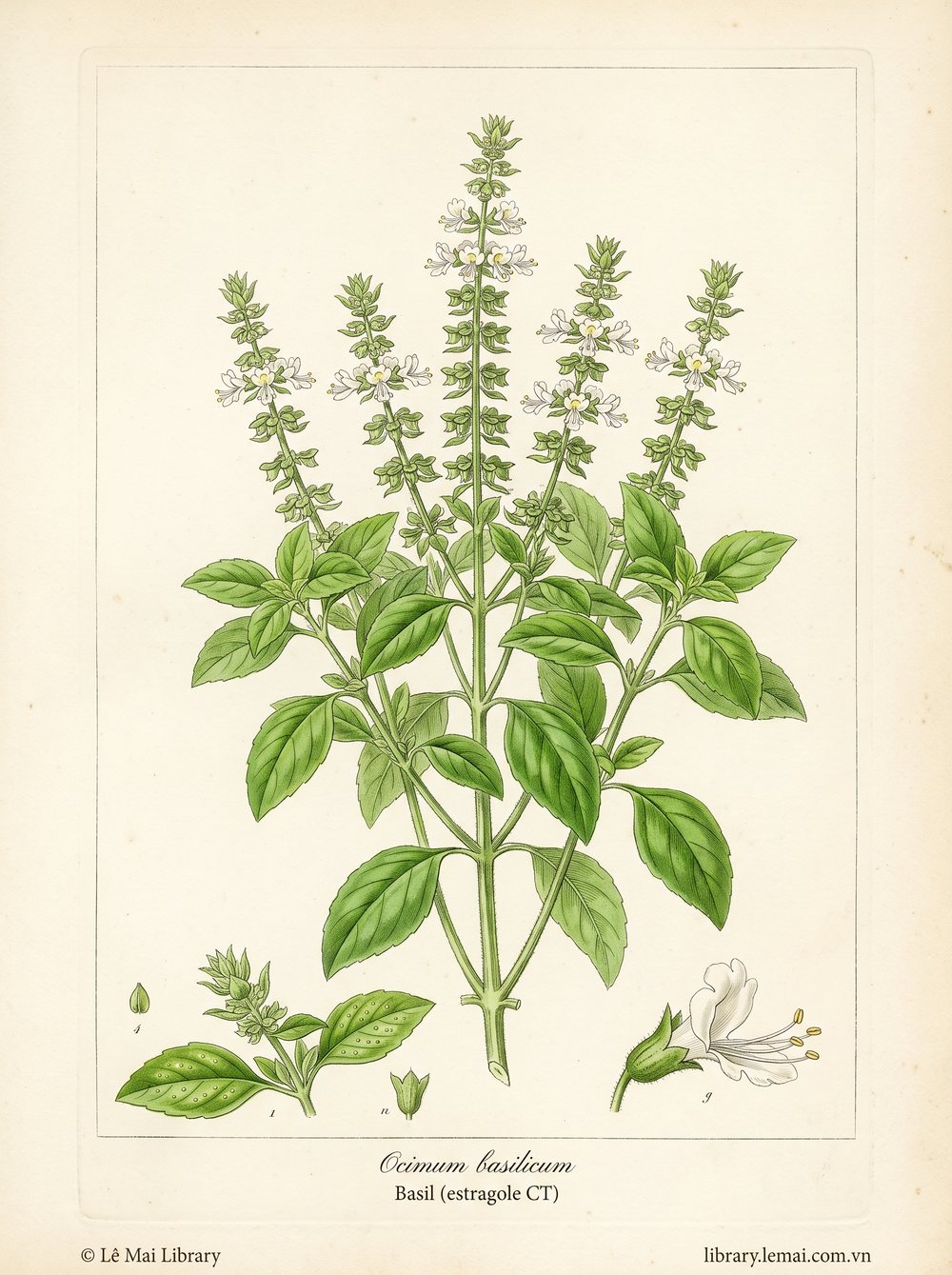
バジル エストラゴール CT
Húng quế
Ocimum basilicum
Exotic basil, Comoros basil, Reunion basil
The estragole chemotype of basil contains a high level of estragole, a rodent carcinogen at sufficiently high oral exposure.
Should not be taken orally. Possible interaction with drugs metabolized by CYP2B6.
Maximum dermal use level 0.02 percent based on 87.4 percent estragole content and a dermal limit of 0.01 percent for estragole.
Methyleugenol may be present up to 4.2 percent, another carcinogen requiring strict limits.
| Estragole | 73.4 – 87.4 % |
| Linalool | tr, 8.6 % |
| 1,8-Cineole | 0.6 – 6.0 % |
| β-Caryophyllene | tr, 4.0 % |
| (+)-Limonene | 0.1 – 3.0 % |
| Methyleugenol | 0 – 4.2 % |
| (E)-β-Ocimene | 0 – 2.2 % |
| Terpinen-4-ol | 0 – 2.2 % |
| Eugenol | tr, 1.2 % |
| Camphor | tr, 1.0 % |
Ocimum basilicum is an aromatic annual herb of tropical Asian and African origin.
The estragole chemotype is produced largely in the Comoros, Réunion and parts of Madagascar, often marketed as 'exotic basil' or 'Réunion basil'.
Other chemotypes of Ocimum basilicum (linalool, methyl cinnamate) carry distinct chemistry and safety profiles. The certificate of analysis must be read before use.
This chemotype dominates commercial basil oil. The name 'sweet basil' is often misapplied, culinary sweet basil in Europe is typically the linalool CT, not the estragole CT.