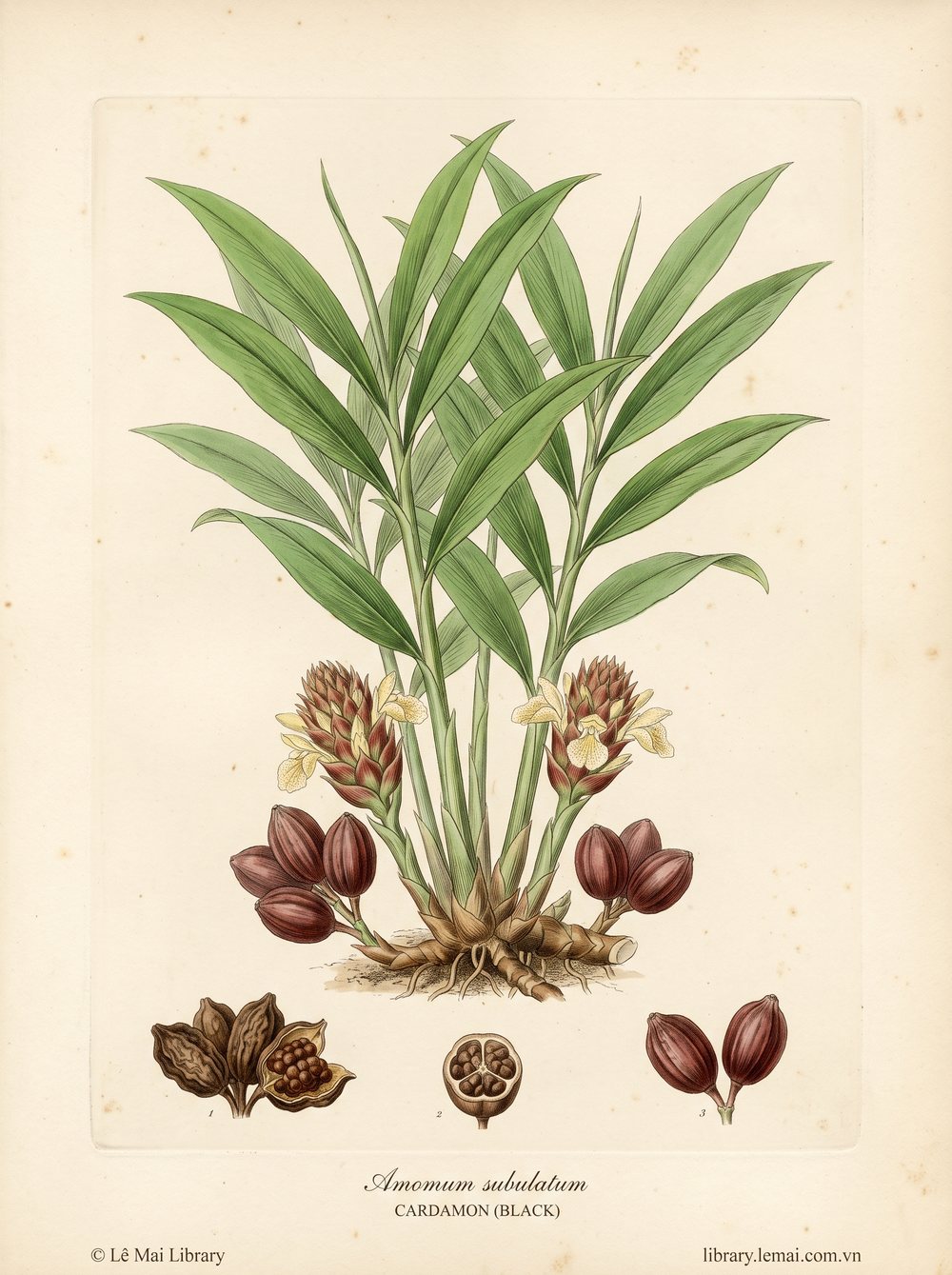
ブラックカルダモン
Bạch đậu khấu đen
Amomum subulatum
Large cardamon, Nepalese cardamon, Greater Indian cardamon
Oils high in 1,8-cineole can cause CNS and breathing problems in young children when applied near the nose.
Contraindication: do not apply to or near the face of infants or children.
Likely not hazardous in pregnancy based on data for the major constituents.
No information on dermal reactions.
| 1,8-Cineole | 61.3 % |
| β-Pinene | 8.9 % |
| α-Terpineol | 7.9 % |
| α-Pinene | 3.8 % |
| (−)-allo-Aromadendrene | 3.2 % |
| γ-Terpinene | 2.0 % |
| δ-Terpineol | 1.6 % |
| Terpinen-4-ol | 1.3 % |
| δ-Elemene | 1.2 % |
| β-Myrcene | 1.2 % |
Amomum subulatum is a perennial herb of the eastern Himalayas (Nepal, Sikkim, Bhutan, northeast India). Larger and darker seeds than green cardamon, with a smokier note from traditional fire-drying.
Family Zingiberaceae. Same family but different genus from green cardamon (Elettaria cardamomum).
In Indian cuisine the two cardamons serve different roles, green for desserts and drinks, black for curries and savory masalas.
Limited availability. 1,8-Cineole content is very high (61.3 percent), higher than green cardamon and close to eucalyptus oil.