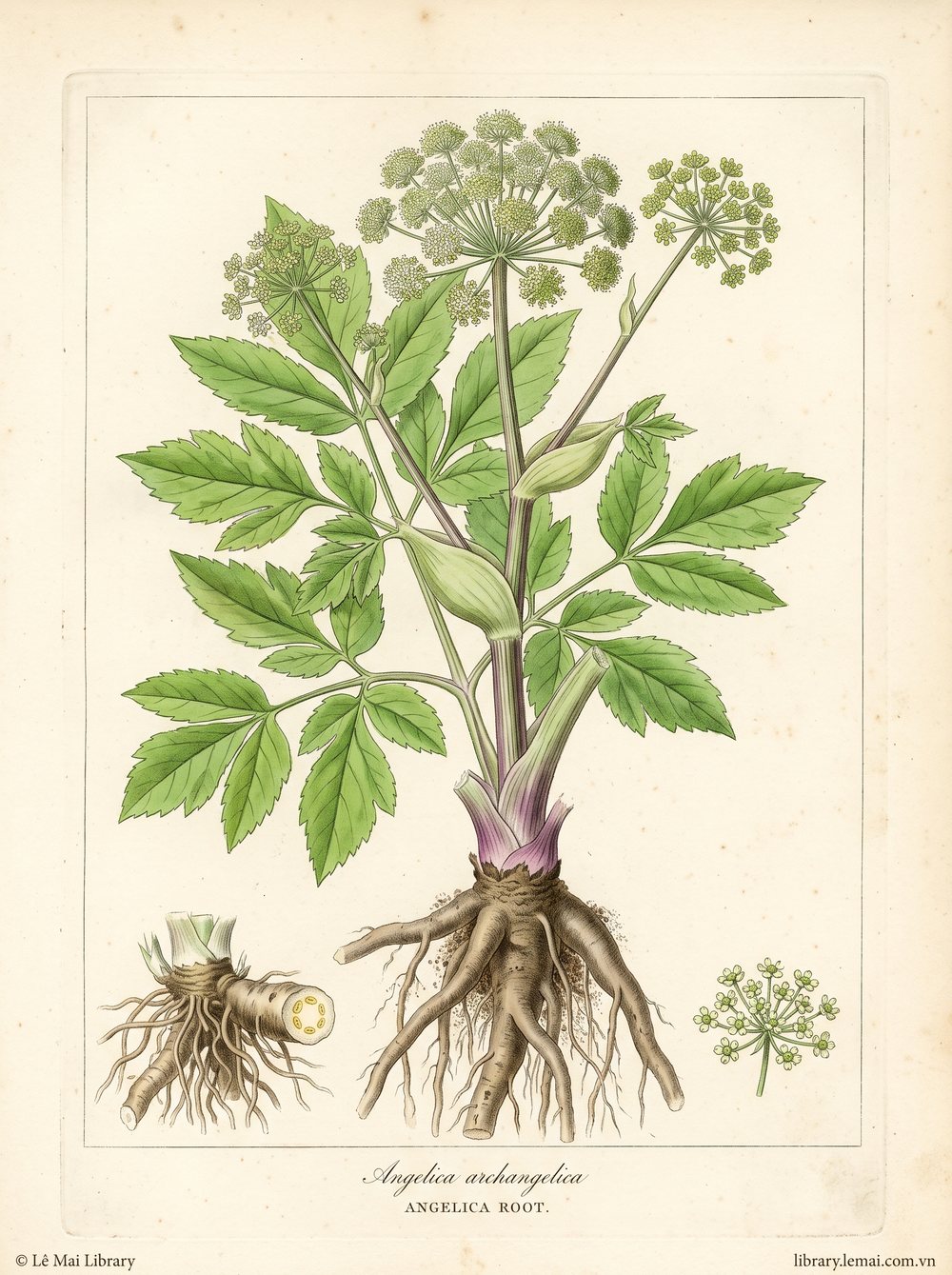
アンジェリカ根
Đương quy, rễ Angelica
Angelica archangelica
Angelique, Garden angelica
Phototoxic due to furocoumarin content (angelicin, psoralen, bergapten).
When applied to skin above maximum use level, skin must not be exposed to sunlight or UV rays for 12 hours after application.
In phototoxicity tests, distinct positive results obtained from 100% down to 3.125% concentration. Doubtful reaction at 1.56%. Negative at 0.8%.
High oral doses in rats caused weight loss, decreased activity, liver and kidney damage. NOAEL: 1.5 g/kg.
| β-Phellandrene | 10.0 – 24.0 % |
| α-Pinene | 4.4 – 24.0 % |
| α-Phellandrene | 7.5 – 20.0 % |
| Limonene | 6.0 – 13.2 % |
| δ-3-Carene | 4.5 – 13.0 % |
| p-Cymene | 3.5 – 9.8 % |
| β-Myrcene | 1.6 – 5.5 % |
| (E)-β-Ocimene | 2.4 – 4.9 % |
| Pentadecanolide | 0.4 – 2.4 % |
| Terpinolene | 0.7 – 2.2 % |
| Angelicin | 0.023 % |
| Psoralen | 0.0112 % |
| Bergapten | 0.0078 % |
Angelica archangelica is a large herbaceous plant up to 2.5 meters tall, in the Apiaceae family.
Grows wild in Northern Europe, cultivated for medicinal and aromatic use. Roots are harvested after 1-2 years of growth.
Root oil contains small amounts of furocoumarins despite being steam-distilled.
Angelica seed oil is cheaper and a common adulterant of angelica root oil.
Due to high limonene, α-pinene, δ-3-carene content, root oil oxidizes easily. Blends should include antioxidants.
Angelica root oil has GRAS status. IFRA limits to 0.8% in leave-on products applied to sun-exposed skin, with exceptions for bath/soap/wash-off.
In Northern European folklore, angelica was considered a sacred plant believed to protect against plague.