Terpinolene
1-Methyl-4-(1-methylethylidene)cyclohexene
Isoterpinene · p-Mentha-1,4(8)-diene
化学組成 · Constituent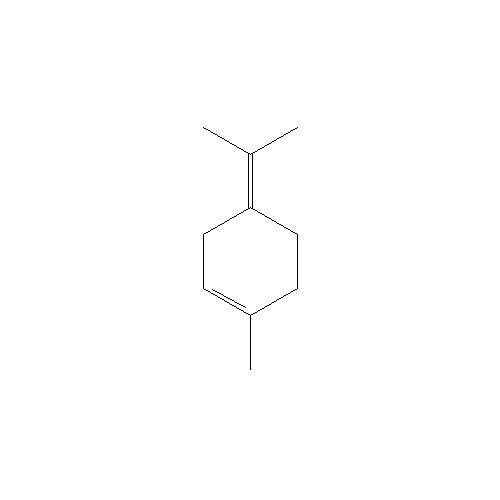
1-Methyl-4-(1-methylethylidene)cyclohexene
Isoterpinene · p-Mentha-1,4(8)-diene
化学組成 · Constituent
Terpinolene is widespread in parsnip, pine, tea tree and blackcurrant bud oils. It is oxidation-prone and sensitizing in tea tree-sensitized individuals.
Skin. At 20 percent on human subjects it was neither irritating nor sensitizing. At 10 percent it sensitized all 16 dermatitis patients already sensitized to tea tree oil.
Oral. Acute oral LD50 in both rats and mice was 4.4 mL/kg.
Antioxidant. Terpinolene shows marked DPPH scavenging and protects LDL from oxidation.
Cancer. Inhibited 79 percent of the in vitro formation of the carcinogen NDMA.
| Parsnip | 40.3 – 69.0 % |
| Pine (dwarf) | 1.0 – 29.2 % |
| Blackcurrant bud | 0 – 11.6 % |
| Turmeric leaf | 11.5 % |
| Fir (Douglas) | 9.1 % |
| Lime (distilled) | 5.2 – 8.7 % |
| Lemon balm (Australian) | 6.6 % |
| Parsley leaf | 2.8 – 6.6 % |
| Cypress | 2.4 – 6.3 % |
| Cajuput | 0 – 5.9 % |
| Rosalina | 2.0 – 5.0 % |
| Tea tree | 1.5 – 5.0 % |
Terpinolene, together with α-terpinene and γ-terpinene, comprises the tea tree monoterpene group most prone to causing sensitization on oxidation. Proper storage reduces risk.