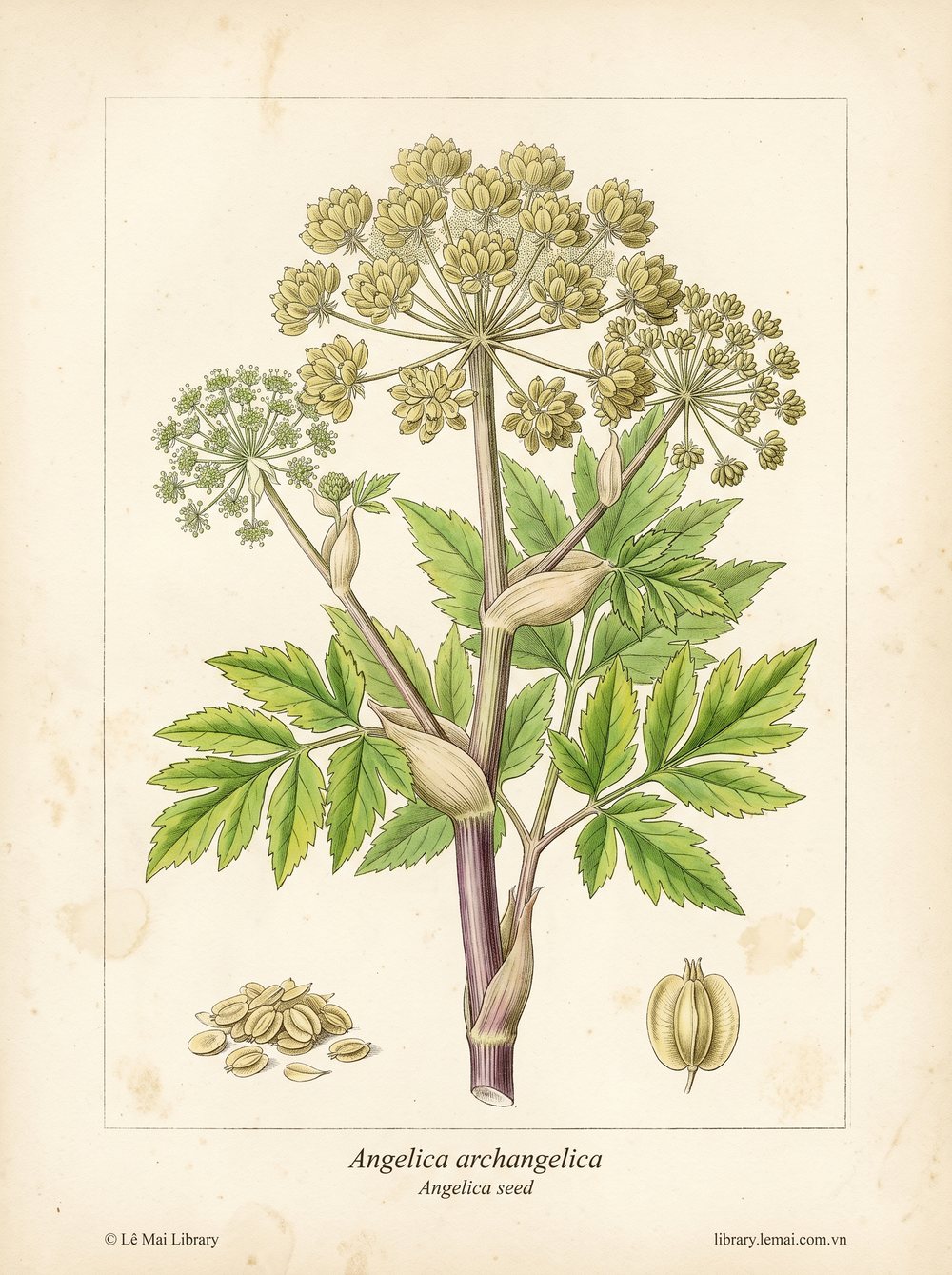
アンジェリカ種子
Đương quy (hạt)
Angelica archangelica
No known hazards for angelica seed oil.
Unlike root oil, seed oil contains NO furocoumarins — not phototoxic.
Tested at 1% on 25 volunteers, neither irritating nor sensitizing. Mildly irritating to rabbits when undiluted.
Avoid old or oxidized oils.
| β-Phellandrene | 35.4 – 72.1 % |
| Limonene | 2.3 – 38.7 % |
| α-Pinene | 8.8 – 9.2 % |
| β-Caryophyllene | 0.1 – 3.3 % |
| β-Myrcene | 1.5 – 2.9 % |
| α-Phellandrene | 2.7 – 2.8 % |
| α-Caryophyllene | 0.7 – 1.1 % |
Seeds harvested from 2-year-old Angelica archangelica plants. The plant flowers and seeds in its second year.
Six psoralens have been found in the seeds (including bergapten, imperatorin, methoxsalen), but none are reported in the essential oil after distillation.
Mainly produced in France, Germany, Hungary, Poland.
Limonene and β-phellandrene may polymerize when stored improperly — becoming viscous and losing commercial value.
Add antioxidants when blending to extend shelf life.
Seed oil is cheaper than root oil. May be used as adulterant of root oil.
Anticarcinogenic activity recorded in cell studies — angelica seed oil cytotoxic to human pancreas and mouse breast cancer cell lines.