Methyl jasmonate
Methyl 3-oxo-2-(2-pentenyl)cyclopentane ethanoate
Jasmonic acid methyl ester
化学組成 · Constituent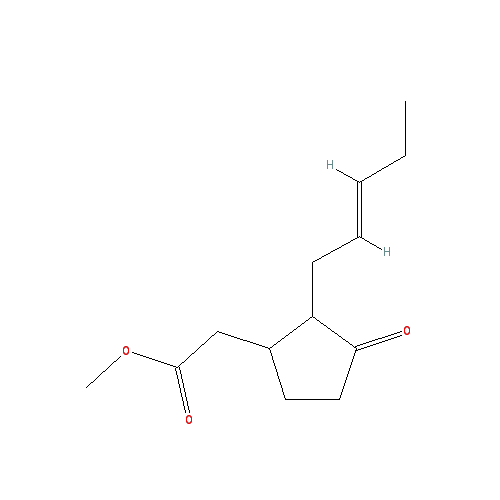
Methyl 3-oxo-2-(2-pentenyl)cyclopentane ethanoate
Jasmonic acid methyl ester
化学組成 · Constituent
Methyl jasmonate là cấu tử chính tạo nên ký họa mùi jasmine. Không có dữ liệu công bố về độc tính cấp hoặc phản ứng da.
Trên da. Trong thử nghiệm in vitro, methyl jasmonate không gây độc ánh sáng.
Hoạt tính chống ung thư. Methyl jasmonate ức chế đáng kể sự tăng sinh của hai loại tế bào ung thư tuyến tiền liệt người in vitro. Cũng ức chế tăng sinh tế bào ung thư vú, melanoma và bạch cầu lympho. Hợp chất gây chết tế bào ung thư bạch cầu phân lập từ máu bệnh nhân và kéo dài thời gian sống của chuột mang lymphoma.
Đặc tính chọn lọc của jasmonate là giết tế bào ung thư trong khi tha tế bào bình thường. Tác dụng trực tiếp lên ty thể của tế bào ung thư, vượt qua các khoá tiền apoptosis và gây chết tế bào không apoptotic.
Methyl jasmonate is a central constituent shaping the jasmine aroma signature. No published data on acute toxicity or skin reactions.
Skin. In an in vitro assay, methyl jasmonate was non-phototoxic.
Anticancer activity. Methyl jasmonate significantly inhibited the proliferation of two human prostate cancer cell types in vitro. It also suppressed proliferation in breast, melanoma and lymphoblastic leukemia cells. The compound induced cell death in leukemia cells isolated from patient blood and prolonged survival of lymphoma-bearing mice.
A defining feature of jasmonates is their selective killing of cancer cells while sparing normal cells. They act directly on mitochondria of cancer cells, bypassing premitochondrial apoptotic blocks and inducing non-apoptotic cell death.
| Bạch đậu · Ginger lily | 1.8 % |
| Hoa nhài · Jasmine | 0.2 – 1.3 % |
| Boronia | 1.2 % |
| Ngải Tansy xanh · Tansy (blue) | tr – 1.0 % |
Methyl jasmonate được thực vật sản xuất rộng rãi, đặc biệt như 'hormone stress' phản ứng trước côn trùng tấn công. Là chất dễ bay hơi, nó cũng truyền tín hiệu tấn công đến các cây lân cận chưa bị tổn thương, có thể kích thích chúng tăng sản xuất jasmonate.
Methyl jasmonate is widely produced by plants, notably as a stress hormone in response to insect attack. As a volatile, it can also signal such attack to neighboring undamaged plants, prompting them to increase jasmonate production.