1,4-Cineole
1-Methyl-4-(1-methylethyl)-7-oxabicyclo[2.2.1]heptane
Isocineole · 1,4-Epoxy-p-menthane
化学組成 · Constituent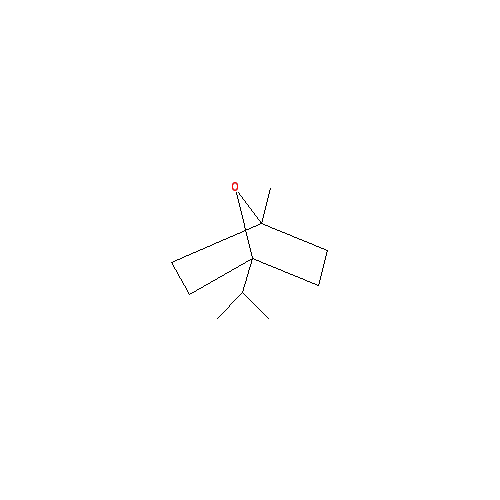
1-Methyl-4-(1-methylethyl)-7-oxabicyclo[2.2.1]heptane
Isocineole · 1,4-Epoxy-p-menthane
化学組成 · Constituent
1,4-Cineole là đồng phân thiểu số của 1,8-cineole. Hợp chất xuất hiện ở nồng độ thấp trong vài tinh dầu cam quýt và cypress.
Trên da. Patch test ở 16 phần trăm trên 25 tình nguyện không kích ứng và không mẫn cảm.
Đường uống và da. LD50 cấp tính chuột 3.1 g/kg; LD50 da thỏ dưới 5 g/kg.
Dữ liệu hạn chế nhưng không gợi ý rủi ro đặc biệt.
1,4-Cineole is the minor isomer of 1,8-cineole. The compound appears at low concentrations in a few citrus and cypress oils.
Skin. A 16 percent patch test on 25 volunteers caused no irritation or sensitization.
Oral and dermal. Acute oral LD50 in rats is 3.1 g/kg; rabbit dermal LD50 is under 5 g/kg.
Limited data but no specific risk indicated.
| Chanh ta · Lime (distilled) | 1.8 – 3.0 % |
| Tuyết tùng Port Orford · Cedarwood (Port Orford) | 1.3 % |
1,4-Cineole được uống ở thỏ 2 g/con và phát hiện năm chất chuyển hoá trong nước tiểu: 9-hydroxy-1,4-cineole (phong phú nhất), 1,4-cineole-9-carboxylic acid, 1,4-cineole-8-en-9-ol, 3,8-dihydroxy-1,4-cineole và 8,9-dihydroxy-1,4-cineole. CYP3A4 ở chuột và người tạo 2-exo-hydroxy-1,4-cineole là chất chuyển hoá chính.
1,4-Cineole given orally to rabbits at 2 g/animal yielded five urinary metabolites: 9-hydroxy-1,4-cineole (most abundant), 1,4-cineole-9-carboxylic acid, 1,4-cineole-8-en-9-ol, 3,8-dihydroxy-1,4-cineole and 8,9-dihydroxy-1,4-cineole. CYP3A4 in rat and human liver microsomes generates 2-exo-hydroxy-1,4-cineole as a major metabolite.
1,4-Cineole đóng góp note long não tươi nhẹ trong vài tinh dầu cam quýt chưng cất.
1,4-Cineole contributes a soft camphor freshness to a few distilled citrus oils.