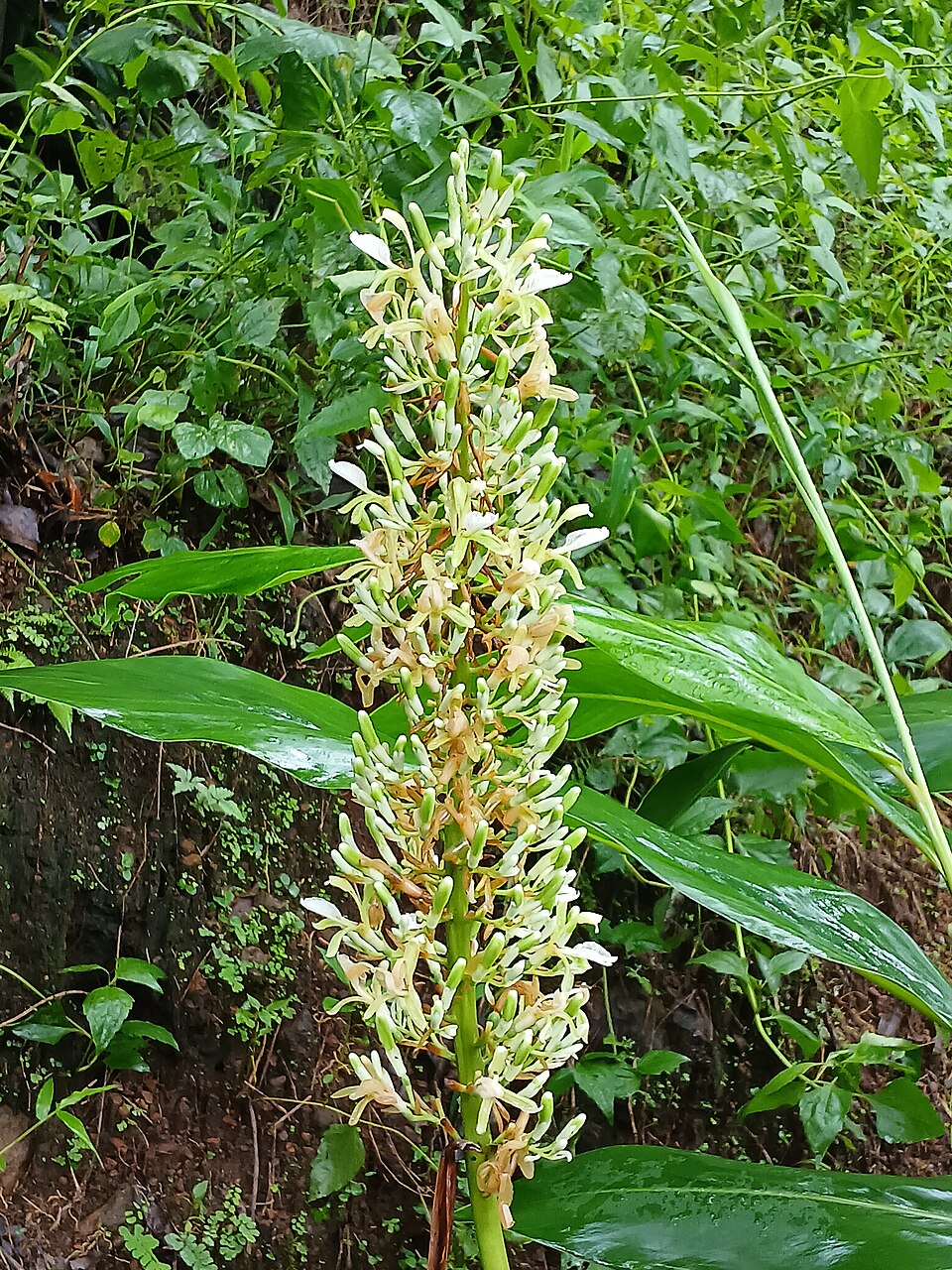
ガランガル (グレーター)
Riềng nếp
Alpinia galanga
Siamese ginger, Amomum galanga, Languas galanga
No specific contraindications in available data.
Likely not hazardous in pregnancy based on data for 1,8-cineole, camphor, β-pinene, (+)-limonene, camphene and α-pinene.
Contains no known carcinogens.
At least two chemotypes exist: 1,8-cineole CT and (E)-β-farnesene CT. Methyl cinnamate is also recorded as a major constituent in some samples.
| 1,8-Cineole | 30.2 – 33.6 % |
| Camphor | 5.0 – 14.0 % |
| β-Pinene | 0.9 – 12.9 % |
| α-Fenchyl acetate | 1.1 – 12.7 % |
| α-Terpineol | 2.3 – 9.3 % |
| (Z)-β-Ocimene | 0 – 6.4 % |
| (E)-Methyl cinnamate | 2.6 – 5.3 % |
| (+)-Limonene | 3.5 – 3.7 % |
| Camphene | 0.5 – 3.1 % |
| Farnesol | 0 – 3.1 % |
| α-Pinene | 0.5 – 3.0 % |
| Bornyl acetate | 0.6 – 1.5 % |
Alpinia galanga is a 2-meter tall herb of Southeast Asia, particularly Thailand, Indonesia, Malaysia. The thick rhizome is an essential spice in Thai cuisine (called kha) and Indonesian (laos).
Distinct from the smaller 'galangal' in Chinese cuisine (lesser galangal, Alpinia officinarum) and Java galangal (Kaempferia galanga). Three different plants sharing the common name.
Family Zingiberaceae. Same family as ginger, turmeric, finger root, cardamon.