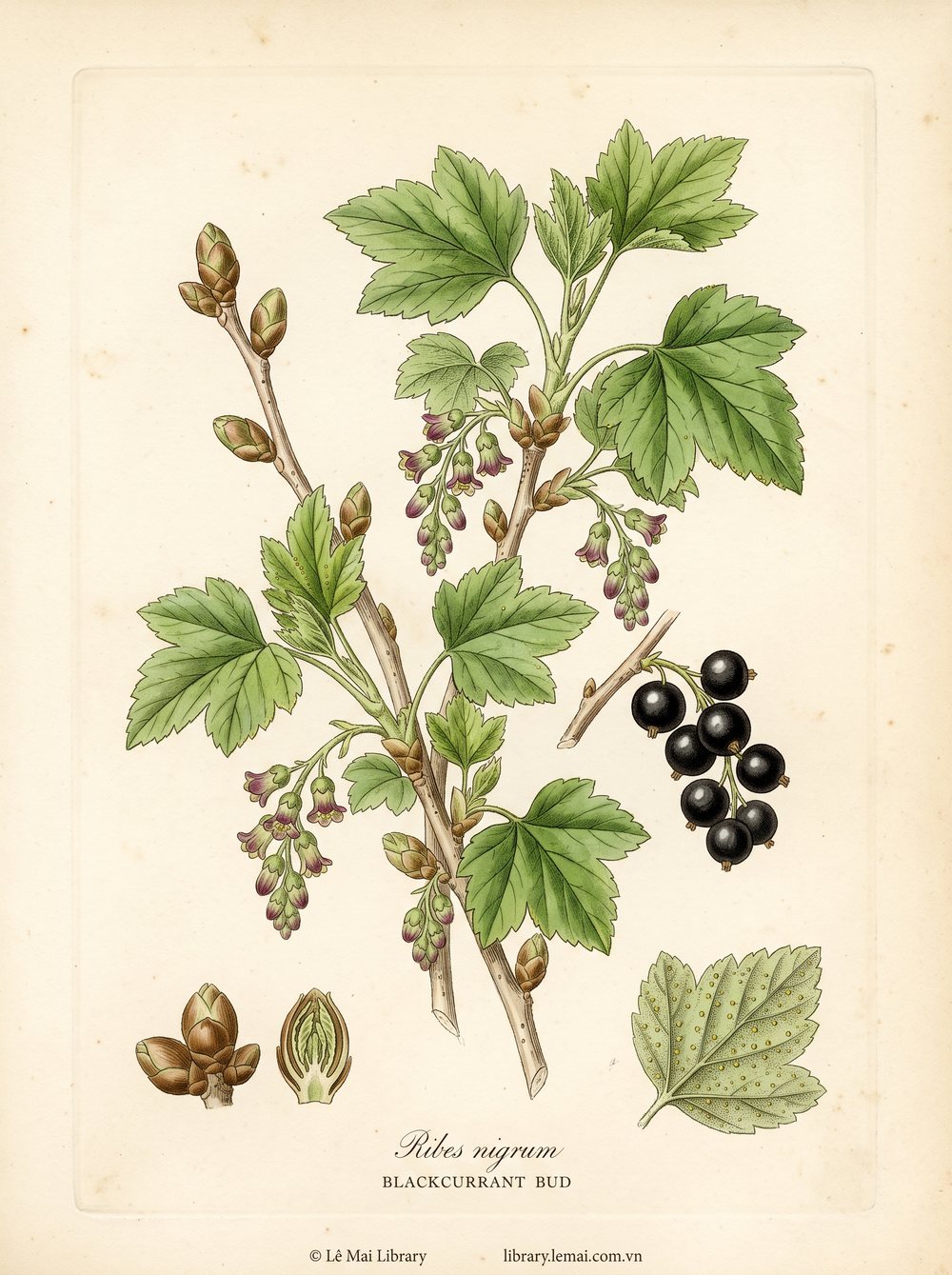
ブラックカラントバッド
Lý chua đen (nụ)
Ribes nigrum
Cassis, Cassis bud
Oxidation products of δ-3-carene may sensitize skin. Avoid old or oxidized essential oils and absolutes.
Store in dark, sealed, refrigerated container. Add an antioxidant to formulations.
No specific contraindications in available data.
Likely not hazardous in pregnancy based on data for the major monoterpenes.
| δ-3-Carene | 15.0 – 35.0 % |
| β-Pinene | 0.2 – 24.0 % |
| β-Phellandrene | 1.6 – 11.0 % |
| (+)-Limonene | 0.8 – 10.0 % |
| Terpinolene | 0 – 9.0 % |
| α-Pinene | 4.0 – 6.0 % |
| γ-Terpinene | 0 – 1.5 % |
| Ocimene | 0 – 1.5 % |
| p-Cymene | 0.7 – 1.4 % |
Ribes nigrum is a small shrub, native to central and eastern Europe. The flower buds carry a sharp, catty scent, at once berry-like and leafy.
Steam-distilled essential oil from the buds is rare; solvent-extracted absolute is more common. The absolute has a different constituent profile, richer in β-caryophyllene and terpinolene.
Unusual among absolutes, blackcurrant bud absolute is monoterpene-rich, while most absolutes lean toward heavier molecules.
One of the most distinctive notes in modern perfumery. 'Cassis' appears in many contemporary fragrances for its ability to suggest fresh berries and wet leaves.