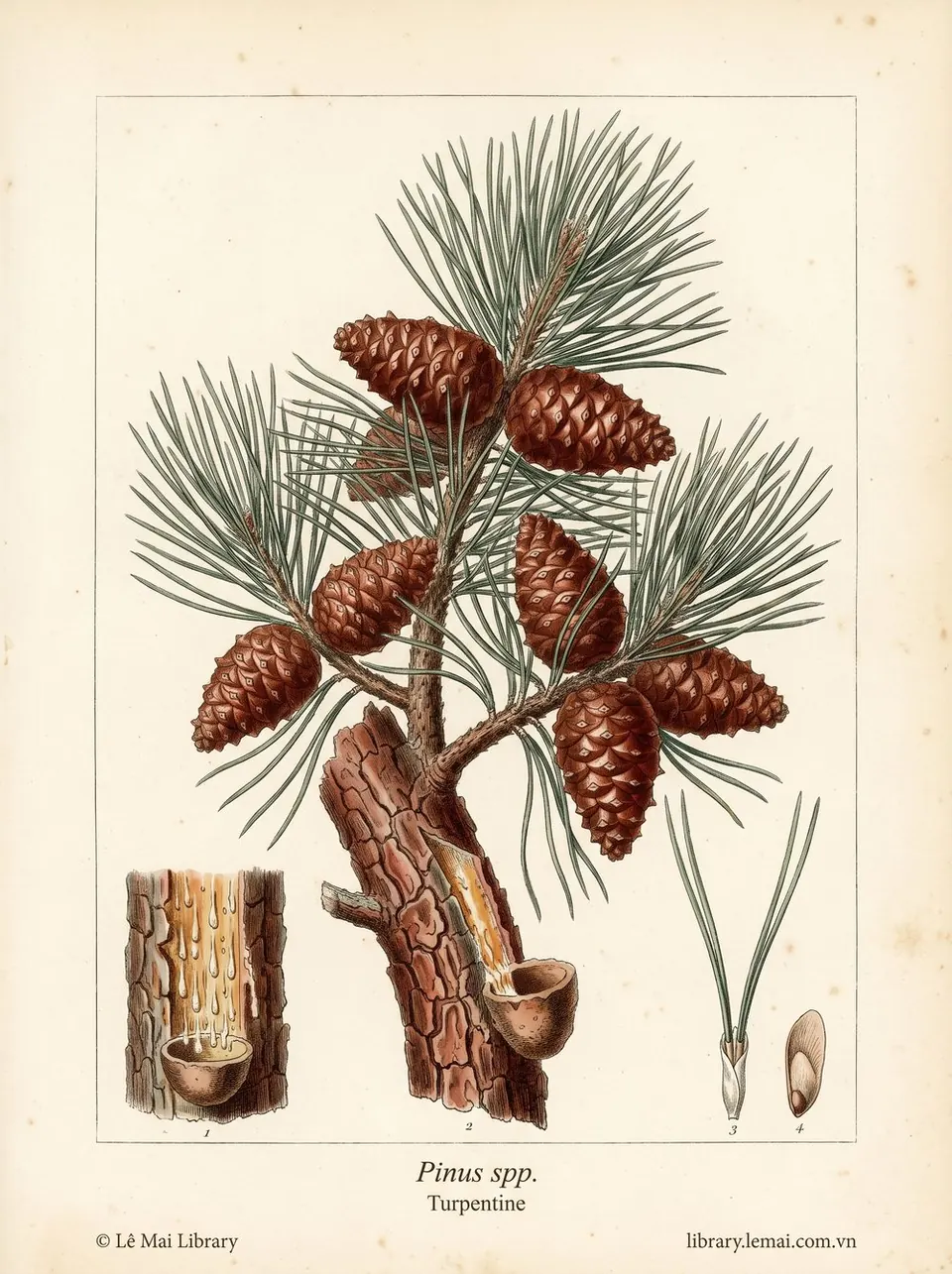
テレピン油
Nhựa thông
Pinus spp.
Spirit of turpentine
Turpentine is steam-distilled from the resin of several pine species, such as Pinus pinaster, Pinus palustris and Pinus elliottii, in the pine family. It smells sharp, fresh and resinous; its main components are α-pinene and β-pinene. Historically it served as a solvent for artists' oils and varnish; once oxidized it strongly sensitizes skin, so it is not recommended in mainstream cosmetics.
Updated 4 Nov 2026 · Lê Mai Team
α-Pinene and β-pinene dominant. Oxidation products strongly sensitize skin.
Historically used as a solvent for oil paints, not cosmetic.
Not recommended in mainstream cosmetics.
| α-Pinene | 50.0 – 75.0 % |
| β-Pinene | 10.0 – 25.0 % |
| δ-3-Carene | 5.0 – 15.0 % |
Turpentine from resin of several Pinus species, Pinus pinaster, Pinus palustris, Pinus elliottii.
Family Pinaceae.
Traditionally used for oil painting and varnish, not cosmetics.