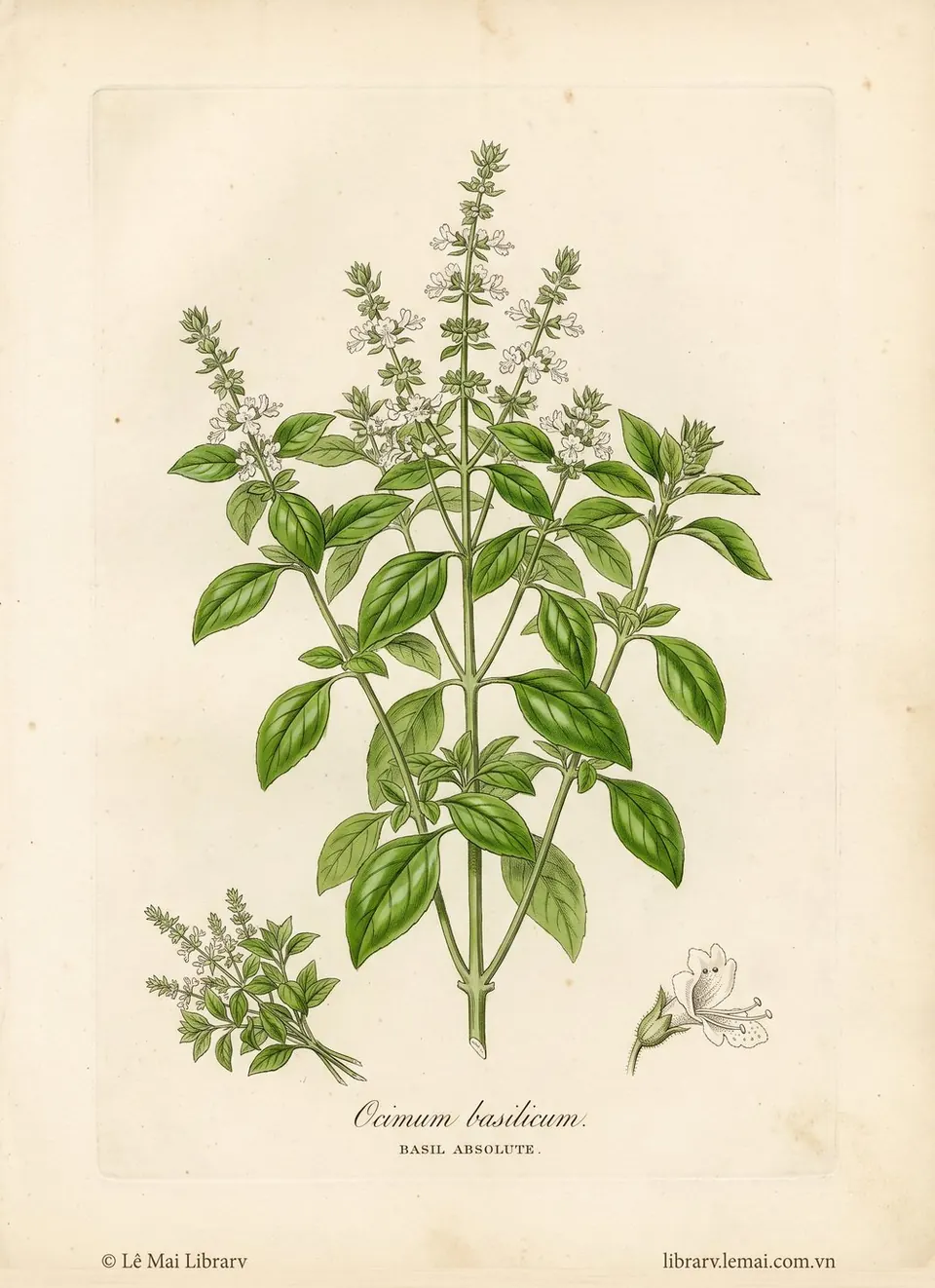
バジル・アブソリュート
Húng quế absolute
Ocimum basilicum
Basil concrete, Basilic absolue, Sweet basil absolute
Basil absolute is solvent-extracted, via a concrete, from the leafy flowering tops of Ocimum basilicum, a member of the mint family produced in Egypt, India and France. It smells of fresh basil, anise, licorice and a touch of clove, sweeter and rounder than the essential oil; its main component is linalool or estragole depending on the chemotype. Estragole and methyleugenol are IFRA-restricted, so check the batch analysis.
Updated 4 Nov 2026 · Lê Mai Team
Fresh basil, anise, liquorice, a light clove, green. Sweeter and rounder than the oil, with hay and cooked-herb facets.
Estragole (methyl chavicol) is IFRA-restricted (2023); methyl eugenol is IFRA-restricted (2023). Both may occur in basil depending on chemotype and count toward limits per product category.
Linalool and eugenol are EU-labelled allergens above threshold. Store dark, sealed and cool.
| Linalool | major, chemotype-dependent |
| Estragole | major, chemotype-dependent |
| Eugenol | present |
| Methyleugenol | trace to minor |
| 1,8-Cineole | present |
Ocimum basilicum is an annual mint-family herb grown throughout the tropics and warm temperate zones. Egypt is a major source of basil for flavour and fragrance. In Vietnam basil is a familiar kitchen herb, but culinary varieties differ from those grown for oil.
Basil has several chemotypes. European types are rich in linalool; tropical types in estragole or methyl cinnamate. The library has oil pages for the main chemotypes.
An absolute is made in two steps. The raw material is extracted with a non-polar solvent such as hexane to give a waxy concrete. The concrete is then washed with ethanol, chilled to precipitate waxes, filtered and freed of alcohol. What remains is the absolute.
The absolute keeps heavier fractions and undergoes less heat change than the oil. It smells rounder and sweeter with a hay note, like slightly wilted basil. The lot's estragole to linalool ratio sets the odour direction and the usage limit.
In perfumery basil absolute serves green, cologne, herbal and masculine accords. It pairs with citrus, mint, orange flower and woods.
Since estragole and methyl eugenol are both under IFRA standards, each lot's certificate of analysis is the basis for the maximum level.
Basil absolute is usually a dark green paste. On evaluation the anise note comes first, followed by green leaf and hay. In soap dosage is low; the basil note survives saponification better than the oil.