α-Terpinene
1-Methyl-4-(1-methylethyl)-1,3-cyclohexadiene
p-Mentha-1,3-diene · α-Terpine
化学組成 · Constituent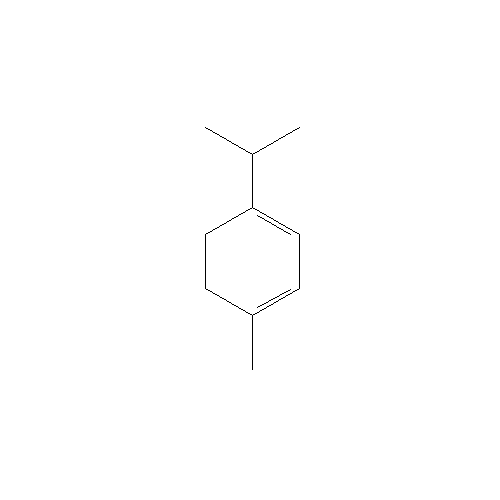
1-Methyl-4-(1-methylethyl)-1,3-cyclohexadiene
p-Mentha-1,3-diene · α-Terpine
化学組成 · Constituent
α-Terpinene is an oxidation-prone constituent that can cause skin sensitization, particularly in individuals already sensitized to tea tree oil.
Skin. At 5 percent on 25 volunteers it was neither irritating nor sensitizing. Among 7 dermatitis patients already sensitized to tea tree oil, 5 reacted positively to 1 percent α-terpinene. At 5 percent it sensitized 11 of 16 dermatitis patients sensitized to tea tree.
Oral. Acute oral LD50 in rats was 1.68 g/kg.
Reproductive. Pregnant rats given 30 to 250 mg/kg α-terpinene by gavage on gestational days 6 to 15. The two highest doses were maternally toxic. Delayed ossification and minor skeletal malformations appeared at 60 mg/kg or more. The NOAEL cannot be established because the test compound had only 89 percent purity.
Mutagenicity. Not mutagenic in the Ames test. Shows strong antimutagenic activity through PROD inhibition.
| Peta | 14.9 % |
| Tea tree | 5.0 – 13.0 % |
| Mace | 4.8 – 7.5 % |
| Ravensara leaf | 1.8 – 7.1 % |
| Marjoram (sweet) | 3.0 – 5.9 % |
| Nutmeg (East Indian) | 0.1 – 5.2 % |
| Pine (dwarf) | 0.2 – 4.5 % |
| Chamomile (Roman) | 0 – 4.5 % |
| Nutmeg (West Indian) | 0.8 – 4.2 % |
| Feverfew | 2.2 – 3.8 % |
| Plai | 3.5 % |
| Pine (Scots) | 0.1 – 3.2 % |
| Curry leaf | 2.8 % |
| Juniperberry | 0 – 2.6 % |
| Fir (Douglas) | 2.0 % |
| Labrador tea | 1.5 % |
| Tansy (blue) | 0.1 – 1.2 % |
| Hinoki leaf | 1.1 % |
α-Terpinene, together with γ-terpinene and terpinolene, comprises the tea tree constituents most prone to causing sensitization on oxidation. Proper storage substantially reduces the risk.