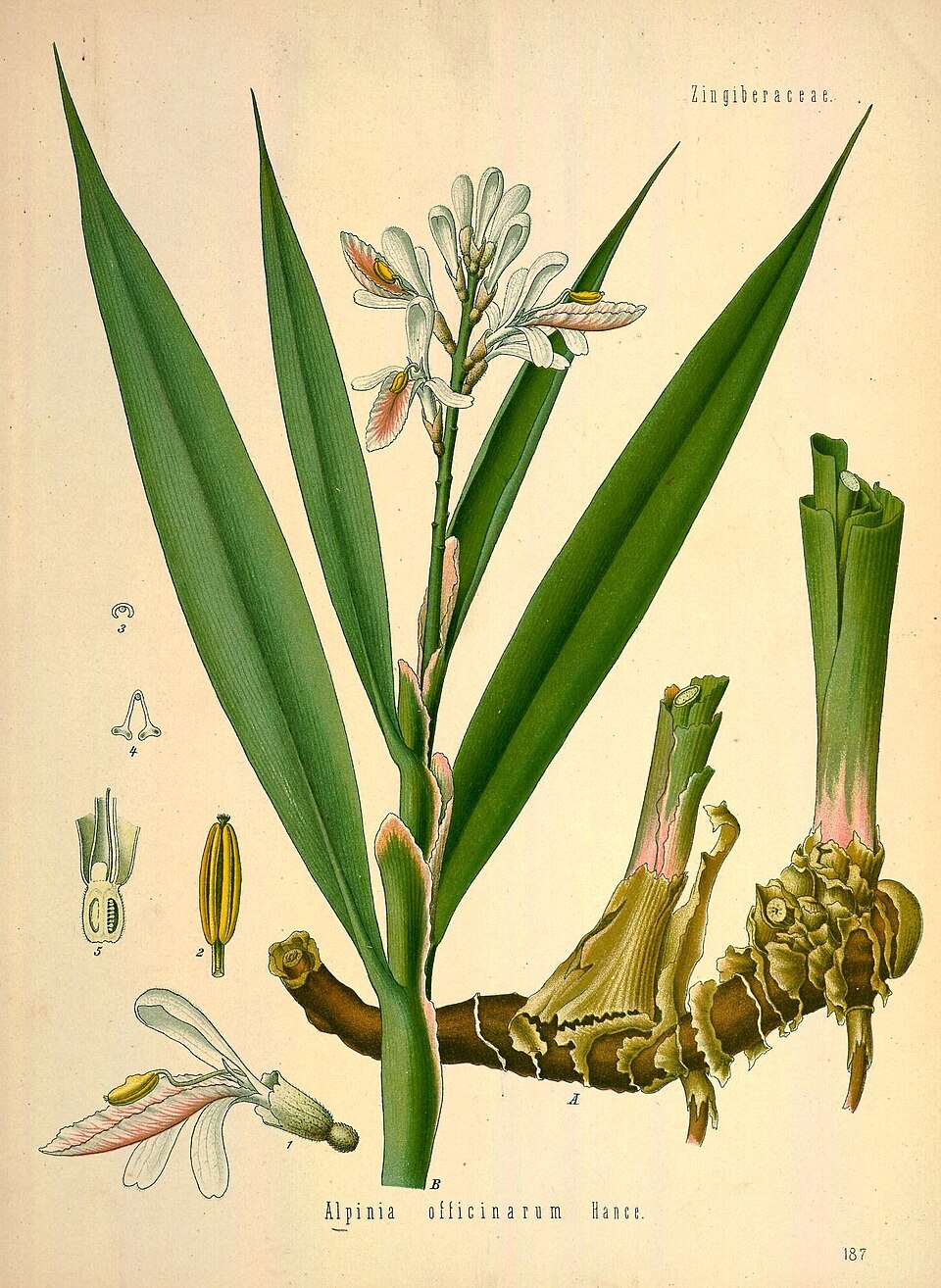
ガランガル (レッサー)
Riềng tẻ
Alpinia officinarum
Chinese ginger, Languas officinarum
Oils high in 1,8-cineole can cause CNS and breathing problems in young children.
Contraindication: do not apply to or near the face of infants or children.
GRAS status.
Likely not hazardous in pregnancy based on data for 1,8-cineole, α-pinene and (+)-limonene.
Significant anticarcinogenic activity against oral epidermal carcinoma and mouse leukemia cells.
| 1,8-Cineole | 49.6 % |
| β-Pinene | 6.6 % |
| α-Pinene | 5.8 % |
| α-Terpineol | 5.0 % |
| Camphene | 4.6 % |
| (+)-Limonene | 4.0 % |
| δ-Cadinene | 2.5 % |
| γ-Cadinene | 2.1 % |
| Terpinen-4-ol | 1.9 % |
| p-Cymene | 1.6 % |
| (E)-α-Bergamotene | 1.6 % |
| Camphor | 1.0 % |
Alpinia officinarum is a smaller herb of China and Southeast Asia, with a thinner rhizome than greater galangal. The 'Chinese ginger' name reflects its traditional Chinese medicinal and culinary use.
Family Zingiberaceae. See also maraba oil (same genus).