Camphene
2,2-Dimethyl-3-methylenebicyclo[2.2.1]heptane
3,3-Dimethyl-2-methylenenorcamphane · 3,3-Dimethyl-2-methylenenorbornane
化学組成 · Constituent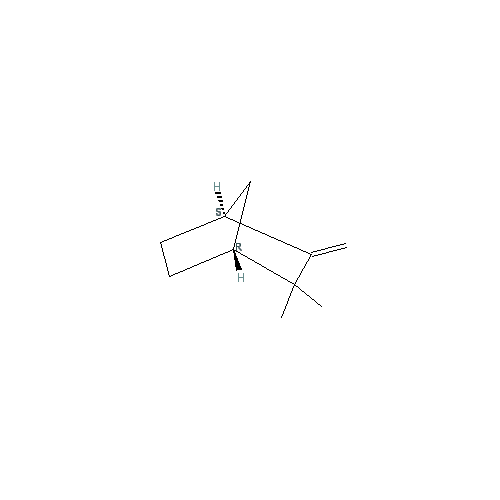
2,2-Dimethyl-3-methylenebicyclo[2.2.1]heptane
3,3-Dimethyl-2-methylenenorcamphane · 3,3-Dimethyl-2-methylenenorbornane
化学組成 · Constituent
Camphene is a simple monoterpene common in pine and mint oils. The compound presents low toxicity risk.
Skin. A 4 percent patch test on 25 volunteers caused no sensitization.
Oral. Acute oral LD50 in rats exceeds 5 g/kg; rabbit dermal LD50 exceeds 2.5 g/kg.
Reproductive. Rat developmental NOAEL is 1,000 mg/kg/day on gestation days 6–15. Maternal NOAEL is 250 mg/kg/day due to temporary reduced motor activity at the high dose.
Mutagenicity. Non-mutagenic in the Ames test. (±)-Camphene is non-genotoxic in Chinese hamster ovary cells.
| Spruce (Norway) | 7.0 – 26.5 % |
| Fir needle (Siberian) | 24.2 % |
| Fir needle (Japanese) | 18.5 % |
| Fir (Douglas) | 16.7 % |
| Fir needle (silver) | 14.8 % |
| Valerian (European) | 0.1 – 14.4 % |
| Spruce (red) | 12.9 % |
| Pine (grey) | 2.8 – 12.1 % |
| Sage (Spanish) | 4.6 – 10.6 % |
| Cistus | 1.1 – 10.3 % |
| Rosemary | 2.8 – 10.0 % |
| Spruce (white) | 9.9 % |
| Fir needle (Canadian) | 3.5 – 9.7 % |
| Pine (Scots) | 1.6 – 9.4 % |
| Sage (Dalmatian) | 0 – 8.6 % |
| Spruce (black) | 8.1 % |
| Feverfew | 5.4 – 7.7 % |
| Lavender (Spanish) | 2.8 – 5.5 % |
| African bluegrass | 3.6 – 5.4 % |
| Pine (white) | 5.2 % |
| Thyme (borneol CT) | 5.0 % |
Camphene is primarily metabolized through epoxidation and hydration. In rabbits, glucuronide conjugates of a hydroxyl derivative (camphenol) and the monoglucuronide of camphene glycol are excreted. After intravenous 0.6 mg/kg in a human subject, 3.6 percent was eliminated through expired air within three hours, mostly within five minutes.
Camphene contributes the fresh pine note to coniferous oils. The compound also shows cholesterol-lowering activity in preliminary rodent studies.