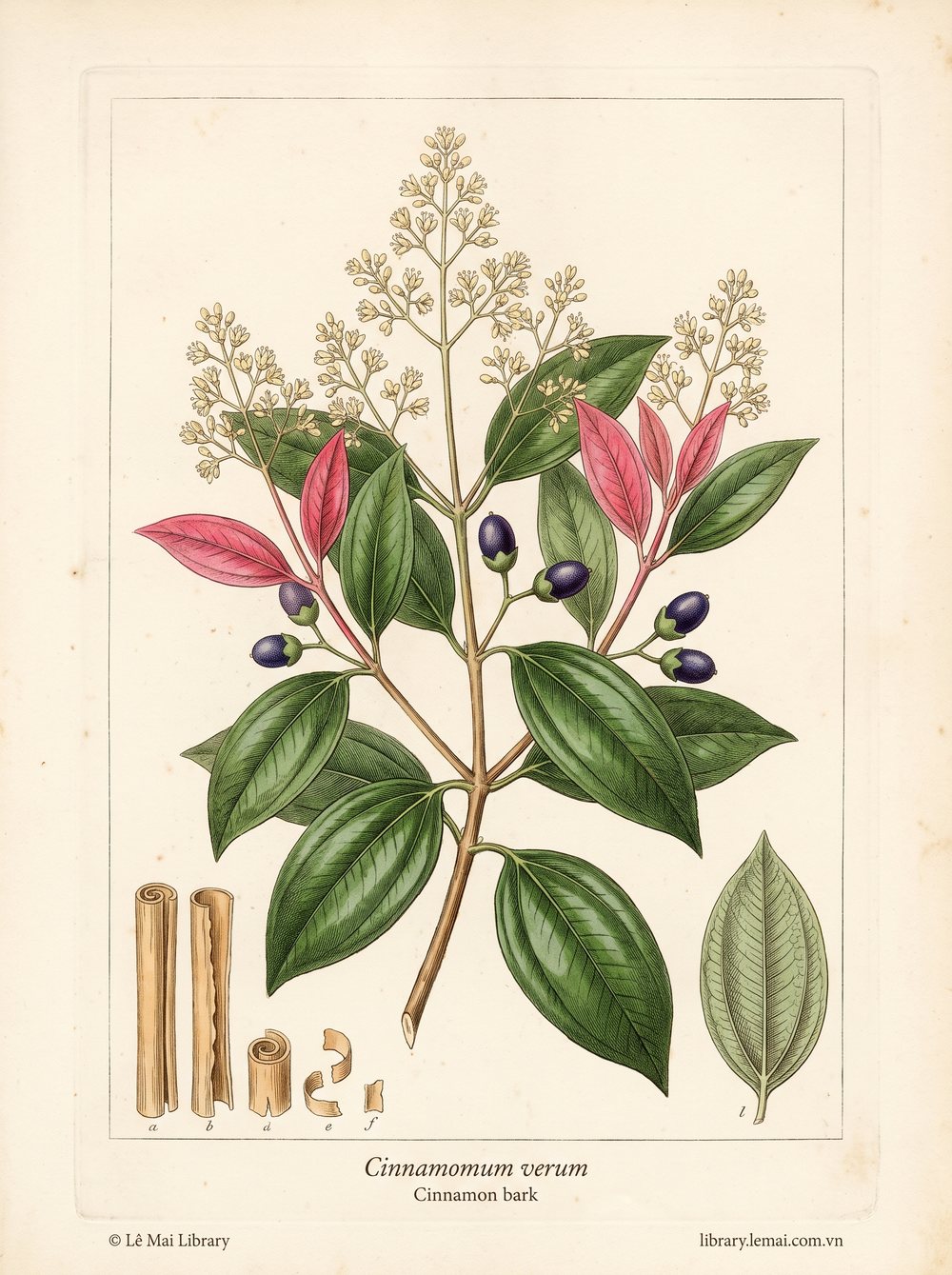
シナモンバーク
Quế (vỏ)
Cinnamomum verum
Ceylon cinnamon, True cinnamon, Cinnamomum zeylanicum
Drug interactions. May inhibit blood clotting. Embryotoxic. High risk of skin sensitization. Low risk of mucous membrane irritation.
Broad contraindications: pregnancy, breastfeeding.
Oral: diabetes medication, anticoagulant medication, before major surgery, peptic ulcer, hemophilia.
GRAS status. Maximum adult oral dose 200 mg daily.
Maximum dermal use level 0.07 percent based on 75.7 percent cinnamaldehyde and a dermal limit of 0.05 percent.
Cinnamon bark oil is non-phototoxic. Undiluted oil is severely irritating, cases of severe burns in children have been reported from direct skin contact.
A rare safrole chemotype exists with 11 percent safrole in bark oil and 52 percent in leaf oil. Such safrole-containing oils present a carcinogenic risk.
| (E)-Cinnamaldehyde | 63.1 – 75.7 % |
| Eugenol | 2.0 – 13.3 % |
| (E)-Cinnamyl acetate | 0.3 – 10.6 % |
| Linalool | 0.2 – 7.0 % |
| β-Caryophyllene | 1.3 – 5.8 % |
| p-Cymene | 1.7 – 2.5 % |
| 1,8-Cineole | 0.4 – 2.3 % |
| Benzaldehyde | tr – 2.2 % |
| α-Terpineol | 0.4 – 1.4 % |
| Camphor | tr – 1.4 % |
| Terpinen-4-ol | 0.4 – 1.1 % |
| Safrole | 0 – 0.04 % |
Cinnamomum verum (synonym C. zeylanicum) is a tree of Sri Lanka and southern India. This is true cinnamon, distinct from cassia (Cinnamomum cassia) which is Chinese cinnamon.
The bark oil is steam-distilled from the dried inner bark of young trees. Sri Lankan production yields two qualities: a premium from the inner bark, and a second quality from chippings and shoot bark, the second quality has lower cinnamaldehyde and up to 20 percent eugenol.
Family Lauraceae. Same family as cassia, camphor, ravensara.
Cinnamon bark oil is frequently adulterated with synthetic cinnamaldehyde and natural eugenol. Occasionally cassia oil or artificially reconstituted oils are sold as cinnamon bark. Reconstitutions may include cinnamon leaf oil and synthetic cinnamaldehyde.