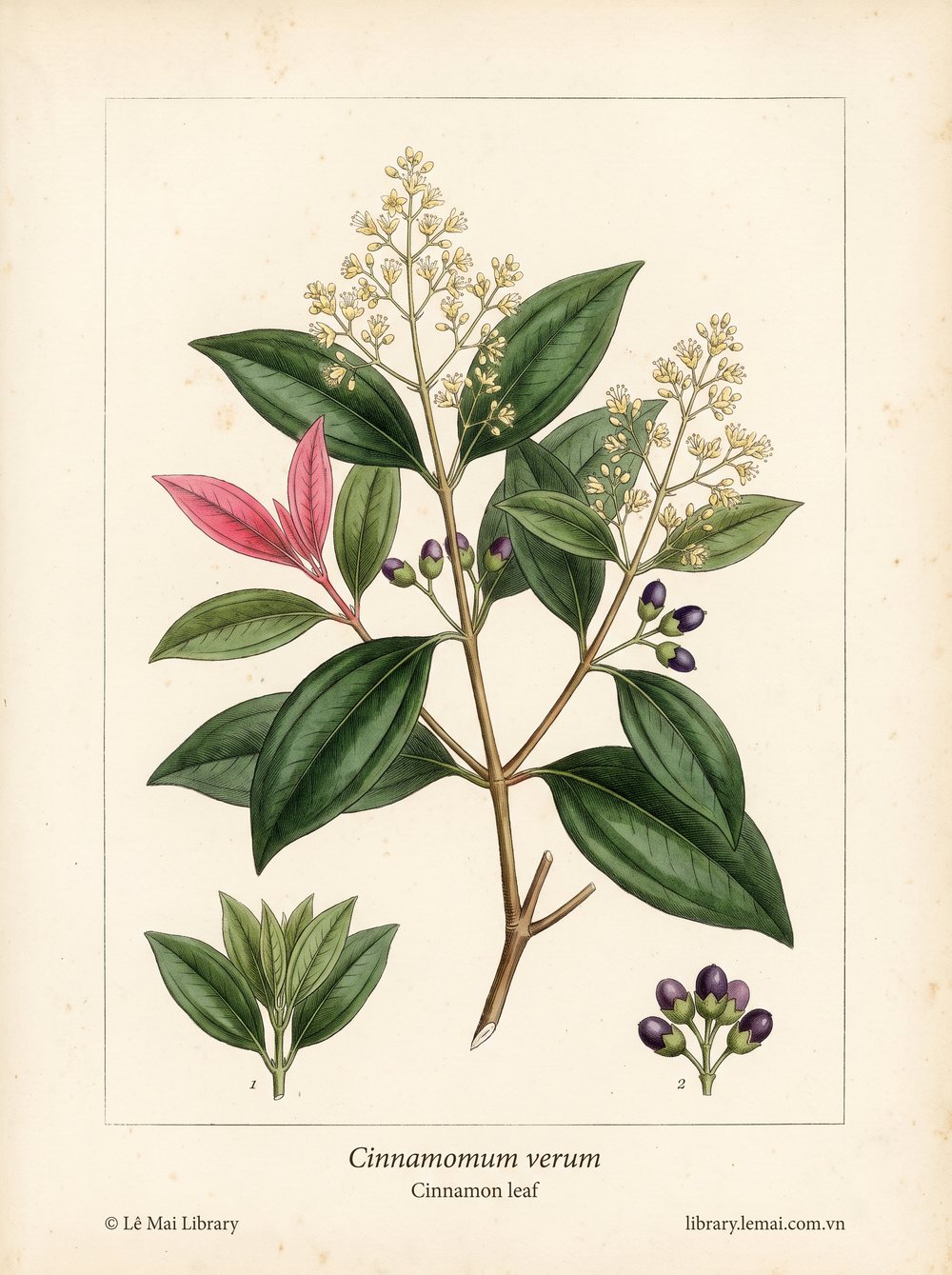
シナモンリーフ
Quế (lá)
Cinnamomum verum
Cinnamomum zeylanicum
Drug interactions. May inhibit blood clotting. May contain safrole. Moderate risk of skin sensitization. Low risk of mucous membrane irritation.
Oral: pethidine, MAOIs, SSRIs, anticoagulant medication, before major surgery, peptic ulcer, hemophilia.
Maximum adult oral dose 175 mg daily.
Maximum dermal use level 0.6 percent based on 87 percent eugenol and a dermal limit of 0.5 percent.
Cinnamon leaf oil contains more eugenol than cinnamaldehyde, distinct safety profile from cinnamon bark.
Occupational ACD has been reported, some through airborne contact.
| Eugenol | 68.6 – 87.0 % |
| Eugenyl acetate | 1.0 – 8.1 % |
| Linalool | 2.0 – 5.0 % |
| (E)-Cinnamyl acetate | 0.8 – 4.6 % |
| Benzyl benzoate | tr – 4.1 % |
| β-Caryophyllene | 1.9 – 3.7 % |
| (E)-Cinnamaldehyde | 0.6 – 1.1 % |
| Safrole | 0 – 1.0 % |
| Cinnamyl alcohol | 0 – 0.6 % |
Same tree as cinnamon bark, Cinnamomum verum, but the oil is distilled from leaves. Eugenol content is 4 to 8 times higher than bark oil.
Leaf oil is significantly cheaper than bark. In perfumery, leaf oil is often blended in as a substitute for bark when cost-reducing.
Family Lauraceae.
May be adulterated by addition of clove fractions, eugenol or cinnamic aldehyde.