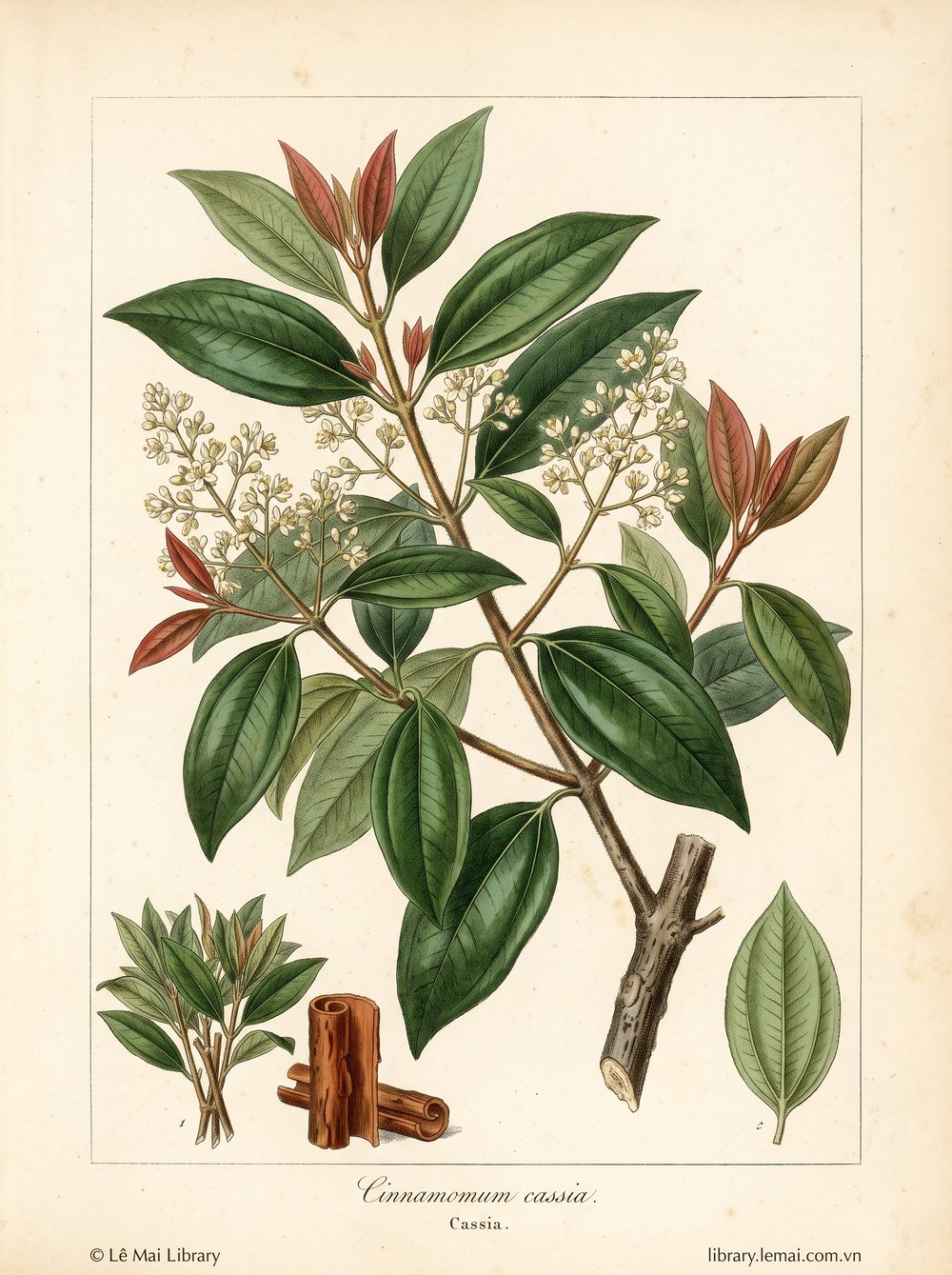
カシア
Quế Cassia, Quế Trung Quốc
Cinnamomum cassia
Chinese cinnamon, False cinnamon, Cinnamomum aromaticum
May contain methyleugenol. Drug interactions. May inhibit blood clotting. Embryotoxic. High risk of skin sensitization. Low risk of mucous membrane irritation.
Broad contraindications: pregnancy, breastfeeding.
Oral: diabetes medication, anticoagulant medication, before major surgery, peptic ulcer, hemophilia.
Dermal: avoid on hypersensitive, diseased or damaged skin, and on children under 2 years.
Maximum adult oral dose 200 mg daily.
Maximum dermal use level 0.05 percent based on 100 percent total (E)- and (Z)-cinnamaldehyde and a dermal limit of 0.05 percent for cinnamaldehyde.
Cassia oil is significantly more toxic dermally (rabbits) than orally (rats). Cinnamaldehyde sensitization can be quenched by (+)-limonene and eugenol, in ten people with urticaria from cinnamaldehyde, six showed greatly diminished reaction when cinnamaldehyde was combined with eugenol.
| (E)-Cinnamaldehyde (bark) | 73.2 – 89.4 % |
| (E)-Cinnamaldehyde (leaf) | 54.6 – 90.1 % |
| (Z)-Cinnamaldehyde | 0.4 – 12.3 % |
| (E)-Cinnamyl acetate | 0.1 – 12.5 % |
| Benzaldehyde | 0.4 – 6.3 % |
| 2-Phenylethyl acetate | 0 – 2.3 % |
| α-Terpineol | tr – 2.0 % |
| Coumarin | tr – 2.5 % |
| Salicylaldehyde | 0.04 – 3.1 % |
| Benzyl benzoate | tr – 2.9 % |
| α-Copaene (leaf) | tr – 2.2 % |
| Methyleugenol | tr – 0.1 % |
Cinnamomum cassia is a tropical Asian tree, native to China and Southeast Asia. Cassia oil is most commonly distilled from leaves and terminal branches. The bark may also be distilled along with the leaves, stalks and twigs, although both leaf and bark oils have similar composition.
Family Lauraceae. Same family as true cinnamon (Cinnamomum verum), but the two species differ in high cinnamaldehyde content and a distinct coumarin profile. Cassia contains coumarin (absent in true Ceylon cinnamon) and is one of the few essential oils with natural coumarin.
A commercial oil also exists from the bark of Cinnamomum loureirii Nees. in Vietnam, called Saigon cinnamon or Vietnamese cinnamon, with composition reported similar to cassia bark, traded in limited quantities in the West.
May be adulterated with synthetic cinnamaldehyde, methyl cinnamic aldehyde and coumarin.