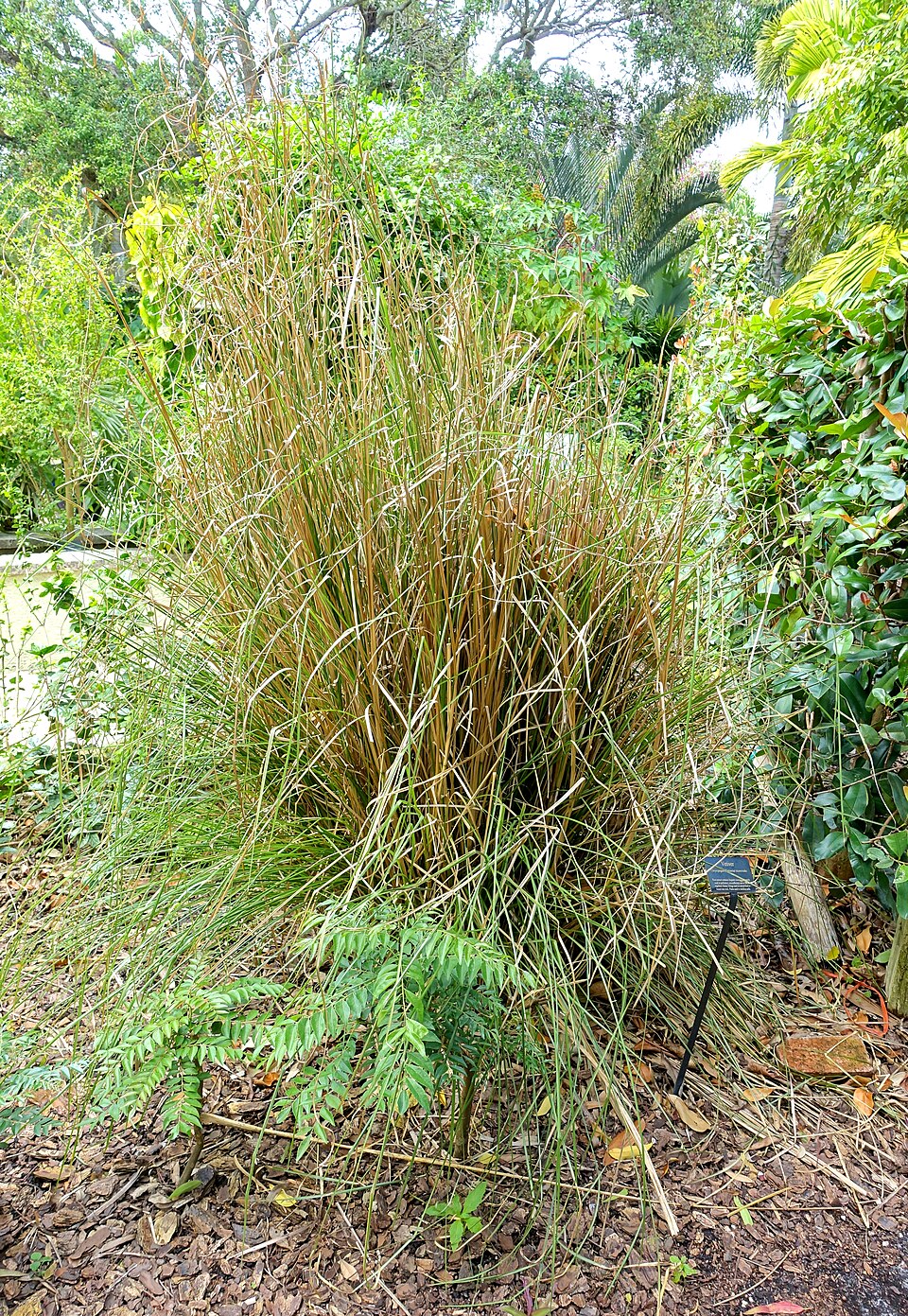
ベチバー
Hương bài
Chrysopogon zizanioides
Vetiveria zizanioides, Khus, Khus-khus
Vetiver is classified as GRAS by the US FDA.
Very low skin sensitization risk.
Not phototoxic.
No data indicates hazard in pregnancy.
Khusimol and vetivones are main constituents, sesquiterpenoids characteristic of vetiver, without significant adverse effects.
Suited to all skin types. One of the safest essential oils.
| Khusimol (zizanol) | 3.4 – 13.7 % |
| Vetiselinenol (isonootkatol) | 1.3 – 7.8 % |
| Cyclocopacamphan-12-ol (epimer A) | 1.0 – 6.7 % |
| α-Cadinol | 0 – 6.5 % |
| α-Vetivone (isonootkatone) | 2.5 – 6.4 % |
| β-Vetivenene | 0.2 – 5.7 % |
| β-Vetivone | 2.0 – 4.9 % |
| β-Vetispirene | 1.5 – 4.5 % |
| γ-Vetivenene | 0.2 – 4.3 % |
| α-Amorphene | 1.5 – 4.1 % |
| Khusenic acid | 0 – 4.8 % |
Chrysopogon zizanioides (previously Vetiveria zizanoides) is a tropical grass with very deep roots, up to 3-4m. Native to India and Southeast Asia.
Oil production: mainly Haiti (world's largest), Indonesia (Java), India, Sri Lanka, China, Brazil.
Roots are harvested after 18-24 months of growth, dried and steam-distilled for 24-48 hours. The long process is needed to extract all heavy compounds from the roots.
Haitian vetiver is the gold standard, sweet, smoky, deeply balsamic notes. Indonesian (Java) vetiver is drier and smokier. Indian has higher khusimol, fresher 'green' notes.
In Vietnam, vetiver grass is grown for soil-erosion control (the roots hold soil exceptionally well). Commercial oil production is not yet at large scale.
Family Poaceae (Gramineae), same family as lemongrass, citronella, and palmarosa.
Vetiver oil is frequently adulterated, synthetic vetiveryl acetate, cedarwood blends, gurjun balsam, and copaiba balsam may be mixed in.
Verify quality by chiral GC-MS analysis. Khusimol/khusinol ratio and vetivones are key indicators.
Haitian vs Java vs Bourbon (Réunion) vetivers have slightly different chemistry, each source has a distinctive signature.
Aged vetiver (5-10 years) is preferred over fresh, smoother, more complex aroma. One of the few essential oils valued for 'aging'.
'Vetiveryl acetate' is a chemical derivative of vetiver, widely used in commercial perfumery. Different from the true essential oil.
Vetiver is one of the most important base notes in both classical and modern perfumery. Guerlain's 'Vetiver' (1959, reformulated) is among the classic masculine fragrances, defining the vetiver note in modern fragrance.
In masculine fragrance, vetiver is a signature note, Tom Ford Grey Vetiver, Frederic Malle Vetiver Extraordinaire, Le Labo Vetiver 46. Also common in unisex and niche fragrance.
Vetiver aroma: earthy, woody, lightly smoky, balsamic, with deep lasting character. Sometimes with rum, tobacco, leather notes. One of the most 'complex' natural notes, not perfectly replicable by synthesis.
In Indian culture, vetiver root (khus) is used in traditional window mats, when sprayed with water in summer, the vetiver aroma cools rooms. Still in use in West Bengal and Bihar.
In cosmetics, vetiver is a universal ingredient for fine fragrance, men's cologne, body lotion, and candles. Safe for all skin types. Reasonable pricing for a premium oil.
For the Lê Mai quiet luxury brand, vetiver is a potential signature ingredient, particularly for masculine or unisex lines. The Vietnamese context is meaningful given local cultivation.