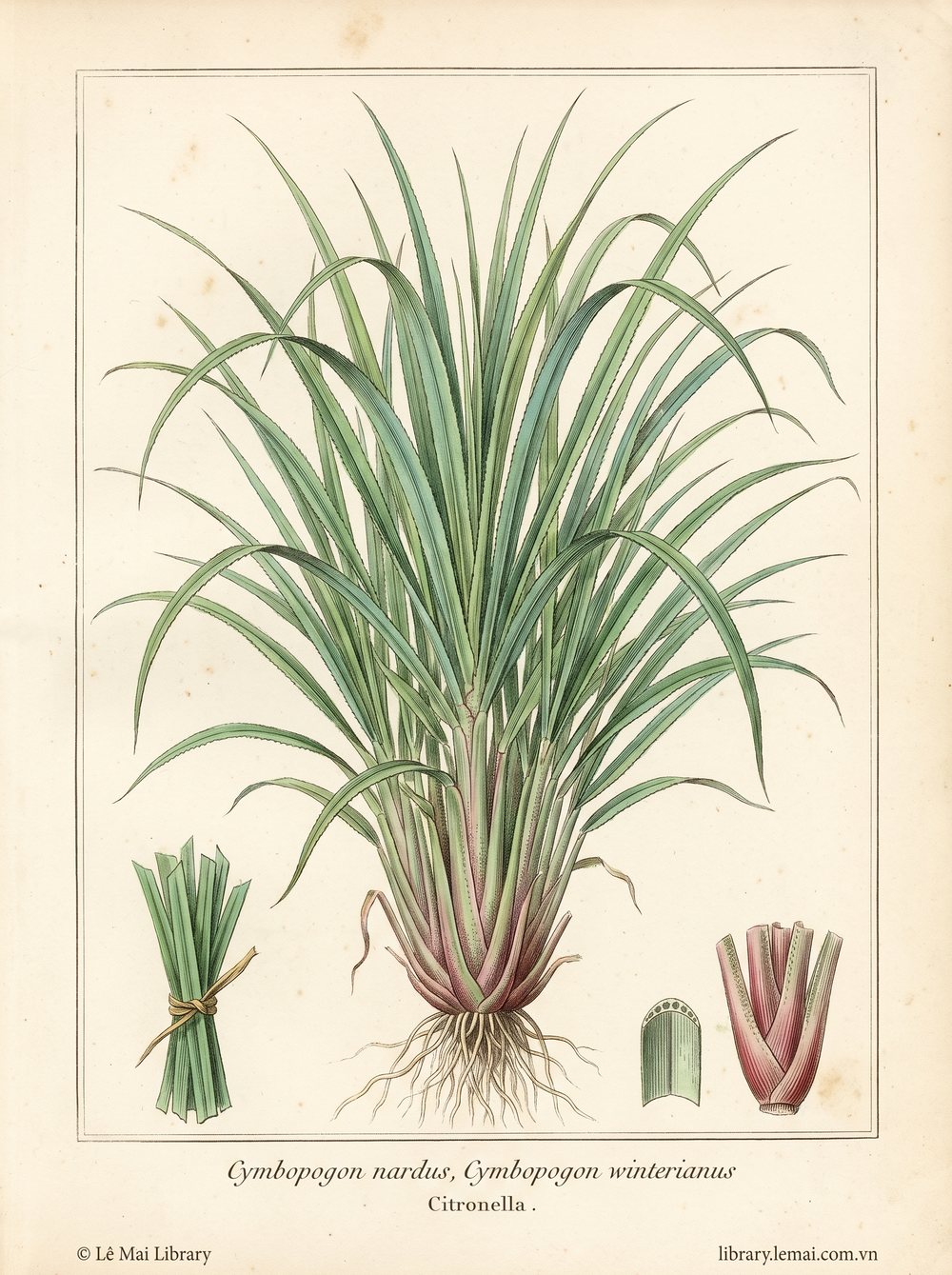
シトロネラ
Sả Java
Cymbopogon nardus, Cymbopogon winterianus
Theoretical drug interaction via CYP2B6. May contain methyleugenol. Low risk of skin sensitization.
GRAS status. Maximum dermal use level 18.2 percent, based on 29.1 percent geraniol and a dermal limit of 5.3 percent.
Two types: Sri Lanka type (Cymbopogon nardus, geraniol-citronellal balanced) and Java type (Cymbopogon winterianus, citronellal-rich, cleaner aroma).
In a clinical trial, 3.7 percent citronella oil repellent used daily for 4 months on 103 children recorded only 1 case of slight itching.
US EPA permits continued use as insect repellent. Canada's PMRA proposes phase-out, EU prohibits use as insect repellent (regulatory registration grounds, not safety). Citronella oil is unrestricted in EU cosmetics.
| Citronellal | 5.2 – 46.8 % (Sri Lanka) · 34.8 – 42.8 % (Java) |
| Geraniol | 16.8 – 29.1 % (Sri Lanka) · 22.1 – 25.4 % (Java) |
| (−)-Citronellol | 3.0 – 21.8 % (Sri Lanka) · 9.7 – 11.5 % (Java) |
| (+)-Limonene | 2.6 – 11.3 % (Sri Lanka) · 2.6 – 5.5 % (Java) |
| Geranyl acetate | 2.1 – 5.1 % |
| Methyleugenol | 0 – 1.7 % |
Cymbopogon nardus (Sri Lanka type) is the longest-traded species, produced in Sri Lanka.
Cymbopogon winterianus (Java type) is produced in Java, Taiwan and China in large volumes. Cleaner and more pleasant aroma than Sri Lanka. Most commercial citronella today is Java type.
Family Poaceae, same family as lemongrass and palmarosa.