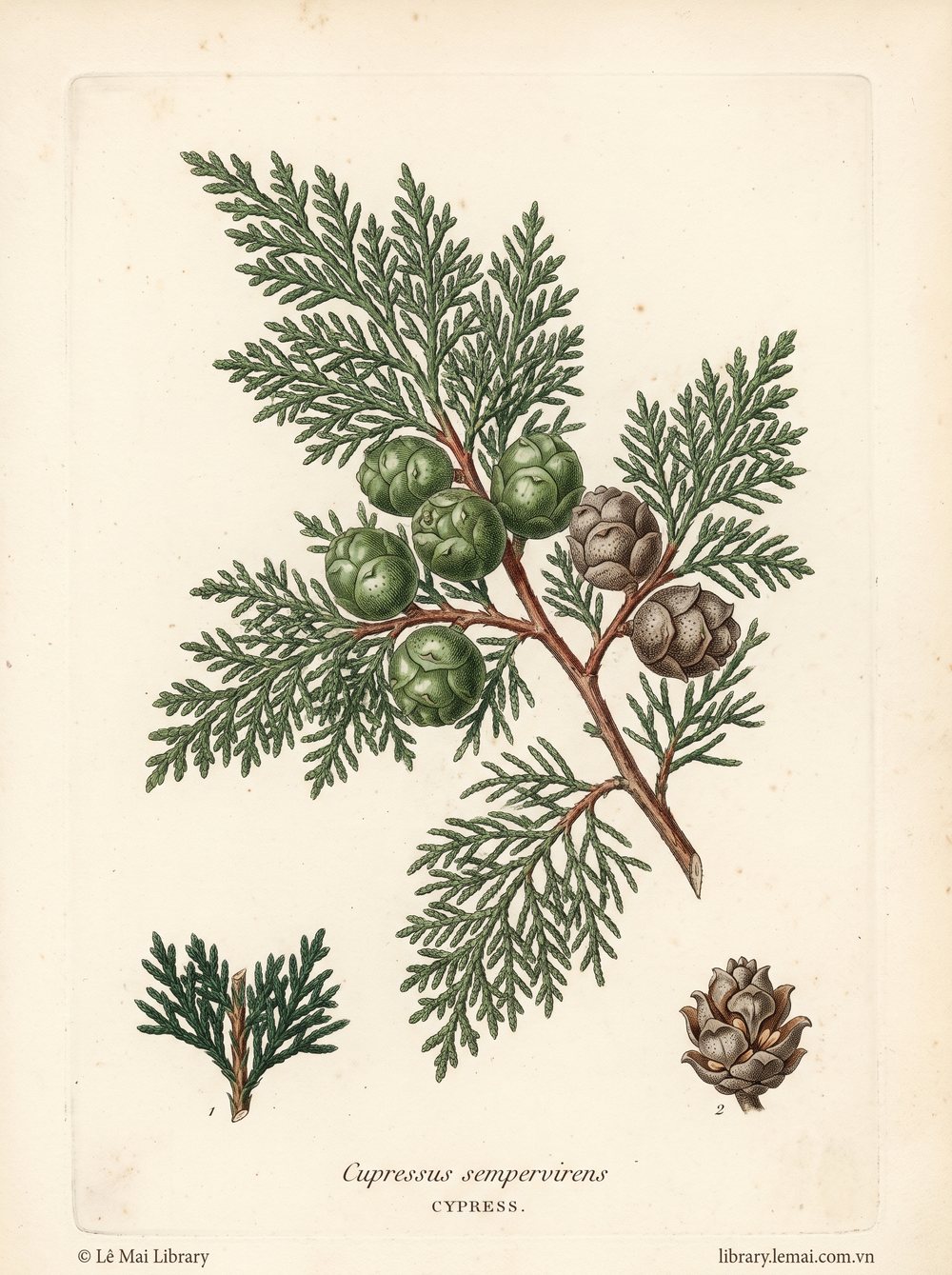
サイプレス
Bách
Cupressus sempervirens
Italian cypress, Mediterranean cypress
Oxidation products of α-pinene and δ-3-carene may sensitize skin.
Store in dark, sealed, refrigerated container. Add an antioxidant to formulations.
No significant irritation at 5 percent test level. Non-phototoxic.
A 65-year-old aromatherapist with multiple essential oil sensitivities reacted to 5 percent cypress oil and weakly to 1 percent.
Likely not hazardous in pregnancy based on α-pinene, β-myrcene and (+)-limonene data.
| α-Pinene | 20.4 – 52.7 % |
| δ-3-Carene | 15.2 – 21.5 % |
| Cedrol | 2.0 – 7.0 % |
| α-Terpinyl acetate | 4.1 – 6.4 % |
| Terpinolene | 2.4 – 6.3 % |
| (+)-Limonene | 2.3 – 6.0 % |
| β-Pinene | 0.8 – 2.9 % |
| Sabinene | 0.7 – 2.8 % |
| β-Myrcene | 0 – 2.7 % |
| δ-Cadinene | 1.7 – 2.6 % |
| Terpinen-4-yl-acetate | 1.2 – 2.1 % |
| α-Terpineol | 1.2 – 1.4 % |
| p-Cymene | 0.2 – 1.2 % |
| γ-Terpinene | 0.4 – 1.1 % |
Cupressus sempervirens is the tall, columnar cypress of the Mediterranean, the iconic form of the Tuscan countryside. The oil is mainly distilled in France and Spain.
Family Cupressaceae. Same family as juniper and Texan/Virginian cedarwoods.
In Greek and Roman traditional medicine, cypress was used for circulatory disorders, a use still reflected in contemporary aromatherapy.
May be adulterated by addition of α-pinene, δ-3-carene and β-myrcene.