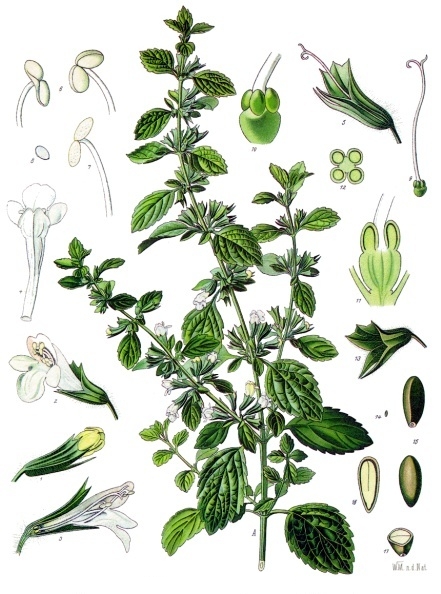
メリッサ
Tía tô đất
Melissa officinalis
Lemon balm, Sweet balm, Bee balm
Citral (geranial plus neral) constitutes about 64 percent. Skin sensitization risk above the dermal limit.
IFRA previously recommended that melissa oil should not be used as a fragrance ingredient. In 2009, IFRA introduced a dermal limit of 0.63 percent.
Drug interactions through CYP2B6 inhibition by citral. Use orally with caution.
Cardiovascular activity: melissa oil fed to male mice at 0.015 mg/day for 6 weeks reduced blood glucose by 65 percent, increased serum insulin, and improved glucose tolerance. Risk of interaction with antidiabetic medication.
Teratogenicity: citral carries a risk of birth defects at high doses. Recommended maximum daily oral dose in pregnancy: 65 mg.
Children under 2: avoid dermal use. Sensitive or damaged skin: use with caution.
Antioxidant addition recommended during formulation to guard against citral oxidation in citral-rich oils.
| Geranial | 23.4 – 38.0 % |
| Neral | 16.5 – 28.0 % |
| Citronellal | 5.0 – 13.7 % |
| β-Caryophyllene | 4.6 – 8.0 % |
| (E)-β-Ocimene | 1.0 – 5.0 % |
| Geraniol | 1.0 – 4.0 % |
| α-Caryophyllene | 0.5 – 3.0 % |
| (Z)-β-Ocimene | 0.5 – 2.5 % |
| β-Pinene | 0.5 – 2.0 % |
| Linalool | 0.3 – 1.5 % |
Melissa officinalis is a perennial herb from the Mediterranean and Western Asia. The leaves have a soft citrus aroma with a hint of honey.
Oil yield is very low, only 0.01 to 0.05 percent of fresh leaf weight. About 7 tons of fresh leaf are needed to produce 1 kg of essential oil.
Main production: Bulgaria, France, Germany, Hungary, Egypt. True melissa is among the most expensive essential oils on the market, prices can reach 8,000-12,000 USD/kg.
The English name 'lemon balm' reflects the citrus aroma of the leaves. The name 'melissa' comes from ancient Greek meaning 'honeybee', the flowers attract many bees.
Family Lamiaceae (Labiatae), same family as mint, basil, and rosemary.
True melissa is among the most adulterated essential oils on the market. Natural yield is very small while demand is large.
Common adulterants: lemongrass oil, lemon-scented gum oil (Eucalyptus staigeriana = 'Australian lemon balm'), citronella oil, synthetic citral.
Many commercial products labeled 'melissa' are actually melissa-blends or entirely synthetic. Verification by chiral GC-MS analysis is mandatory for premium sourcing.
True melissa has a characteristic chiral signature: the ratio of (R)-(-) to (S)-(+) enantiomers of β-citronellol and some other terpenes.
True melissa aroma is distinctive: soft citrus, honey, herbaceous, intense but crystalline, without the sharp note of lemongrass or citronella.
True melissa has been extensively studied for anxiolytic, sleep-supportive, and memory-supportive effects. Unlike most citral-rich oils, melissa has a unique aromatic and phytochemical profile.
Strong antioxidant activity, DPPH test IC50 of just 7.6 μg/mL.
In European herbal medicine, melissa leaves have been used for anxiety, insomnia, and digestive issues for over 1,000 years. Avicenna (980-1037 CE) wrote that melissa 'makes the heart joyful'.
In cosmetics, melissa is used sparingly in premium products due to high cost and IFRA limits. Suited for niche perfumery and relaxation-focused products.
Note: 'Australian lemon balm' (Eucalyptus staigeriana, under letter L) is NOT true melissa, sometimes sold by mistake or by intent to reduce cost.