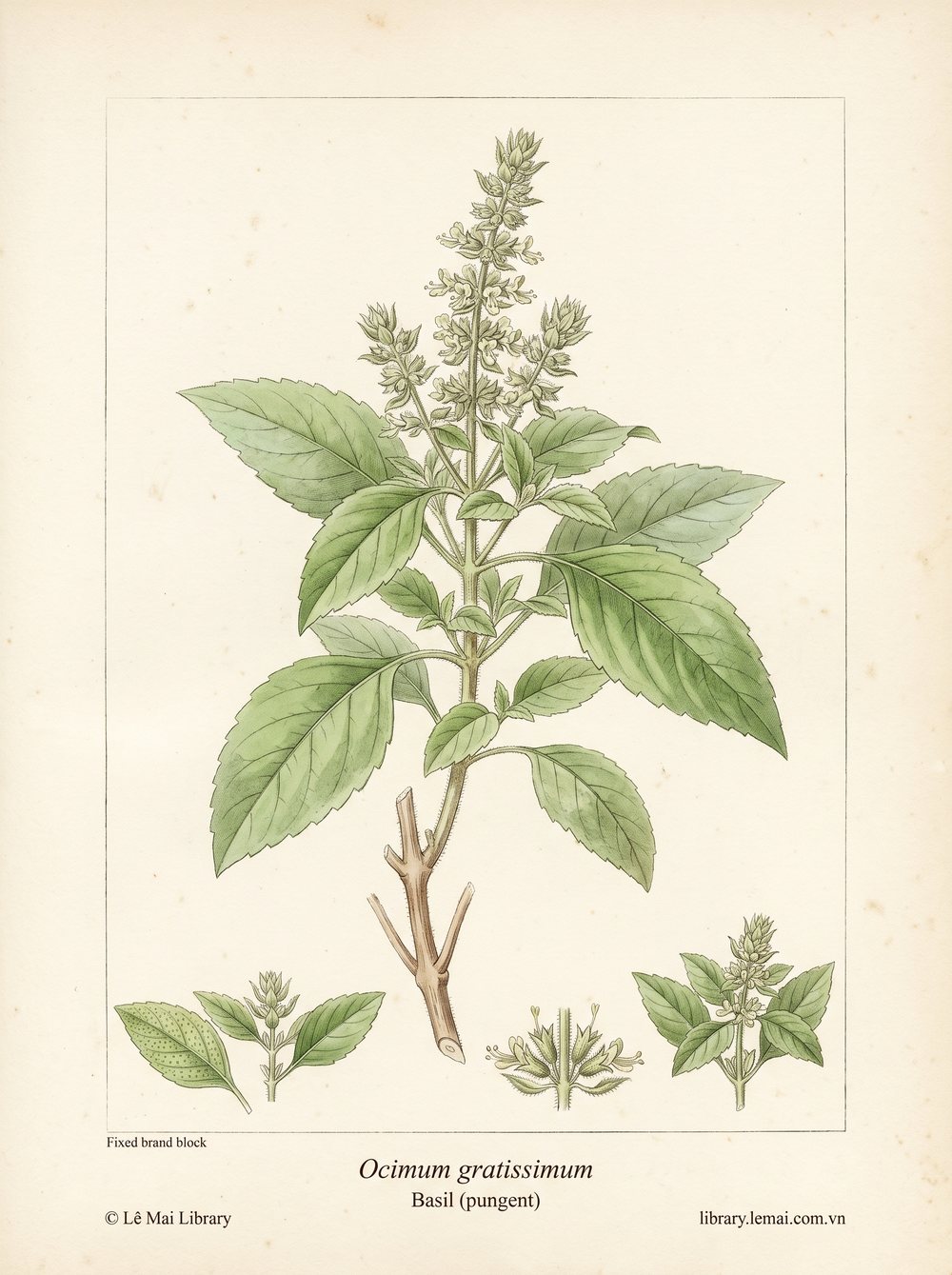
バジル パンジェント
Húng quế cay
Ocimum gratissimum
Shrubby basil, Tree basil, Russian basil, East Indian basil, Clocimum
May contain estragole and methyleugenol. May inhibit blood clotting due to high eugenol.
Low to moderate risk of skin and mucous membrane sensitization.
Oral: avoid with pethidine, MAOIs, SSRIs, anticoagulants. Avoid before major surgery, peptic ulcer, hemophilia, low blood pressure.
Maximum adult oral dose 159 mg daily. Maximum dermal use level 0.9 percent, based on 56.2 percent eugenol and a dermal limit of 0.5 percent.
Methyleugenol present at 0.4 percent, a carcinogen requiring strict limits.
| Eugenol | 62.9 % |
| (E)-β-Ocimene | 20.6 % |
| Isoeugenol | 2.4 % |
| β-Caryophyllene | 1.3 % |
| Methyleugenol | 0.4 % |
| Estragole | 0.2 % |
The eugenol chemotype of Ocimum gratissimum, produced almost exclusively in India. A hybrid strain containing 85 – 90 percent eugenol, called clocimum oil, was developed by the Regional Research Laboratory in Jammu.
The same species in the estragole/camphor chemotype is Madagascan basil, produced in Madagascar.
Other chemotypes rich in geraniol, thymol, p-cymene, or ethyl cinnamate exist but are not produced commercially.
The name 'clocimum' is short for 'clove-scented ocimum'.