β-Citronellal
3,7-Dimethyl-6-octenal
Citronellal · 2,3-Dihydrocitral
化学組成 · Constituent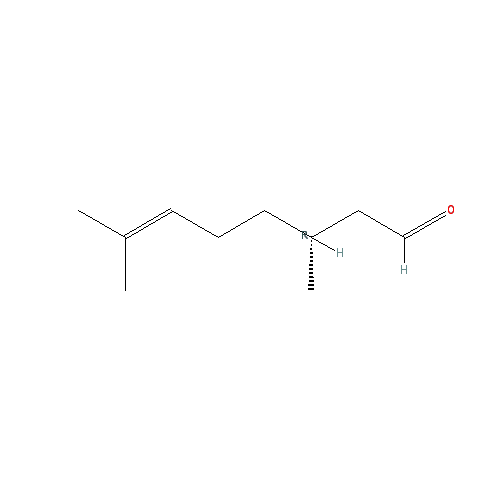
3,7-Dimethyl-6-octenal
Citronellal · 2,3-Dihydrocitral
化学組成 · Constituent
β-Citronellal is the major constituent of citronella, lemon-scented gum and combava leaf oils.
Skin. A 4 percent patch test on 25 volunteers caused no irritation or sensitization. However, the compound is reported as a mild irritant with occasional sensitization, believed to underlie citronella oil dermatitis. Two patch-test confirmed cases identify citronellal as the agent.
Oral. Acute oral LD50 in rats exceeds 5 g/kg; rabbit dermal LD50 is 2.5 g/kg.
Reproductive. Citronellal caused malformations in chick embryos by injection. In a 72-hour assay, citronellal had a 12 percent teratogenic value versus 7.9 percent control. Human relevance is unclear.
Mutagenicity. Non-mutagenic in the Ames test. Antimutagenic activity through PROD inhibition. Genotoxicity results in hamster cells are inconsistent.
| Lemon-scented gum | 66.9 – 86.2 % |
| Combava leaf | 58.9 – 81.5 % |
| Citronella | 5.2 – 46.8 % |
| Combava fruit | 0.4 – 16.8 % |
| Melissa | 4.5 – 13.3 % |
| Tea tree (lemon-scented) | 6.8 % |
| Lemon leaf | 1.5 – 2.9 % |
Citronellal is largely conjugated with glucuronic acid (about 25 percent) in rabbits, with a portion excreted as a dicarboxylic acid.
Citronellal is the key carrier of the mosquito-repellent activity of citronella oil. The compound is also used in industrial menthol synthesis.