Neral
(2Z)-3,7-Dimethyl-2,6-octadienal
(Z)-Citral · cis-Citral · β-Citral · Citral b
化学組成 · Constituent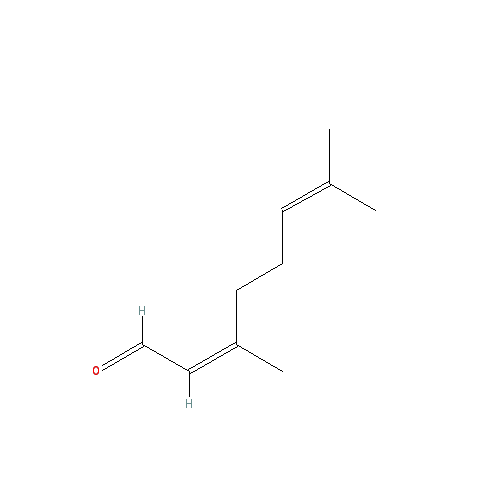
(2Z)-3,7-Dimethyl-2,6-octadienal
(Z)-Citral · cis-Citral · β-Citral · Citral b
化学組成 · Constituent
Neral is an isomer of geranial and a component of citral. The two isomers occur together in nature and are usually analyzed jointly.
Skin. In 20 eczema patients suspected of contact sensitization to cosmetics, there were no reactions to 1 percent neral. Of 182 dermatitis patients suspected of contact allergy to cosmetics, 2.6 percent reacted positively to 1 percent neral.
No separate toxicity data exist for neral, but see the Citral profile, of which neral is a naturally-occurring constituent.
| Myrtle (lemon) | 32.0 – 40.9 % |
| Lemongrass | 25.0 – 36.1 % |
| May chang | 25.5 – 33.8 % |
| Tea tree (lemon-scented) | 31.3 % |
| Verbena (lemon) | 22.9 – 29.6 % |
| Myrtle (honey) | 29.0 % |
| Melissa | 9.7 – 26.1 % |
| Lemon leaf | 6.5 – 25.3 % |
| Basil (lemon) | 16.0 – 17.1 % |
| Lemon balm (Australian) | 7.7 % |
| Thyme (lemon) | 7.1 % |
| Bergamot (wild) | 1.4 – 2.0 % |
| Lemon (expressed) | 0.4 – 2.0 % |
| Lemon (distilled) | 0.5 – 1.5 % |
| African bluegrass | 0.1 – 1.4 % |
| Lime (expressed) | 0.5 – 1.4 % |
| Orange (sweet) | < 1.3 % |
| Geranium | 0 – 1.1 % |
In most essential oils, neral and geranial occur together at an approximate 2:3 ratio. The sum of both isomers constitutes citral, a fragrance compound closely monitored for skin sensitization.