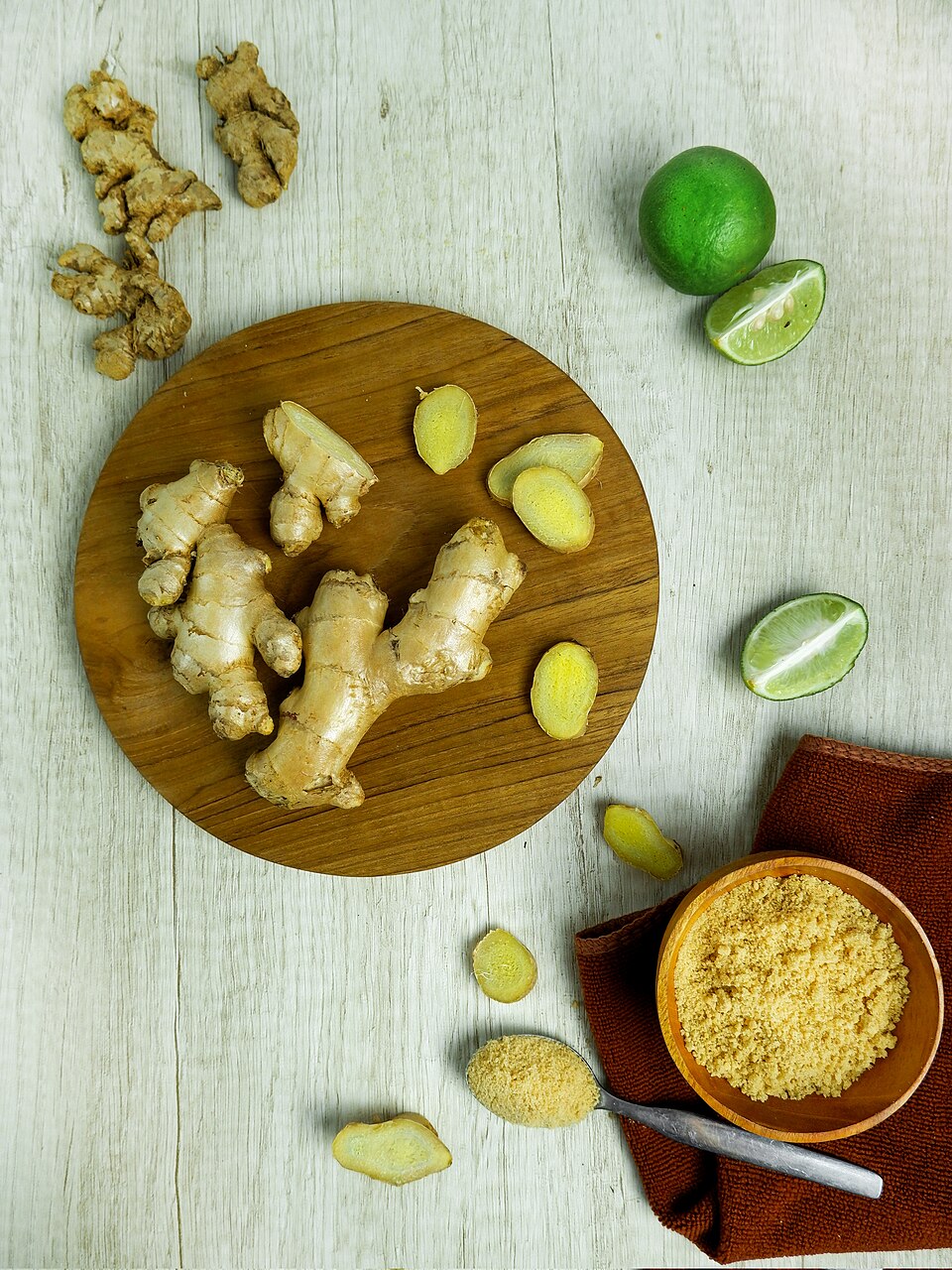
ジンジャー
Gừng
Zingiber officinale
No specific contraindications in available data.
GRAS status. No irritation or sensitization at 4 percent test level. Low-level phototoxic effects reported, not considered significant.
Oral ginger oil weakens the delayed hypersensitivity response, so allergic reactions from the oil are likely minimal.
In vitro research: ginger oil inhibits prostate cancer cells (IC50 0.08 percent) and lung cancer cells (IC50 0.11 percent).
| Zingiberene | 38.1 – 40.2 % |
| ar-Curcumene | 17.1 % |
| β-Sesquiphellandrene | 7.2 – 7.3 % |
| β-Bisabolene | 5.2 – 6.0 % |
| Camphene | 4.5 – 4.7 % |
| β-Phellandrene | 2.5 – 3.4 % |
| Borneol | 2.2 – 2.8 % |
| 1,8-Cineole | 1.7 – 2.1 % |
| α-Pinene | 1.3 – 1.4 % |
| β-Elemene | 1.2 % |
| 2-Undecanone | 1.4 % |
Zingiber officinale is a perennial herb originating in Southeast Asia, now cultivated globally. The fresh rhizome is an essential spice in East Asian cuisine.
The oil is steam-distilled from dried rhizomes (oil from fresh ginger differs). Main production in China, India, England (from Nigerian ginger), Jamaica.
CO2 extracts are also available, preserving more heat-sensitive constituents than steam distillation.
Family Zingiberaceae.
Ginger oil is not commonly adulterated.