フラゴニア
Fragonia
Agonis fragrans
Fragrant agonis
Oxidation products of α-pinene may sensitize skin.
Store in dark, sealed, refrigerated container. Add an antioxidant.
1,8-Cineole presents only a low risk of skin irritation/sensitization and has antioxidant properties.
Likely not hazardous in pregnancy based on data for 1,8-cineole, α-pinene, linalool and (+)-limonene.
Contains no known carcinogens.
| 1,8-Cineole | 31.0 – 33.0 % |
| α-Pinene | 21.0 – 27.0 % |
| Linalool | 11.7 – 12.4 % |
| α-Terpineol | 5.6 – 5.7 % |
| Terpinen-4-ol | 3.7 – 4.0 % |
| Myrtenol | 3.1 – 3.8 % |
| γ-Terpinene | 1.8 – 3.6 % |
| p-Cymene | 2.0 – 2.9 % |
| (+)-Limonene | 2.5 % |
| β-Myrcene | 1.6 – 2.4 % |
| β-Pinene | 1.5 – 1.7 % |
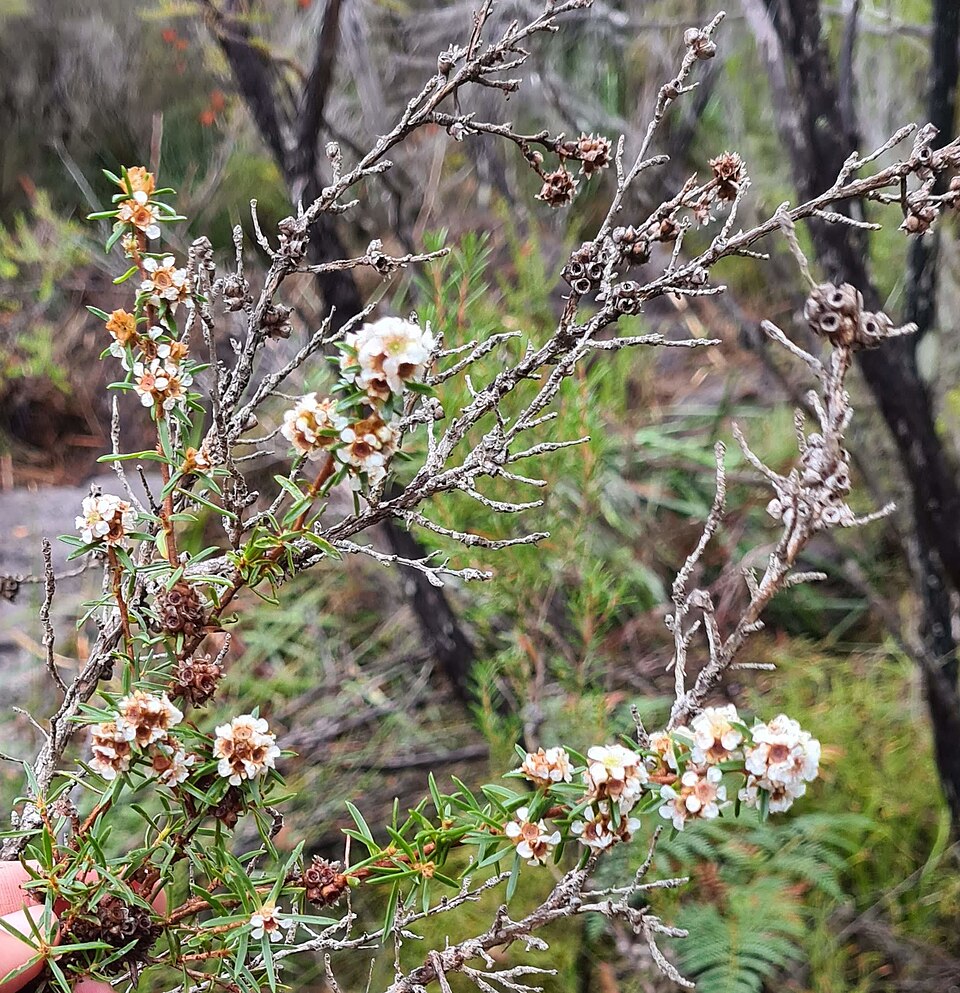
Agonis fragrans is a small shrub endemic to Western Australia. The oil was developed recently (early 21st century) as a new aromatherapy material.
The name 'Fragonia' has been trademarked by the sole Australian producer.
Family Myrtaceae. Same family as eucalyptus, tea tree, niaouli, an 'aromatherapy alternative' with more balanced chemistry between cineole and linalool.