ティーツリー
Tràm trà
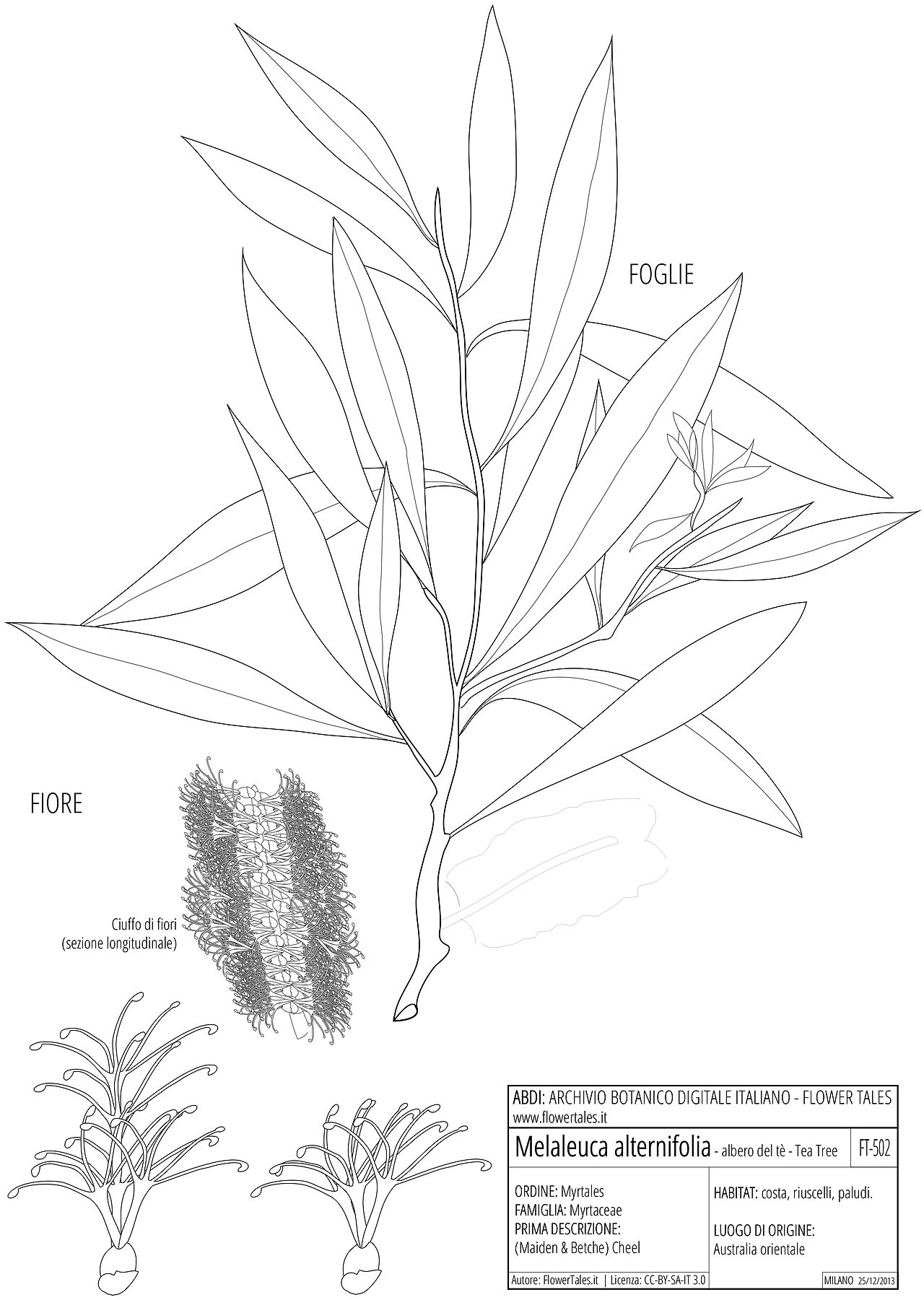
Melaleuca alternifolia
Melaleuca, TTO
Tea tree is among the most extensively researched essential oils medically, particularly for antibacterial, antifungal, and antiviral activity.
Terpinen-4-ol comprises 30-45 percent, the principal antibacterial component, not significantly sensitizing.
Tea tree oxidation products (particularly oxidized α-terpinene and terpinolene) can sensitize skin. Proper storage essential, dark, sealed, refrigerated, with antioxidant in formulation.
Skin reaction rate: in 217 contact dermatitis patients tested at 5 percent: 8 reactions (3.7 percent). Other studies show 0.5 to 3 percent. Sensitive skin requires caution.
Notable: oxidized tea tree oil causes much higher sensitization than fresh. Avoid old oil.
Not phototoxic. No data indicates hazard in pregnancy.
Some in vitro studies suggest mild estrogen-modulating activity, debated but not confirmed clinically. Not contraindicated.
Rare clinical reports: children ingesting large amounts orally (10-20 mL) experienced drowsiness, incoordination, ataxia. Oral use not recommended.
| Terpinen-4-ol | 30.0 – 45.0 % |
| γ-Terpinene | 10.0 – 22.0 % |
| α-Terpinene | 5.0 – 15.0 % |
| Terpinolene | 1.5 – 5.0 % |
| 1,8-Cineole | 0 – 15.0 % |
| α-Terpineol | 1.5 – 8.0 % |
| p-Cymene | 0.5 – 8.0 % |
| α-Pinene | 1.0 – 6.0 % |
| (+)-Aromadendrene | 0 – 4.0 % |
| Ledene (viridiflorene) | 0 – 3.0 % |
| δ-Cadinene | 0 – 3.0 % |
| (+)-Limonene | 0.5 – 1.5 % |
Melaleuca alternifolia is a small shrub endemic to the North Coast of New South Wales, Australia. Grows wild in wetlands and along streams.
Aboriginal Bundjalung tradition used crushed leaves for wounds and skin infections for thousands of years. The name 'tea tree' is attributed to Captain James Cook in 1770, when he saw Aboriginal sailors brewing tea from the leaves.
Commercial distillation began in the 1920s. Production grew sharply after A.R. Penfold (Sydney) identified antibacterial activity in 1925.
Main production: Australia (NSW North Coast, Queensland), with secondary production in China, South Africa, and Kenya.
ISO standard 4730, established 1996 and updated, requires minimum 30 percent terpinen-4-ol, maximum 15 percent 1,8-cineole.
Trees take 18-24 months from planting to first harvest. Thereafter can be cut 1-2 times per year for 15-20 years.
Family Myrtaceae, same family as eucalyptus, manuka, kanuka, rosalina, niaouli.
High-quality tea tree oil must have minimum 30 percent terpinen-4-ol and maximum 15 percent 1,8-cineole per ISO 4730. Some cheap commercial tea trees have higher cineole, lower quality.
Oxidized tea tree oil is much more hazardous than fresh oil. α-Terpinene and terpinolene oxidize to sensitizing compounds (1,2,4-trihydroxymenthane). Verify peroxide value (PV), high PV means old oil.
Common adulterants: addition of synthetic terpinen-4-ol, or blending with cajuput, niaouli, or eucalyptus oils. Verify by chiral GC-MS analysis.
Australian organic certified tea tree is the gold standard. Demeter biodynamic certified also exists.
Freshly distilled has a sharp 'medicinal' note. 6-12 months storage softens the aroma, but also raises peroxide. A trade-off.
Tea tree is one of the few essential oils approved by the FDA and TGA (Australia) for OTC (over-the-counter) applications, particularly for acne and minor skin infections.
Strong antibacterial activity against S. aureus (including MRSA), E. coli, Candida albicans, dermatophytes, and viruses like HSV-1. Hundreds of clinical and in vitro studies.
In cosmetics, tea tree is a standard ingredient for acne formulations, anti-dandruff shampoos, antifungal creams, and scalp care. Widespread in 'natural' and 'clean beauty' skincare.
Pet warning: concentrated tea tree oil is toxic to cats and dogs, do not apply to animal skin. Numerous veterinary poisoning cases on record.
In the Lê Mai brand context, tea tree is a universal ingredient for skin care lines, suited to soap, body wash, acne creams, and shampoo. Reasonable pricing, stable supply.
In Vietnamese folk medicine, cajuput oil (Melaleuca cajuputi, covered under C) has a similar history of use for respiratory and skin support. Tea tree is a different Melaleuca species from cajuput.