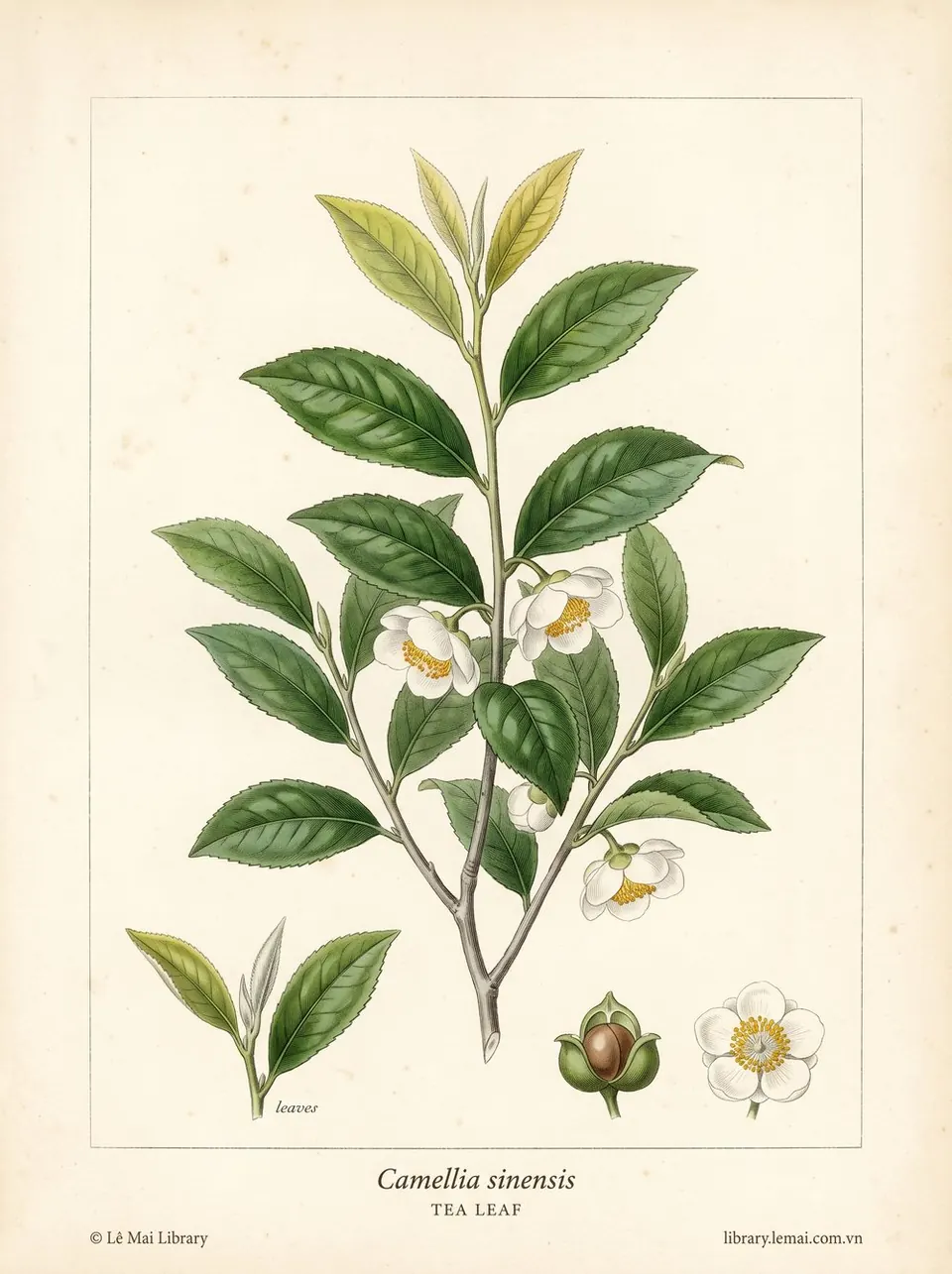
ティーリーフ
Lá trà (Camellia sinensis)
Camellia sinensis
Black tea
Tea leaf absolute is solvent-extracted from the leaves of Camellia sinensis, the tea plant of the tea family, native to China and Southeast Asia. It gives a refined black tea note, with linalool, phenylethanol and geraniol among its constituents. The absolute is rare and used mostly in niche perfumery. It can sensitize skin at very low levels, and IFRA limits it to 0.2% in body creams and oils.
Updated 3 Nov 2026 · Lê Mai Team
Tea leaf absolute causes skin sensitization at very low concentrations, 0.001 percent in guinea pig studies.
IFRA limits 0.2 percent for body creams, oils, lotions.
Not recommended on sensitive skin, damaged skin, children under 2.
No pregnancy data.
| Linalool | various |
| Phenylethanol | various |
| Geraniol | various |
Camellia sinensis is the tea plant, source of all tea types (black, green, oolong, white). Native to China and Southeast Asia.
The absolute is rare, primarily used in niche perfumery.
Family Theaceae (Camelliaceae).
| Eau Parfumée au Thé Vert | Bvlgari · 1992 · main note |
| Silver Mountain Water | Creed · 1995 · heart |
| Néroli Outrenoir | Guerlain · 2016 · heart |
| Thé Noir 29 | base |
| Mixed Emotions | heart |
Based on note lists published by each house. Fragrance names and marks belong to their owners.
Characteristic 'black tea' note for perfumery, a refined oriental note. Very limited production.
Buy Black Tea Essential Oil No.110