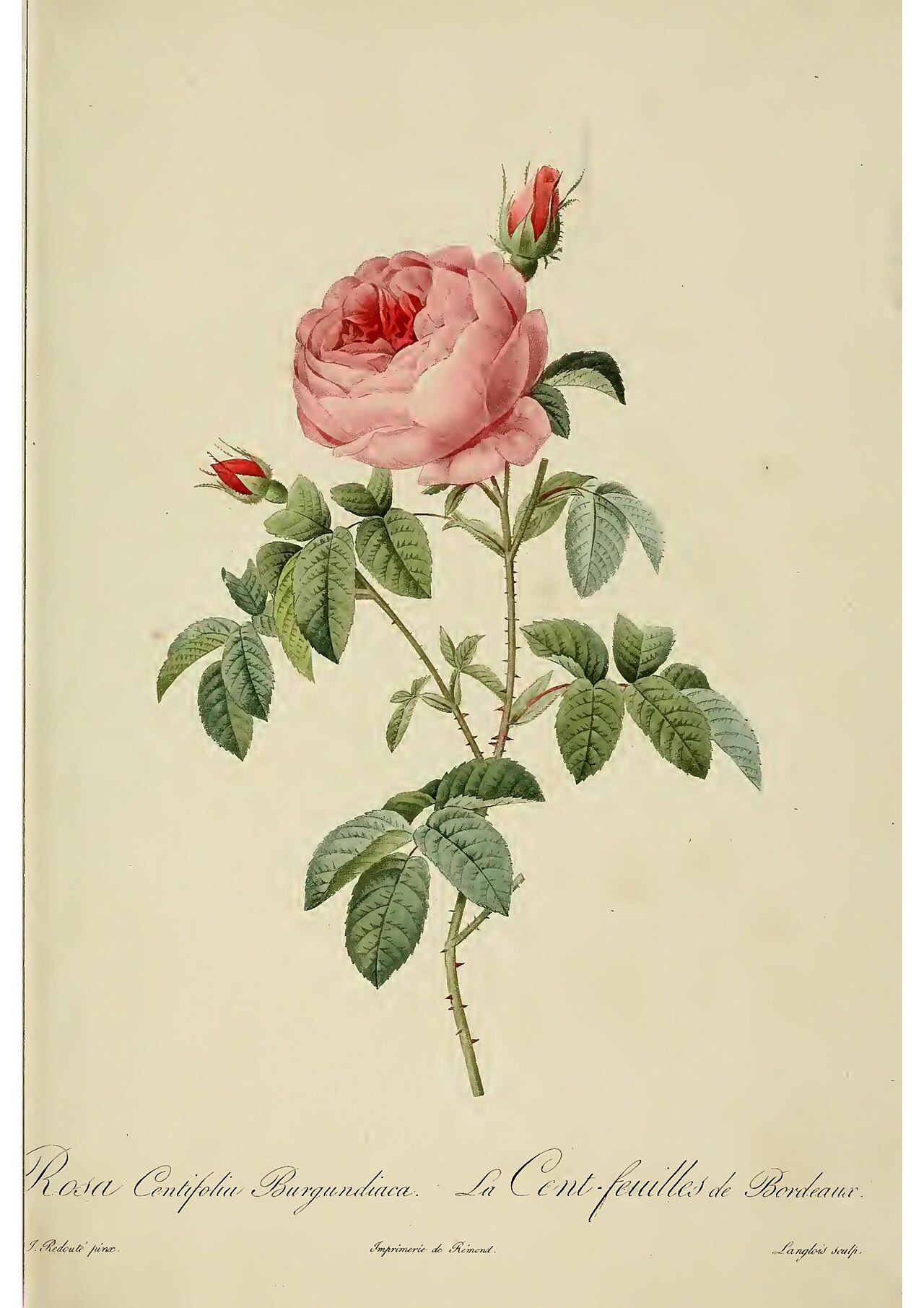
プロヴァンスローズ
Hoa hồng Provence
Rosa × centifolia
Cabbage rose, May rose, Rose de mai
Rose centifolia absolute is classified as GRAS. Methyl eugenol may be present (up to 0.8 percent), a suspected carcinogen.
Maximum dermal: 2.5 percent. IFRA limit 0.05 percent. EU limit 0.025 percent.
Very low skin sensitization risk. Tested at 2 percent on 25 volunteers: not irritating. Not phototoxic.
Unlike damask rose, Provence rose is produced only as absolute (no steam distillation).
| 2-Phenylethanol | 64.8 – 73.0 % |
| (-)-Citronellol | 8.8 – 12.0 % |
| Alkanes & alkenes | 1.1 – 8.5 % |
| Geraniol | 4.9 – 6.4 % |
| Nerol | 0 – 3.0 % |
| Eugenol | 0.7 – 2.8 % |
| (E,E)-Farnesol | 0.5 – 1.3 % |
| Terpinen-4-ol | 0 – 1.0 % |
| Methyleugenol | 0 – 0.8 % |
Rosa × centifolia is the 'hundred-petalled' hybrid rose (centifolia = one hundred leaves). Hybrid origin uncertain, possibly from R. gallica, R. moschata, R. canina, and R. damascena crossings by Dutch breeders.
Commercially grown mainly in France (Grasse) and Morocco. The name 'Rose de mai' reflects May flowering, the single annual harvest.
Limited production. Centifolia is produced only as absolute (the flower structure is unsuited to steam distillation).
Family Rosaceae.
Centifolia aroma differs from damask: less deep, more green notes and 2-phenylethanol (floral-honey character).
In classical French perfumery (Grasse), centifolia is the signature absolute, particularly for fragrances like Chanel No. 5 and Joy by Patou.
Extremely limited production, only France and Morocco.