Nerol
(2Z)-3,7-Dimethyl-2,6-octadien-1-ol
(Z)-Geraniol · cis-Geraniol
化学組成 · Constituent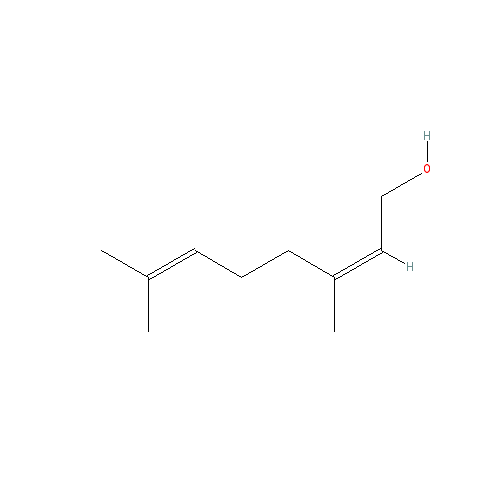
(2Z)-3,7-Dimethyl-2,6-octadien-1-ol
(Z)-Geraniol · cis-Geraniol
化学組成 · Constituent
Nerol is the Z-isomer of geraniol, occurring in many floral and citrus leaf oils. The compound shows significant skin sensitization activity.
Skin. Undiluted nerol was moderately irritating to rabbit skin. A 4 percent patch test on 25 volunteers caused no irritation and no sensitization. However, in a worldwide multicenter study on 218 dermatitis patients with proven fragrance sensitization, 13 (6.0 percent) reacted to 5 percent nerol. In an in vitro assay, nerol was non-phototoxic.
Acute toxicity. Acute oral LD50 in rats 4.5 g/kg. Acute dermal LD50 in rabbits exceeded 5 g/kg.
Reproductive. On chick embryos at 72 hours, nerol had a teratogenicity value of 11.9 percent versus 7.9 percent control. As an isomer of linalool, reproductive toxicity may be similar. In pregnant rat studies, linalool up to 1,000 mg/kg/day caused no fetal toxicity or teratogenicity.
| Basil (lemon) | 13.0 – 15.3 % |
| Davana | 10.0 % |
| Rose (Damask) | 0.8 – 8.7 % |
| Lemon leaf | 1.3 – 7.4 % |
| Orange flower | 0.9 – 4.0 % |
| Orange flower water (absolute) | 3.0 – 3.7 % |
| Rose (Provence) | 0 – 3.0 % |
| Myrtle (honey) | 2.8 % |
| Lemon balm (Australian) | 1.9 % |
| Thyme (lemon) | 1.9 % |
| Ghandi root | 1.4 % |
| Bergamot (wild) | 0.8 – 1.4 % |
| Melissa | 0.6 – 1.3 % |
| Neroli | 0.3 – 1.3 % |
| Geranium | 0 – 1.2 % |
| May chang | 0.2 – 1.1 % |
Approximately 25 to 30 percent of an oral dose of 17 to 55 g nerol is recovered as a pair of dicarboxylic acids, presumably formed via an intermediate diol from oxidation of one allylic methyl group. Some nerol is also recovered as the glucuronide.
Nerol is isomeric with geraniol and linalool. All three share close chemistry and contribute to rose aroma signatures.