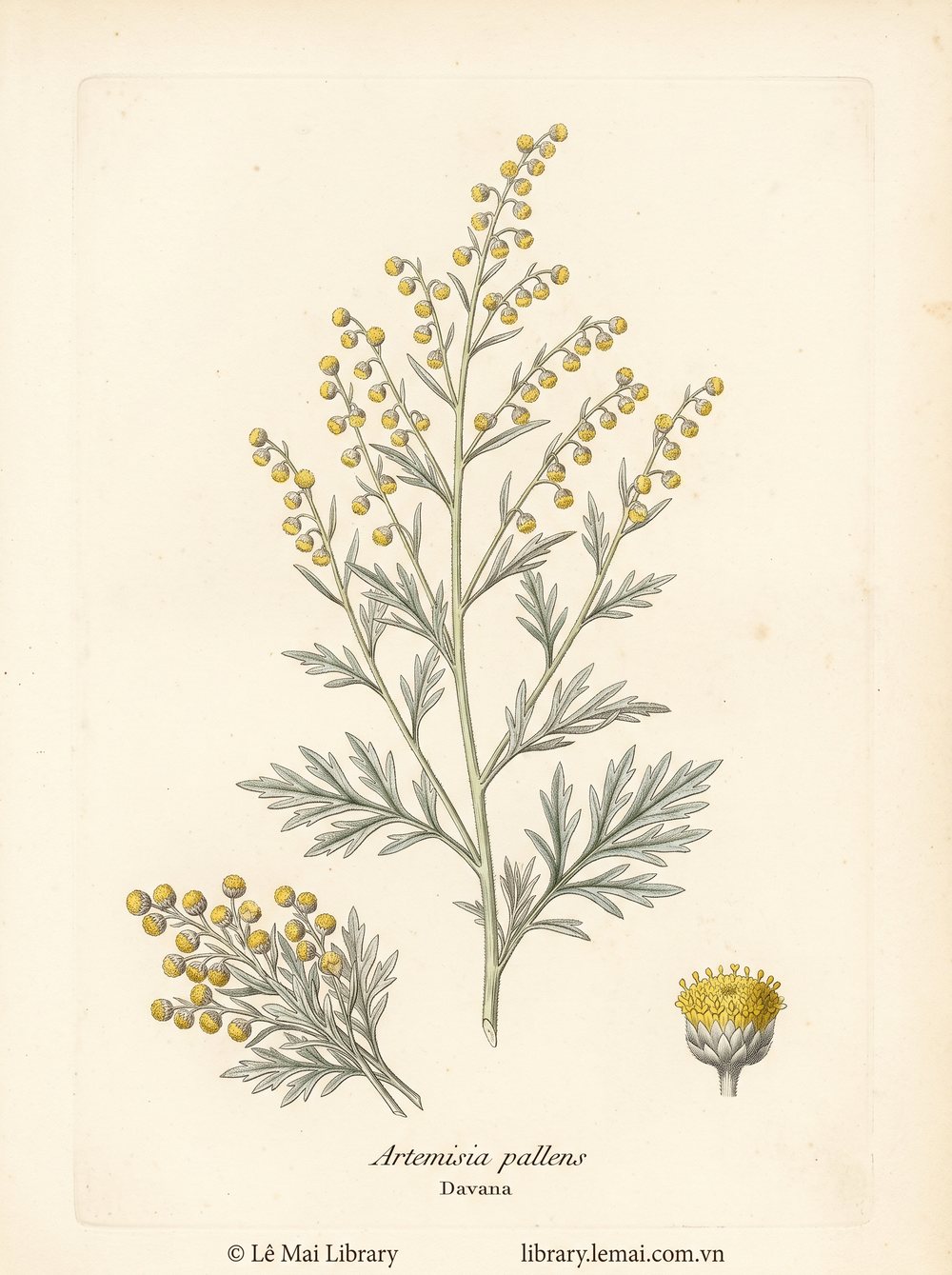
ダヴァナ
Davana (Artemisia pallens)
Artemisia pallens
No specific contraindications in available data.
No irritation or sensitization at 4 percent test level. Non-phototoxic.
90-day subchronic study in rats: no adverse effects at 18 to 21 mg per kg per day.
Contains no known carcinogens.
| (Z)-Davanone | 38.0 % |
| Nerol | 10.0 % |
| Unidentified furans | 6.0 % |
| (E)-Davanone | 5.0 % |
| Geraniol | 5.0 % |
| (Z)-Hydroxy-davanone | 3.0 % |
| Isodavanone | 3.0 % |
| Davanic acid | 2.5 % |
| Cinnamyl cinnamate | 2.0 % |
| (E)-Hydroxy-davanone | 2.0 % |
| oxo-Nerolidol | 2.0 % |
| Artemone | 1.5 % |
| Davana ether | 1.5 % |
| nor-Davanone | 1.5 % |
| (E)-Davanafuran | 1.0 % |
Artemisia pallens is a perennial herb of southern India, particularly Karnataka and Tamil Nadu. The aerial parts are steam-distilled.
Family Asteraceae. Same genus Artemisia as mugwort, tarragon, wormwood, but A. pallens has markedly different chemistry (davanone-rich rather than thujone).
Davana is an important perfumery oil in India, used in religious offerings and fragrances. Davanone content can reach 55 percent in some samples.
The oil tends to become viscous with age, slow polymerization.