2-Phenylethanol
Phenyl ethanol · Phenethyl alcohol · β-Phenylethyl alcohol · Benzyl carbinol
化学組成 · Constituent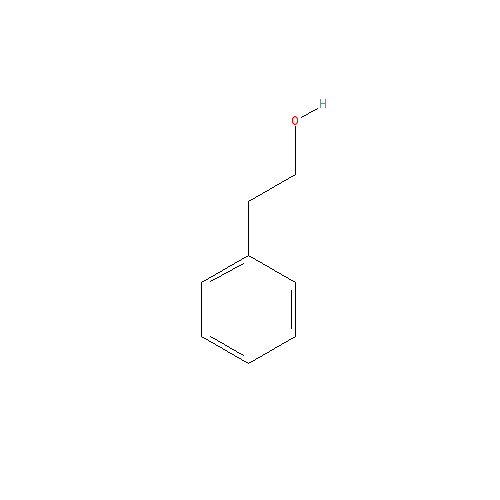
Phenyl ethanol · Phenethyl alcohol · β-Phenylethyl alcohol · Benzyl carbinol
化学組成 · Constituent
2-Phenylethanol is the principal rose-aroma constituent of rose absolute, neroli and other floral absolutes. It is safe for topical use at standard concentrations.
Skin. Undiluted material was slightly irritating to guinea pig skin but not to 25 human volunteers. At 8 percent it was not sensitizing. At 25 percent there was one reaction in 179 dermatitis patients suspected of cosmetic allergy. At 1 percent on 100 dermatitis patients there were no reactions.
Oral. Acute oral LD50 was 1.79 g/kg in rats, 1.15 g/kg in mice and 600 mg/kg in guinea pigs. Acute dermal LD50 in guinea pigs was 5 to 10 mL/kg.
Subchronic. In a 90-day dermal study, rats received 0.25, 0.5, 1.0 or 2.0 mL/kg/day. The dermal NOAEL was 0.5 mL/kg/day, equivalent to 35 mL in a 70 kg human.
Reproductive. Pregnant rats fed 1,000, 3,000 or 10,000 ppm 2-phenylethanol on gestational days 6 to 15. The high-dose group showed a small increase in incomplete fetal calcification. Oral NOAEL was 266 mg/kg. Dermal application at 0.14 mL/kg on pregnant rats caused marginal skeletal irregularities, considered the threshold for developmental toxicity.
Mutagenicity. Not mutagenic in the Ames test. Did not induce SCE in human lymphocytes.
| Rose (Provence) | 64.8 – 73.0 % |
| Bakul | 38.8 % |
| Orange flower | 4.5 – 35.0 % |
| Champaca (orange) | 25.0 – 34.0 % |
| Champaca (white) | 6.4 % |
| Hyacinth | 3.7 % |
| Jasmine sambac | 2.4 % |
| Osmanthus | tr – 2.2 % |
| Rose (Damask) | 0.3 – 2.0 % |
| Narcissus | 0 – 1.6 % |
In rabbits, about 47 percent of an ingested dose is excreted combined with glucuronic acid, and about 43 percent as hippuric acid. Large amounts are oxidized to phenylacetic acid, which is conjugated with glycine and excreted as phenaceturic acid.
2-Phenylethanol is widely used as a fragrance and mild preservative in cosmetics, owing to antibacterial activity at low concentrations.