β-Citronellol
3,7-Dimethyl-6-octen-1-ol
Citronellol · Cephrol · 2,3-Dihydrogeraniol
化学組成 · Constituent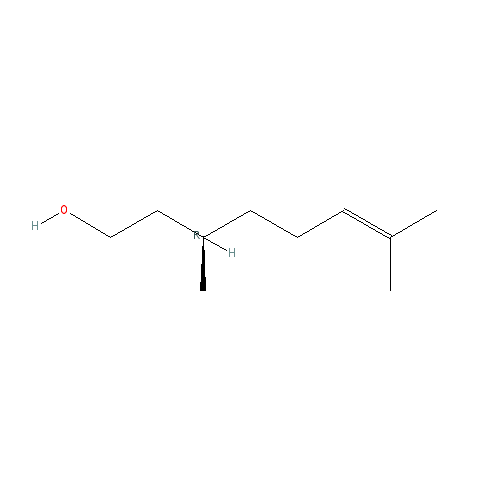
3,7-Dimethyl-6-octen-1-ol
Citronellol · Cephrol · 2,3-Dihydrogeraniol
化学組成 · Constituent
β-Citronellol is a key constituent of rose and geranium. Large-scale data from thousands of patients indicate a very low sensitization risk.
Skin. Undiluted on 20 volunteers for five days caused no irritation. A 48-hour patch test at 20 percent on 35 volunteers gave no irritation. At 6 percent on 25 volunteers, no sensitization.
Sensitization. Pooled large studies show citronellol positive rates of 0.07–0.5 percent at 1 percent; 0–0.3 percent at 5 percent. In Japanese and Korean patient groups, no reactions at 5 percent.
Oral. LD50 data are unavailable, but per IFRA the compound has low acute toxicity.
Reproductive. No significant estrogenic activity.
Mutagenicity. Non-mutagenic in the Ames test.
| Geranium | 18.6 – 47.7 % |
| Rose (Japanese) | 44.5 % |
| Rose (Damask) | 16.0 – 43.5 % |
| Citronella | 3.0 – 21.8 % |
| Rose (Provence) | 8.8 – 12.0 % |
| Lemon-scented gum | 0 – 5.4 % |
| Grindelia | 1.0 – 5.0 % |
| Angelica root (Himalayan) | 1.5 – 3.0 % |
| Combava fruit | 2.9 % |
| Cedarwood (Port Orford) | 2.3 % |
| Fir (Douglas) | 2.1 % |
| White cloud | 1.6 % |
Citronellol is primarily metabolized through oxidation.
β-Citronellol is the foundation of natural rose notes in fine perfumery. The compound is often synthesized industrially from citronellal or geraniol.
Although listed among the 26 EU fragrance allergens, extensive clinical data confirm a very low sensitization risk.