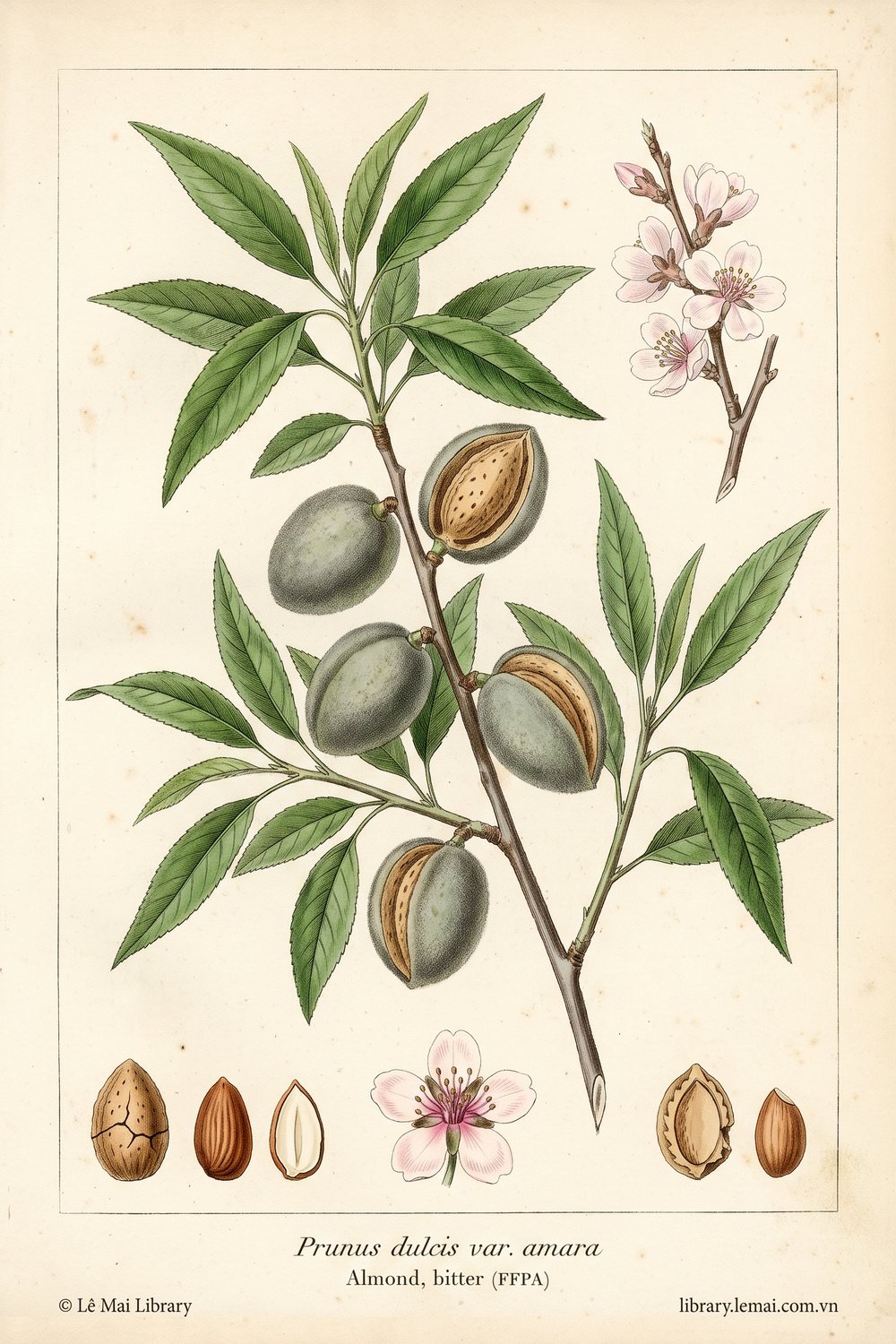
ビターアーモンド (FFPA)
Hạnh đào đắng FFPA
Prunus dulcis var. amara
Bitter almond, rectified
No known hazards for the FFPA variant.
Avoid old or oxidized oils. Benzaldehyde tends to oxidize to benzoic acid.
When tested at 4% on 25 volunteers, bitter almond FFPA was neither irritating nor sensitizing. Non-phototoxic.
The unrectified version contains highly toxic HCN — must NOT be used internally or externally.
| Benzaldehyde | ≥ 98 % |
Prunus dulcis var. amara is the bitter almond. Kernels contain amygdalin, a naturally occurring glycoside.
During distillation prep, kernels are crushed, pressed into cake, macerated in warm water for 12–24 hours. Amygdalin breaks down forming HCN.
After distillation, HCN is removed by calcium hydroxide and ferrous sulfate treatment, making the oil safe for human use.
Synthetic benzaldehyde may be used as adulterant or complete substitute for bitter almond oil.
Benzaldehyde is prone to autoxidation — oil quality degrades over time.
FFPA stands for Free From Prussic Acid — HCN (hydrocyanic acid) removed.
Bitter almond FFPA was introduced in the 1850s as a safer alternative. The unrectified version remained available until 1890.
Add antioxidants when blending to extend stability.