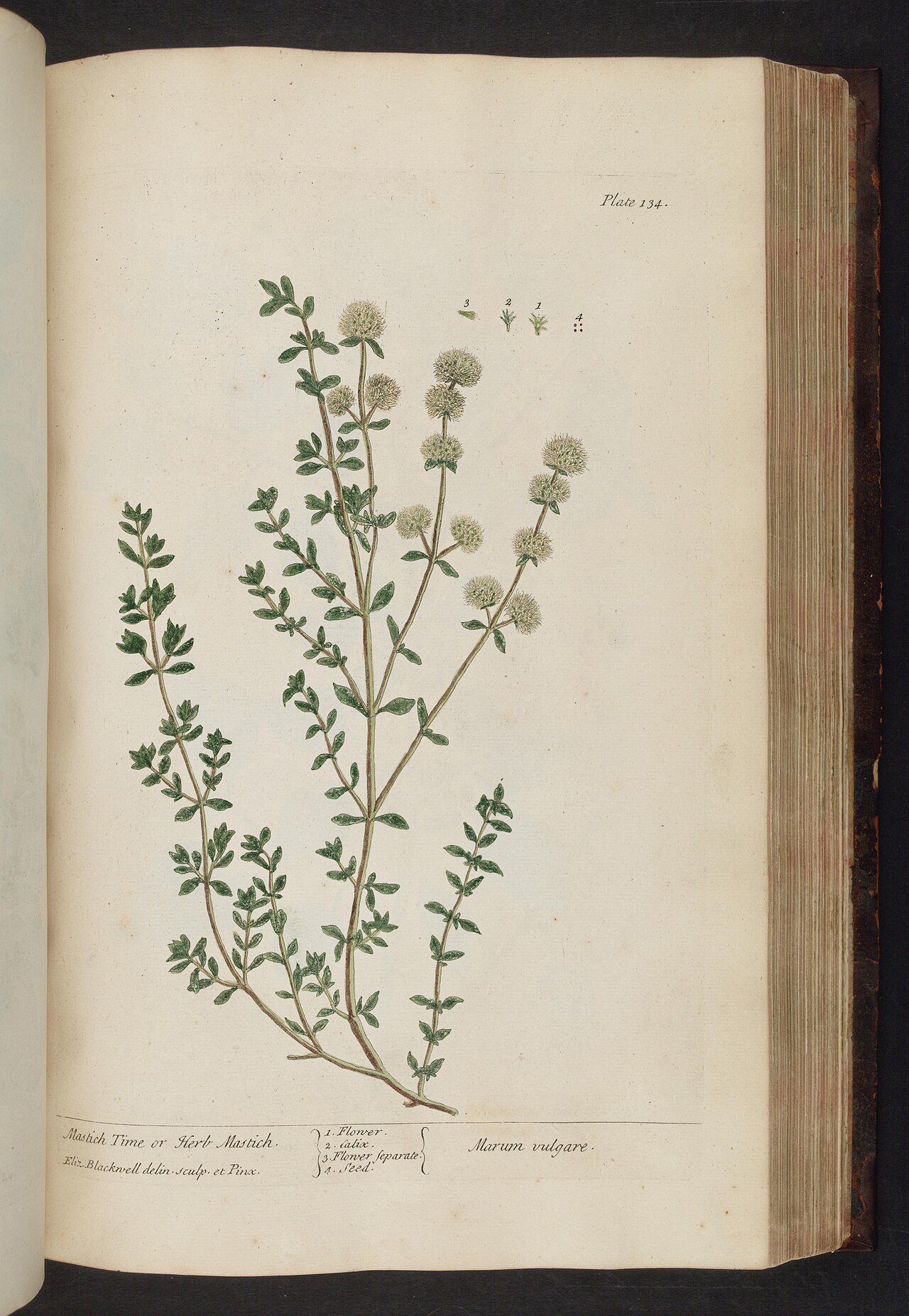
スパニッシュマジョラム
Kinh giới Tây Ban Nha
Thymus mastichina ssp. mastichina
Mastic thyme, Spanish wild marjoram
1,8-Cineole comprises 45-59 percent. Oils high in 1,8-cineole can cause CNS and respiratory issues in young children when applied near the face.
Contraindicated near the face of infants and children.
Mildly irritating to rabbits, non-irritating to mice and pigs; tested at 6 percent on 25 volunteers, neither irritating nor sensitizing.
Not phototoxic. No data indicates specific hazard in pregnancy.
| 1,8-Cineole | 45.1 – 58.6 % |
| Camphor | 5.5 – 8.9 % |
| α-Pinene | 4.6 – 6.8 % |
| Camphene | 4.3 – 6.0 % |
| Borneol | 3.8 – 5.9 % |
| β-Pinene | 2.3 – 5.1 % |
| α-Terpineol | 2.8 – 4.5 % |
| Sabinene | 1.9 – 3.4 % |
| Terpinen-4-ol | 1.1 – 3.1 % |
| (+)-Limonene | 1.3 – 1.5 % |
Thymus mastichina is a Spanish wild thyme. Despite the 'marjoram' name, it is botanically Thymus, not Origanum.
The name 'mastic thyme' reflects the strong 1,8-cineole aroma with some resinous notes.
Family Lamiaceae (Labiatae).
Not a substitute for sweet marjoram (Origanum majorana) in aromatherapy or cosmetics, markedly different chemistry.
Produced mainly in Spain and Portugal.