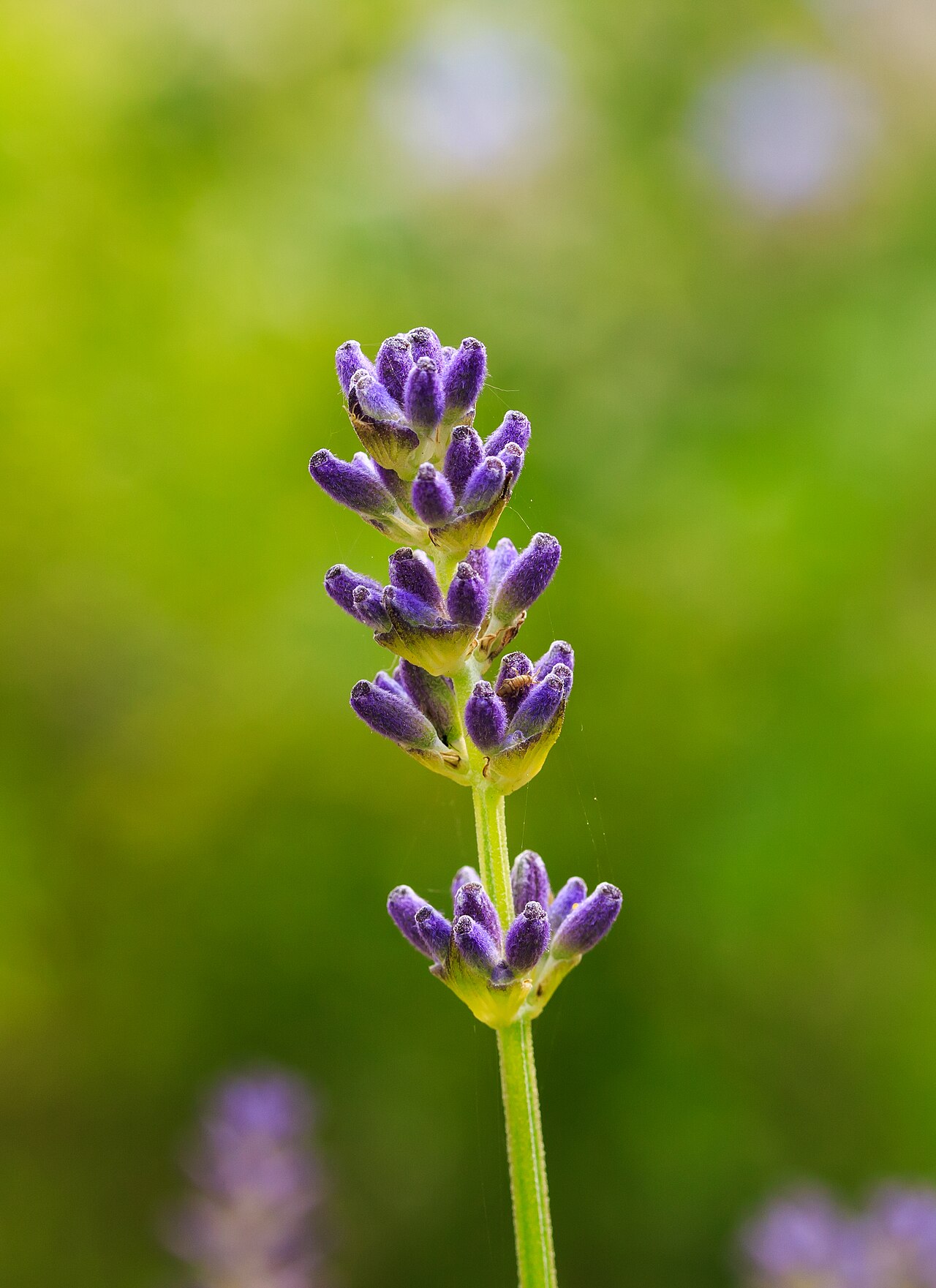
スパイクラベンダー
Oải hương đực
Lavandula latifolia
Spike lavender, Aspic, Broad-leaved lavender
1,8-Cineole and camphor content much higher than true lavender. Sharp aroma, closer to camphor than floral.
Avoid in children under 6, especially near the face, due to risk of laryngospasm from camphor and 1,8-cineole.
Not recommended in pregnancy and breastfeeding.
Not to be confused with true lavender. Spike has a distinctly different aroma and safety profile.
| 1,8-Cineole | 28.0 – 35.0 % |
| Linalool | 27.2 – 43.1 % |
| Camphor | 10.0 – 23.2 % |
| α-Pinene | 0.7 – 3.5 % |
| Borneol | 0.9 – 3.4 % |
| β-Pinene | 0.8 – 2.7 % |
Lavandula latifolia is broad-leaved lavender, growing at lower altitudes than true lavender (200-700m).
Production is mainly in Spain (Aragon, Castilla). Oil yield is higher than true lavender.
One of the parent species of lavandin (along with Lavandula angustifolia).
Spike lavender was traditionally used in oil painting to thin turpentine and oil paints (note: 'oil of spike' refers to spike lavender oil, not the spike oil of other species).
In aromatherapy, spike is sometimes used for respiratory issues thanks to its high 1,8-cineole content.