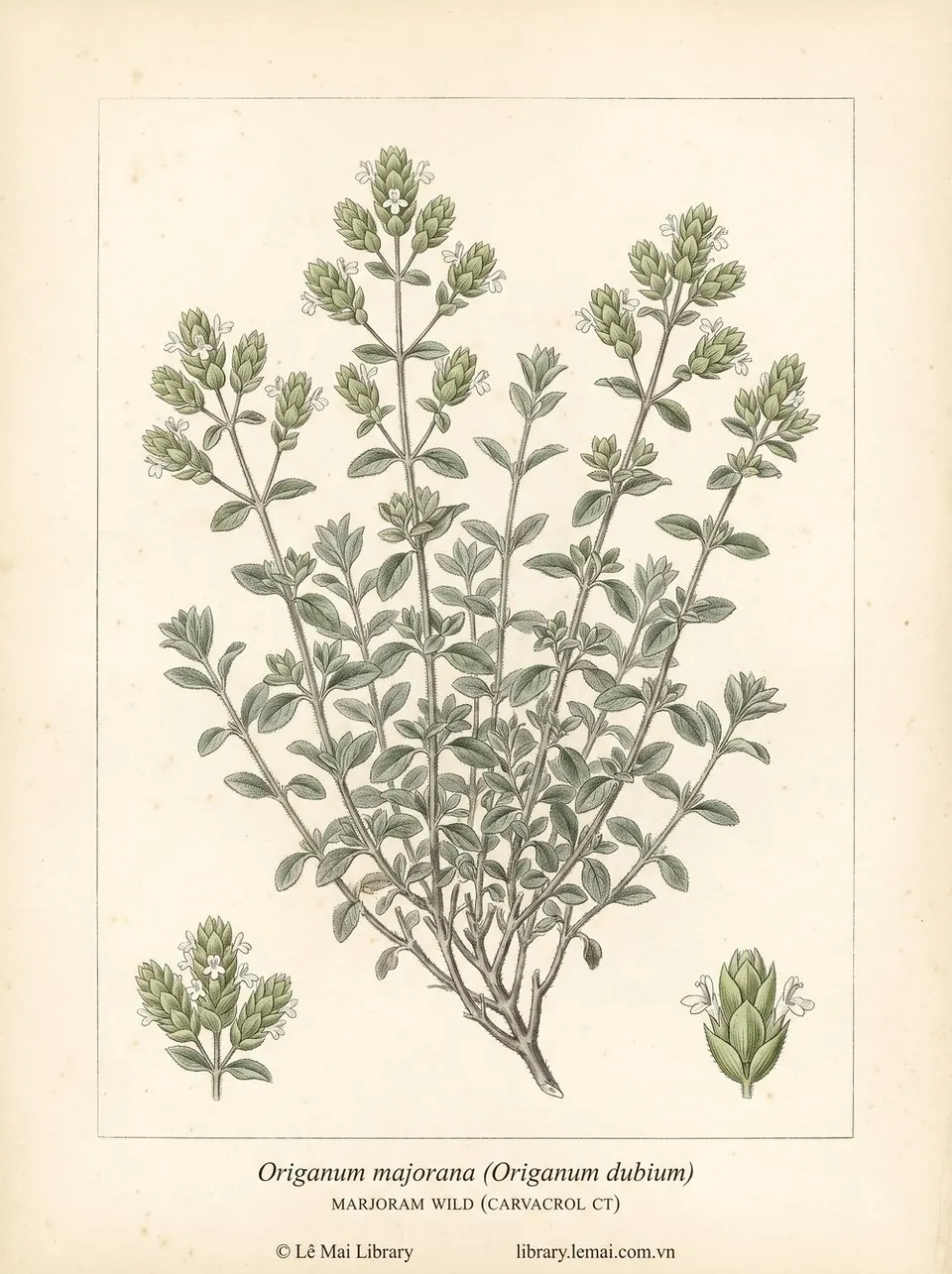
ワイルドマジョラム カルバクロール
Kinh giới hoang (CT carvacrol)
Origanum majorana (Origanum dubium)
Wild oregano, Majorana hortensis
Wild marjoram (carvacrol chemotype) essential oil is steam-distilled from the leaves of a wild Mediterranean form of Origanum majorana, sometimes classed separately as Origanum dubium, in the mint family. It smells hot, spicy and herbal, closer to oregano than to sweet marjoram; its main component is carvacrol (about 76.4 to 81%). Carvacrol irritates skin at high concentrations, so dilute it well for skin use.
Updated 4 Nov 2026 · Lê Mai Team
Carvacrol comprises 76-81 percent. Phenol causes skin irritation at high concentrations.
May inhibit platelet aggregation. Use orally with caution alongside anticoagulants, after major surgery, or with bleeding disorders.
Oral caution: antidiabetic drugs (carvacrol interaction).
| Carvacrol | 76.4 – 81.0 % |
| p-Cymene | 5.2 – 6.0 % |
| γ-Terpinene | 3.0 – 3.6 % |
| α-Phellandrene | 0 – 1.8 % |
| α-Terpineol | 0.9 – 1.6 % |
| Terpinen-4-ol | 1.0 – 1.2 % |
| α-Terpinene | 1.2 % |
| α-Pinene | 0.9 – 1.0 % |
A wild chemotype of Origanum majorana growing wild in the Mediterranean. Sometimes classified separately as Origanum dubium.
Carvacrol-rich, aroma closer to oregano than sweet marjoram.
Family Lamiaceae.
Markedly different safety profile from sweet marjoram terpinen-4-ol CT, not interchangeable.
Used in limited cosmetic contexts due to its phenolic nature.