Pinocamphone
2,6,6-Trimethylbicyclo[3.1.1]heptan-3-one
3-Pinanone · (E)-Pinocamphone · trans-Pinocamphone
化学組成 · Constituent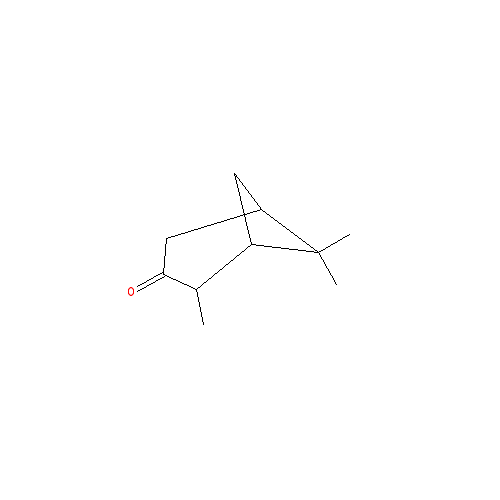
2,6,6-Trimethylbicyclo[3.1.1]heptan-3-one
3-Pinanone · (E)-Pinocamphone · trans-Pinocamphone
化学組成 · Constituent
Pinocamphone is the principal neurotoxic constituent of hyssop oil from the pinocamphone chemotype. It causes convulsions at high doses and is regulated in food.
Nervous system. The lowest known human convulsant dose of pinocamphone isomers is about 210 mg, equivalent to 10 drops of hyssop oil containing roughly 70 percent pinocamphone and isopinocamphone, or 3 mg/kg. Subcutaneous pinocamphone caused convulsions but not death in mice at 585 mg/kg. Intraperitoneal dosing in rats was convulsant and lethal above 0.05 mL/kg.
Mechanism. Pinocamphone acts as a GABA-gated chloride channel blocker, with convulsant activity reversible by diazepam.
Oral. Acute intraperitoneal LD50 in mice exceeded 250 mg/kg.
| Hyssop (pinocamphone CT) | 31.2 – 42.7 % |
| Labdanum | 0 – 1.3 % |
| Hyssop (linalool CT) | 0.5 – 1.0 % |
Pinocamphone is metabolized in vitro and in vivo primarily by CYP enzymes to hydroxyl derivatives, considered a likely detoxification pathway.
Pinocamphone and thujone are structurally similar and share many properties. Both are convulsant, both non-competitively antagonize GABA receptors, and both are metabolized by CYP enzymes to less harmful derivatives. Convulsant thresholds in mice are very close.