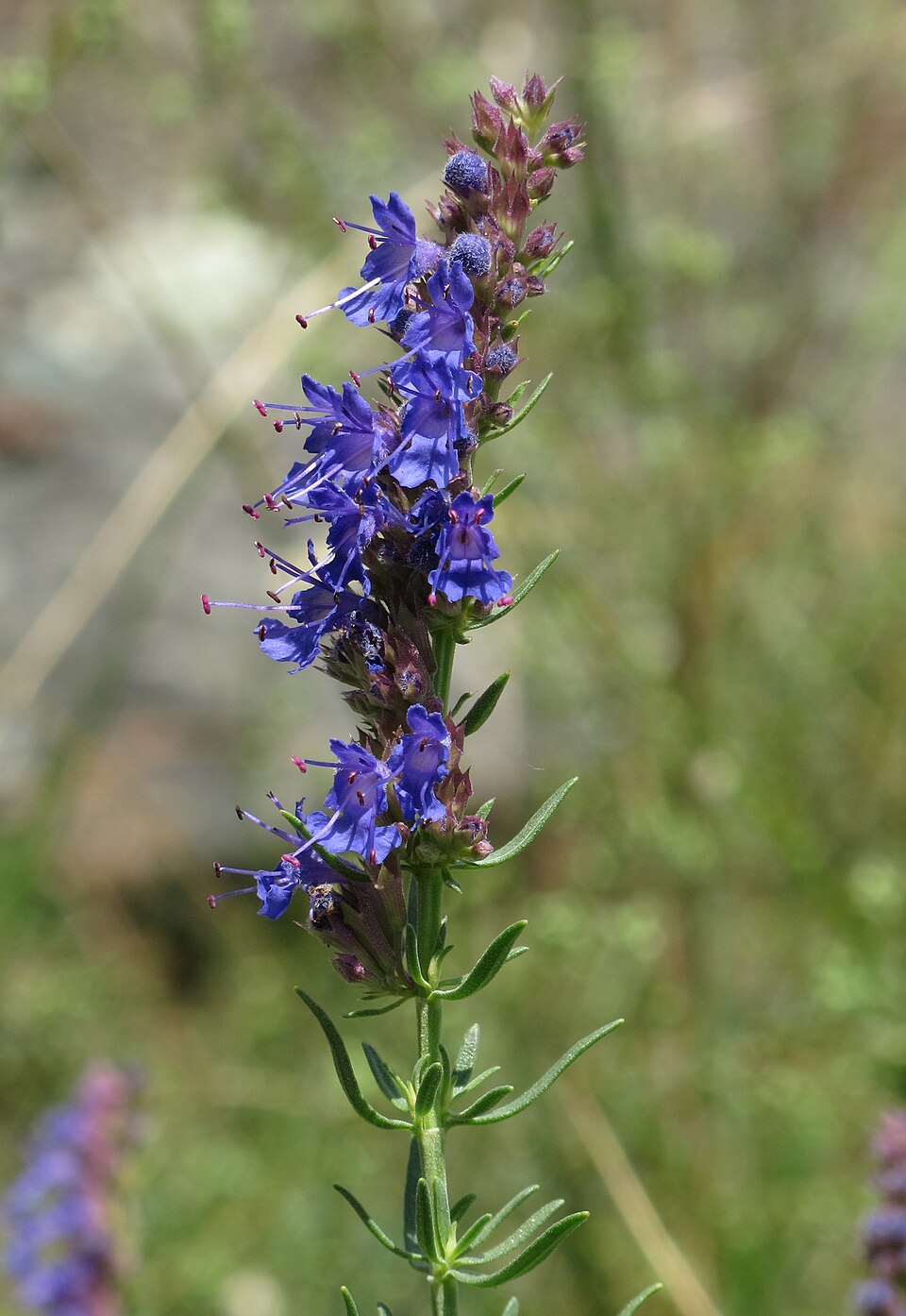
ヒソップ リナロール CT
Bài hương (CT linalool)
Hyssopus officinalis var. decumbens
Hyssop decumbens
No specific contraindications in available data, markedly different from hyssop pinocamphone CT (the common chemotype).
Very low pinocamphone content in this chemotype means no neurotoxic / convulsant risk like the common chemotype.
Linalool, α-pinene, β-pinene in the oil potentiate GABA-A receptors, opposing any GABA-inhibitory effect of pinocamphone (if present).
Linalool oxidation products may sensitize. Store carefully. 1,8-Cineole has antioxidant properties.
| Linalool | 48.0 – 51.7 % |
| 1,8-Cineole | 12.3 – 14.9 % |
| (+)-Limonene | 5.0 – 6.0 % |
| γ-Pinene | 2.9 – 3.3 % |
| Caryophyllene oxide | 1.7 – 3.2 % |
| α-Pinene | 2.2 – 2.5 % |
| Camphene | 1.7 – 2.0 % |
| β-Myrcene | 1.3 – 1.7 % |
| Isopinocamphone | 1.0 – 1.5 % |
| β-Bourbonene | 1.0 – 1.2 % |
| Sabinene | 0.8 – 1.0 % |
| Pinocamphone | 0.5 – 1.0 % |
Var. decumbens is a distinct variety of Hyssopus officinalis with completely different chemistry, linalool chemotype rather than pinocamphone.
The oil is steam-distilled from the aerial parts. Mainly produced in Spain.
Family Lamiaceae. A clear example that a shared botanical name does not guarantee a shared safety profile, two chemotypes of the same species carry markedly different risks.