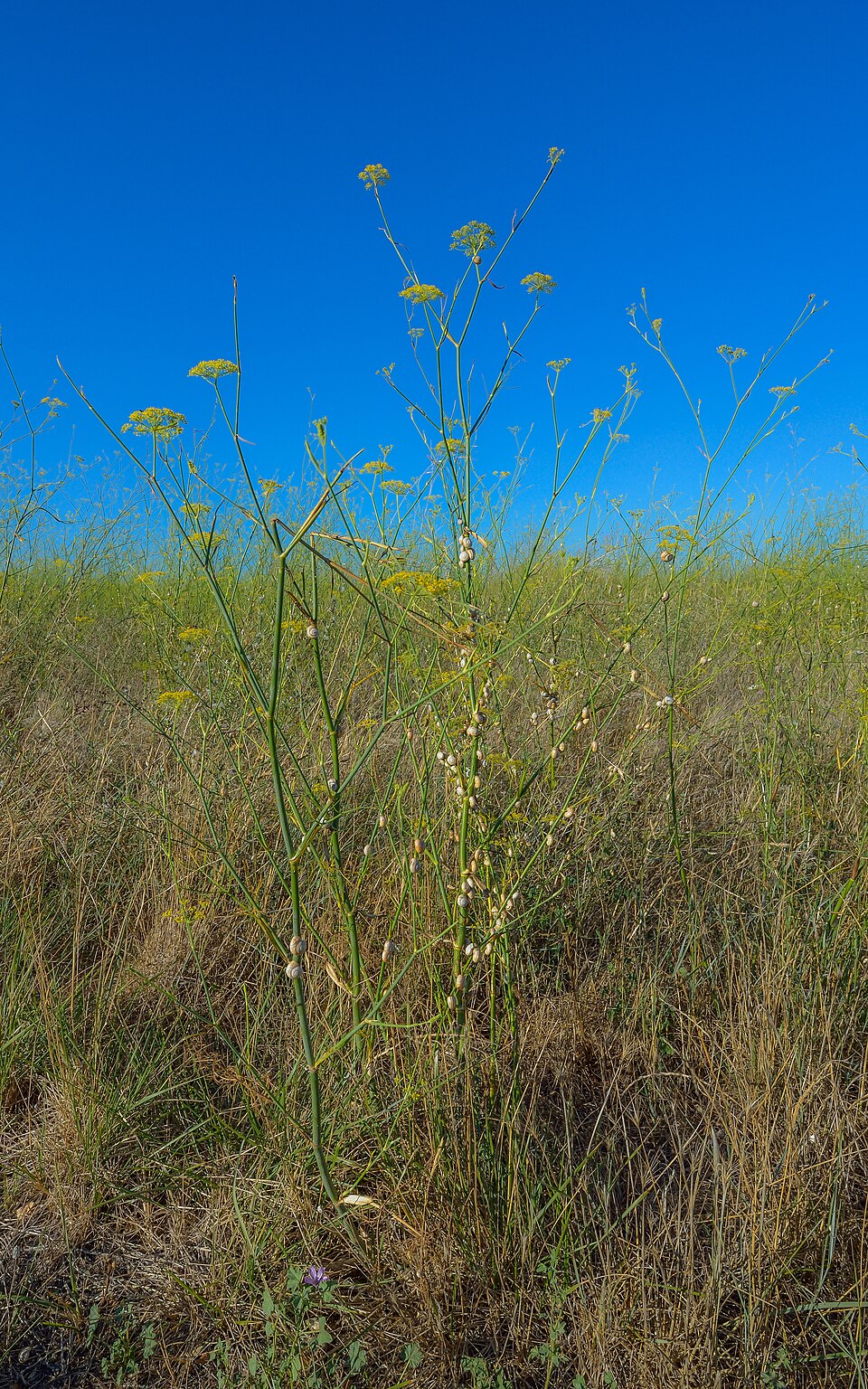
ビターフェンネル
Thì là đắng
Foeniculum vulgare subsp. capillaceum
Drug interactions. Reproductive hormone modulation. Potentially carcinogenic based on estragole content. May inhibit blood clotting. Skin sensitization if oxidized.
Broad contraindications: pregnancy, breastfeeding, endometriosis, estrogen-dependent cancers, children under 5 years.
Oral: caution with diabetes medication, anticoagulants, before major surgery, peptic ulcer, hemophilia.
Maximum adult oral dose 54 mg daily. Maximum dermal use level 1.8 percent.
Basis: 6.5 percent estragole, with oral limit 0.05 mg per kg and dermal 0.12 percent.
Four girls aged 5 months to 5 years presented with premature breast development after several months of daily fennel seed tea. Estradiol levels were 15 to 20 times normal. Symptoms resolved 3 to 6 months after stopping the tea.
| (E)-Anethole | 52.5 – 84.3 % |
| Fenchone | 4.0 – 24.0 % |
| α-Pinene | tr – 10.4 % |
| (+)-Limonene | 0.5 – 9.4 % |
| Estragole | 2.8 – 6.5 % |
| α-Phellandrene | 0.3 – 1.2 % |
| (Z)-Anethole | tr – 0.2 % |
Foeniculum vulgare subsp. capillaceum is bitter fennel, the variety with high fenchone and a pronounced bitterness compared with ordinary sweet fennel.
The European Pharmacopoeia standard requires bitter fennel oil to contain over 60 percent (E)-anethole, over 15 percent fenchone, less than 5 percent estragole.
Family Apiaceae. Distinct from sweet fennel (same species Foeniculum vulgare), bitter has much higher fenchone and a characteristic bitter taste.
It is important to verify that bitter fennel oil has not oxidized before use. (E)-Anethole is prone to oxidation, and its oxidation products ((Z)-anethole, anisaldehyde, anisic ketone) may be sensitizing.