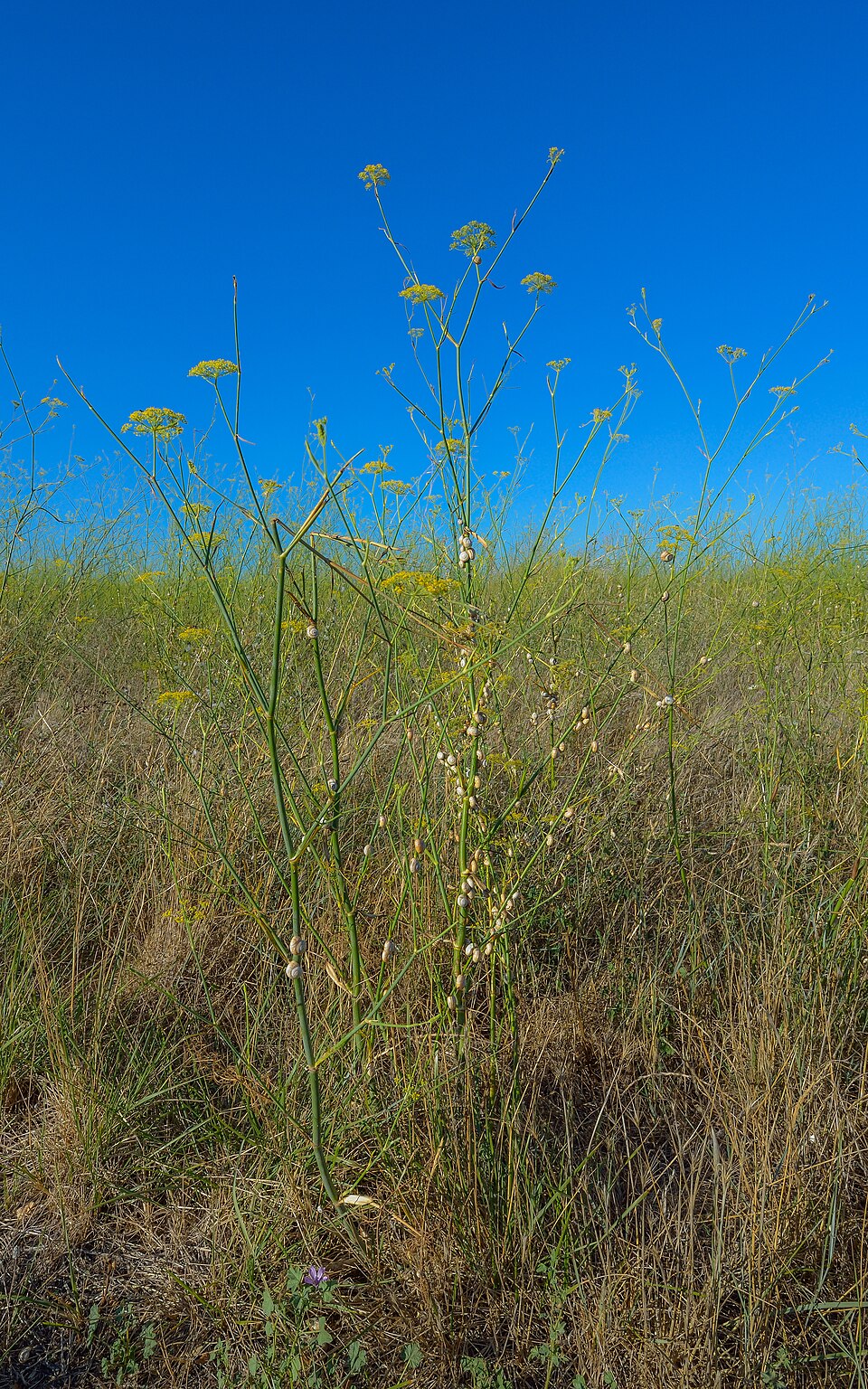
スウィートフェンネル
Thì là ngọt
Foeniculum vulgare
Same risk profile as bitter fennel: drug interactions, hormone modulation, potentially carcinogenic due to estragole.
Broad contraindications: pregnancy, breastfeeding, endometriosis, estrogen-dependent cancers, children under 5 years.
Oral: caution with diabetes medication, anticoagulants.
Maximum adult oral dose 73 mg daily. Maximum dermal use level 2.5 percent.
Basis: 4.8 percent estragole, with oral limit 0.05 mg per kg and dermal 0.12 percent.
Sweet fennel oil reduced uterine contractions in ex vivo studies. Should not be used during labor, particularly when progressing slowly.
| (E)-Anethole | 58.1 – 92.5 % |
| (+)-Limonene | 0.2 – 21.0 % |
| Fenchone | 0.2 – 8.0 % |
| Estragole | 1.1 – 4.8 % |
| α-Pinene | 0.1 – 3.4 % |
| α-Phellandrene | 0.1 – 2.0 % |
| (Z)-Anethole | tr – 0.7 % |
Foeniculum vulgare is a perennial herb of the Mediterranean. The seed is an essential spice in Italian, French, Indian and Middle Eastern cuisines.
Four fennel chemotypes exist: anethole, (+)-limonene, estragole, and estragole/fenchone. Only the anethole chemotype is commercially produced for oil.
Family Apiaceae. Same family as anise and star anise, all three are anethole-rich.
May be adulterated with monoterpene hydrocarbons such as limonene, and with synthetic anethole (which typically contains the more toxic (Z)- isomer). Bitter fennel oil is sometimes passed off as sweet fennel oil.