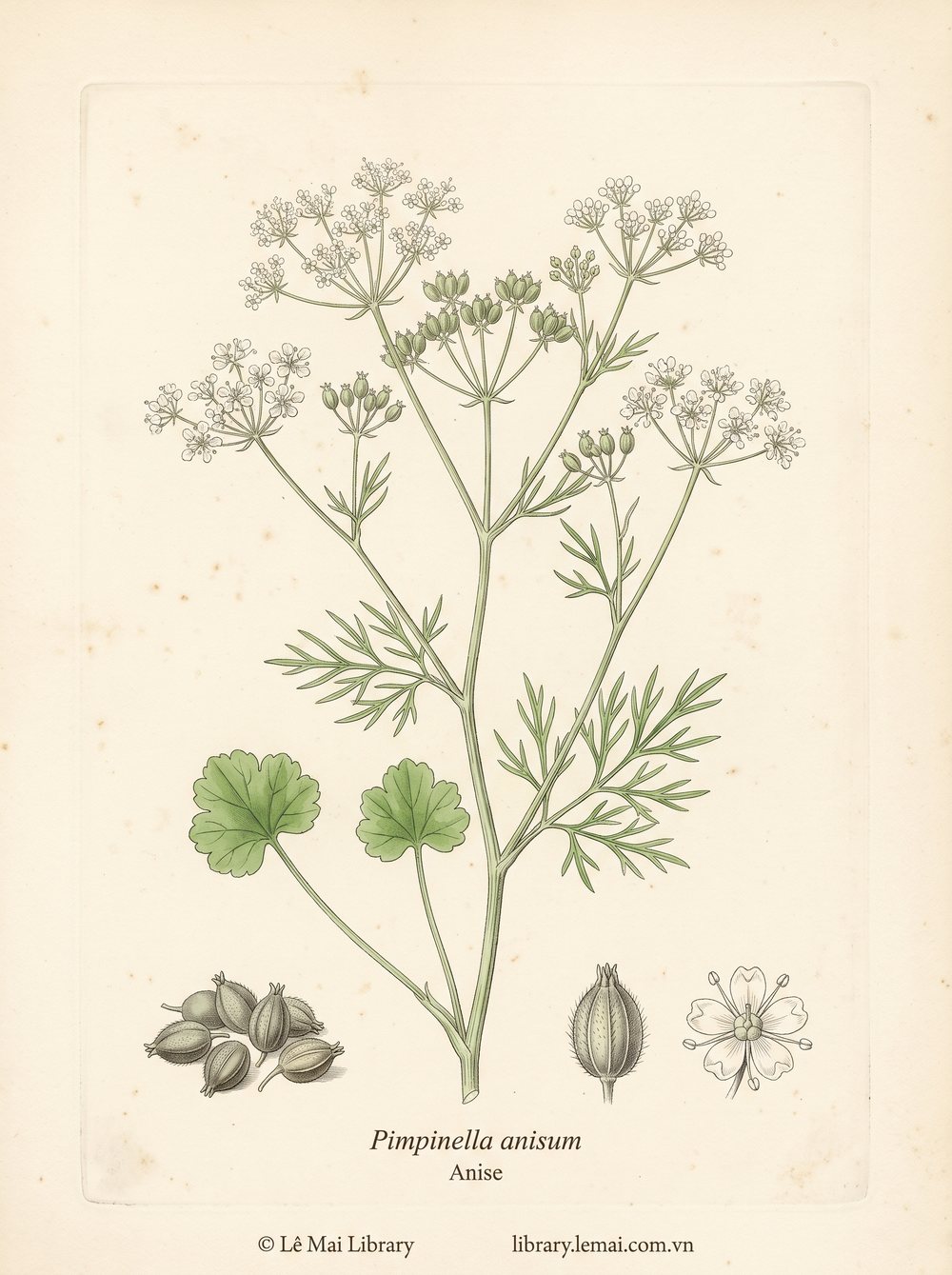
アニス
Hồi, Tiểu hồi
Pimpinella anisum
Aniseed, Sweet anise
Potentially carcinogenic based on estragole content.
Estrogenic activity — modulates reproductive hormones. (E)-Anethole has shown in vivo estrogenic effects in humans.
May inhibit blood clotting — (E)-anethole inhibits platelet aggregation.
One case of seizures in a 12-day-old infant recorded after parents administered multiple doses of anise oil for colic. Infant recovered after hospitalization.
Contraindicated all routes: pregnancy, breastfeeding, endometriosis, estrogen-dependent cancers, children under 5 years.
| (E)-Anethole | 75.2 – 96.1 % |
| Limonene | tr – 4.9 % |
| Estragole | 0.3 – 4.0 % |
| Anisyl alcohol | 0 – 3.5 % |
| γ-Himachalene | ≤ 2.2 % |
| Anisaldehyde | 0.6 – 2.0 % |
| (Z)-Anethole | tr – 0.5 % |
Pimpinella anisum is a small herbaceous plant in the Apiaceae family, native to the Mediterranean.
Anise seeds are a common flavoring for liqueurs (ouzo, sambuca, pastis), confectionery, traditional medicine. Oil is distilled from dried seeds.
Mainly produced in Spain, China, Egypt, Russia, Mexico, Chile.
Anise oil is commonly adulterated with cheaper star anise oil or with synthetic anethole.
European Pharmacopoeia standards: (E)-anethole 87-94%, estragole 0.5-5.0%, anisaldehyde 0.1-1.4%, (Z)-anethole 0.1-0.4%.
Estragole is dose-dependent carcinogen. (E)-Anethole itself is NOT a rodent carcinogen.
(E)-Anethole has weak estrogenic activity in vitro. In vivo estrogenic effects confirmed with sweet fennel tea (containing anethole) in humans.
Some aromatherapy literature claims anise oil is 'addictive and damages the brain' — no scientific basis. The genuine concerns are estragole carcinogenicity and estrogenic activity.